
Acrobates
Diprotodontia·Omnivore·Social (up to five may share a nest)
The feathertail glider (Acrobates pygmaeus) is the world's smallest gliding mammal, native to eastern Australia. It is distinguished by its feather-shaped tail and its remarkable ability to climb smooth surfaces, even glass. This nocturnal marsupial is an omnivore, feeding on nectar, pollen, and insects, and is known for its unique adaptation of torpor during cold weather.
Key Facts
- ›World's smallest gliding mammal, roughly the size of a small mouse.
- ›Possesses a distinctive feather-shaped tail due to rows of stiff hairs.
- ›Native to the eastern seaboard of continental Australia.
- ›Nocturnal and arboreal, spending most of its time in eucalyptus trees.
- ›Capable of entering torpor, significantly reducing body temperature and oxygen consumption.
- ›Females can have two litters per season, with the second litter entering embryonic diapause.
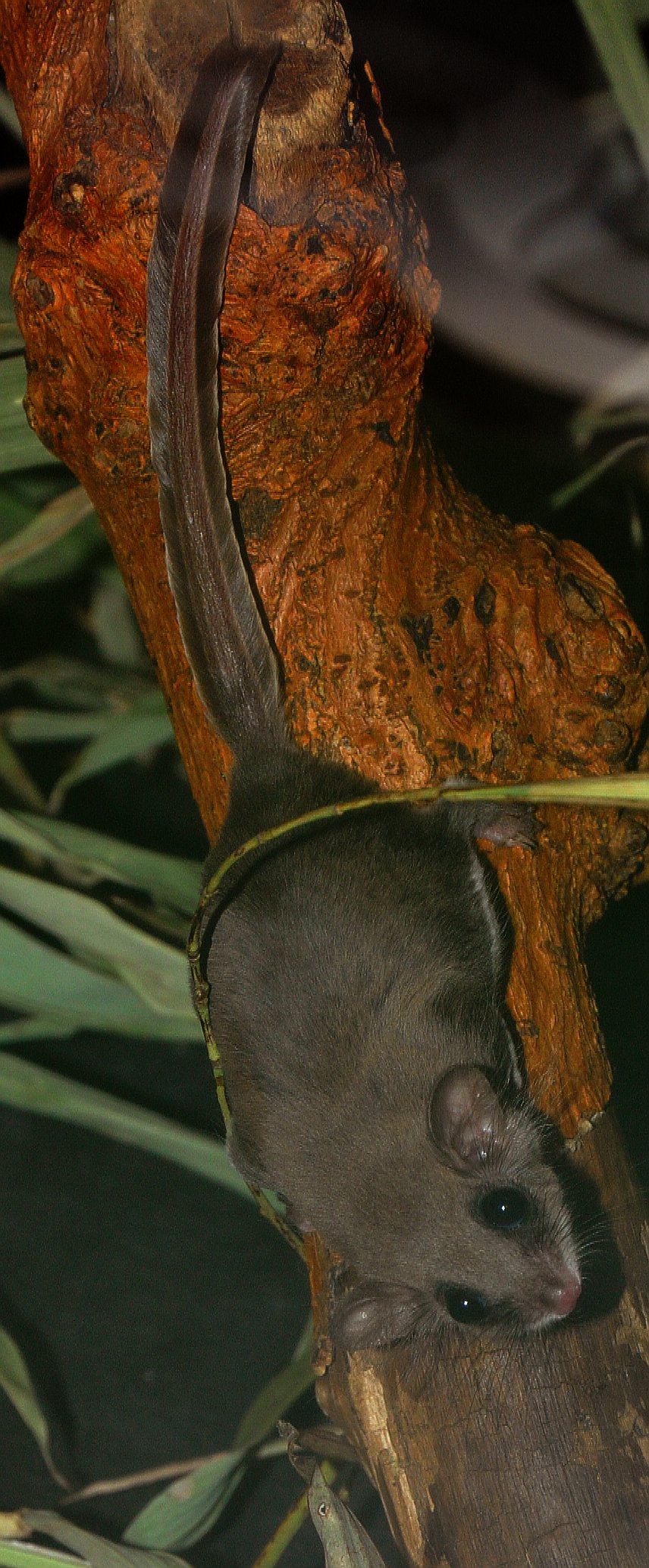
Pygmy Gliding Possum, Pygmy Glider, Pygmy Phalanger, Flying Phalanger, Flying Mouse, Narrow-Toed Feathertail Glider
Australia
Forests, Eucalyptus Trees
- Uniform Greyish-Brown Upper Body, White Underside
- Soft and Silky Fur
- Rings of Dark Fur Around the Eyes
- Moderately Large and Rounded Ears
- Numerous Long Whiskers
- Patagium Stretching Between Fore and Hind Legs, Fringed With Long Hairs
- Feather-Shaped Tail With Two Rows of Long, Stiff Hairs
- Hindfeet With Enlarged, Opposable First Digits Lacking Claws
- Long, Thin, Brush-Like Tongue
- Females Typically Give Birth To Two Litters of Up To Four Young In A Season.
- Females Can Mate Again Shortly After the First Litter Is Born.
- the Second Litter Enters Embryonic Diapause and Is Born After the First Litter Has Finished Weaning .
- Multiple Paternity Is Common, Even Within Litters.
- Young Remain In the Pouch For the First 65 Days of Life.
Gliding, Climbing
- Feather-Shaped Tail For Gliding
- Patagium With Hair Fringe To Increase Effective Area
- Suction-Cup Like Feet For Climbing Smooth Surfaces
- Ability To Enter Torpor During Cold Weather
- Brush-Like Tongue For Collecting Pollen and Consuming Semi-Liquid Food
- Unique Bony Disc In the Ear Structure
- Embryonic Diapause In Reproduction
About Acrobates
Acrobates pygmaeus: The Feathertail Glider
The feathertail glider, scientifically known as Acrobates pygmaeus, is a remarkable marsupial native to eastern Australia. It holds the distinction of being the world's smallest gliding mammal, a creature so diminutive it is often compared to a small mouse. Its common name, feathertail glider, is derived from its most distinctive feature: a long tail covered in short fur, except for two prominent rows of stiff hairs on either side, which give it the appearance of a feather or a double-sided comb. This adaptation, along with a small patagium (gliding membrane) stretching between its limbs, allows it to glide considerable distances.
Description and Adaptations
Physically, the feathertail glider is characterized by its soft, silky fur, typically a uniform greyish-brown on its upper body and white underneath. Rings of dark fur encircle its eyes, and it possesses moderately large, rounded ears and an unusually large number of whiskers. Its hindfeet are equipped with enlarged, opposable first digits that lack claws, aiding in its exceptional climbing abilities. The glider's long, thin tongue, adorned with numerous papillae, is adapted for collecting pollen and consuming semi-liquid foods, such as nectar. A unique bony disc in its ear structure is thought to enhance its sensitivity to certain sound frequencies.
Habitat and Behavior
Feathertail gliders inhabit a wide array of forest types across eastern Australia, from coastal regions to elevations of at least 1,200 meters. They are primarily nocturnal and arboreal, spending the majority of their time high in eucalyptus trees. Their diet is omnivorous, consisting of nectar, pollen, and various arthropods like moths, ants, and termites. Despite their small size, they are highly adept climbers, capable of clinging to smooth surfaces like eucalyptus trunks and even vertical glass, a feat achieved through a combination of fine skin ridges and sweat on their feet that function like suction cups.
Reproduction and Survival
Reproductively, feathertail gliders exhibit a fascinating strategy. Females typically produce two litters per season, each containing up to four young. Notably, they can mate again shortly after the first litter is born, with the second litter entering embryonic diapause. This means the second embryo's development is delayed until the first litter is weaned, ensuring continuous breeding cycles. In terms of survival, feathertail gliders do not hibernate but can enter a state of torpor during cold weather, during which their body temperature can drop to as low as 2°C. They often curl into a ball and huddle with other individuals to conserve energy and reduce heat loss. The maximum lifespan recorded for this species is approximately five years.
Source: Wikipedia ↗
Frequently Asked Questions
What makes the feathertail glider's tail unique?
The feathertail glider's tail is unique due to two distinctive rows of long, stiff hairs on either side. These hairs give the tail the appearance of a feather or a double-sided comb, aiding in its gliding ability and balance.
Where can feathertail gliders be found?
Feathertail gliders are found across the eastern seaboard of continental Australia, ranging from northern Queensland down to Victoria and into extreme south-eastern South Australia.
What do feathertail gliders eat?
They are omnivorous, feeding on a diet that includes nectar, pollen, and various arthropods such as moths, ants, and termites.
How do feathertail gliders climb so well?
Feathertail gliders are highly adept climbers, capable of clinging to smooth surfaces like eucalyptus trunks and even vertical panes of glass. This ability is attributed to fine skin ridges and sweat on their feet that create a suction-cup effect.
What is torpor and why do feathertail gliders use it?
Torpor is a state of reduced metabolic activity that feathertail gliders enter during cold weather, allowing their body temperature to drop significantly and their oxygen consumption to decrease drastically. They often huddle together in this state to conserve energy and reduce heat loss.
What are the reproductive habits of the feathertail glider?
Females typically give birth to two litters of up to four young in a season. A fascinating aspect is embryonic diapause, where the second litter is not born until the first litter has finished weaning, ensuring continuous development.
Related Marsupials

Caluromys
Caluromys, commonly known as woolly opossums, are a genus of three species belonging to the order Didelphimorphia. These marsupials are characterized by their woolly fur and are found in the diverse ecosystems of Central and South America. They are primarily arboreal and are known for their omnivorous diet.

Ailurops
The Ailurops, commonly known as bear cuscuses, are a genus of arboreal marsupials belonging to the family Phalangeridae. Found exclusively in Indonesia on Sulawesi and nearby islands, their isolation is thought to have led to their unique morphological divergence. Little is currently known about their specific ecological status.

Antechinus
Antechinus are a genus of small, mouse-like marsupials endemic to Australia, characterized by their bristly fur. They inhabit forests, woodlands, and grasslands, with most species found along the eastern coast. A distinctive feature of Antechinus is their unusual reproductive strategy, where males experience mass mortality after a short mating period, while females can reproduce multiple times.