
Caluromys
Caluromys, commonly known as woolly opossums, are a genus of three species belonging to the order Didelphimorphia. These marsupials are characterized by their woolly fur and are found in the diverse ecosystems of Central and South America. They are primarily arboreal and are known for their omnivorous diet.
Key Facts
- ›Woolly opossums are marsupials belonging to the genus Caluromys.
- ›The genus comprises three distinct species: Derby's woolly opossum, Brown-eared woolly opossum, and Bare-tailed woolly opossum.
- ›They are native to Central and South America.
- ›Woolly opossums are primarily arboreal, meaning they live in trees.
- ›Their diet is omnivorous, consuming a variety of plant and animal matter.
- ›The genus is part of the order Didelphimorphia, which includes other opossums.

Woolly Opossums
Central America, South America
Tropical Forests
Woolly Fur
About Caluromys
What are Woolly Opossums?
Woolly opossums, scientifically classified within the genus Caluromys, are a group of three distinct marsupial species. These animals are members of the order Didelphimorphia, a diverse order that includes many of the New World opossums. They are characterized by their dense, woolly fur, which gives them their common name.
Geographic Distribution and Habitat
The natural range of woolly opossums extends across Central and South America. They inhabit primarily tropical forest environments, where their arboreal lifestyle allows them to thrive. The specific habitats can vary among the species, but forests are a common requirement.
Diet and Behavior
Woolly opossums are omnivorous, meaning their diet comprises both plant and animal matter. They are known to consume fruits, insects, and other small invertebrates or vertebrates. These marsupials are predominantly arboreal, spending a significant portion of their lives in trees, where they forage, travel, and likely find shelter.
Source: Wikipedia ↗
Frequently Asked Questions
What are woolly opossums?
Woolly opossums are a genus of three species of marsupials known scientifically as Caluromys. They are characterized by their soft, woolly fur and are found in Central and South America.
How many species of woolly opossums are there?
There are three recognized species within the genus Caluromys: Derby's woolly opossum (Caluromys derbianus), the Brown-eared woolly opossum (Caluromys lanatus), and the Bare-tailed woolly opossum (Caluromys philander).
Where do woolly opossums live?
Woolly opossums are native to the tropical regions of Central and South America. Their distribution spans a wide range across these continents.
What do woolly opossums eat?
Woolly opossums are omnivores. Their diet consists of a variety of food sources, including fruits, insects, and other small animals.
Are woolly opossums arboreal?
Yes, woolly opossums are primarily arboreal, which means they spend most of their lives in trees. Their arboreal lifestyle is suited to their forest habitats.
Related Marsupials
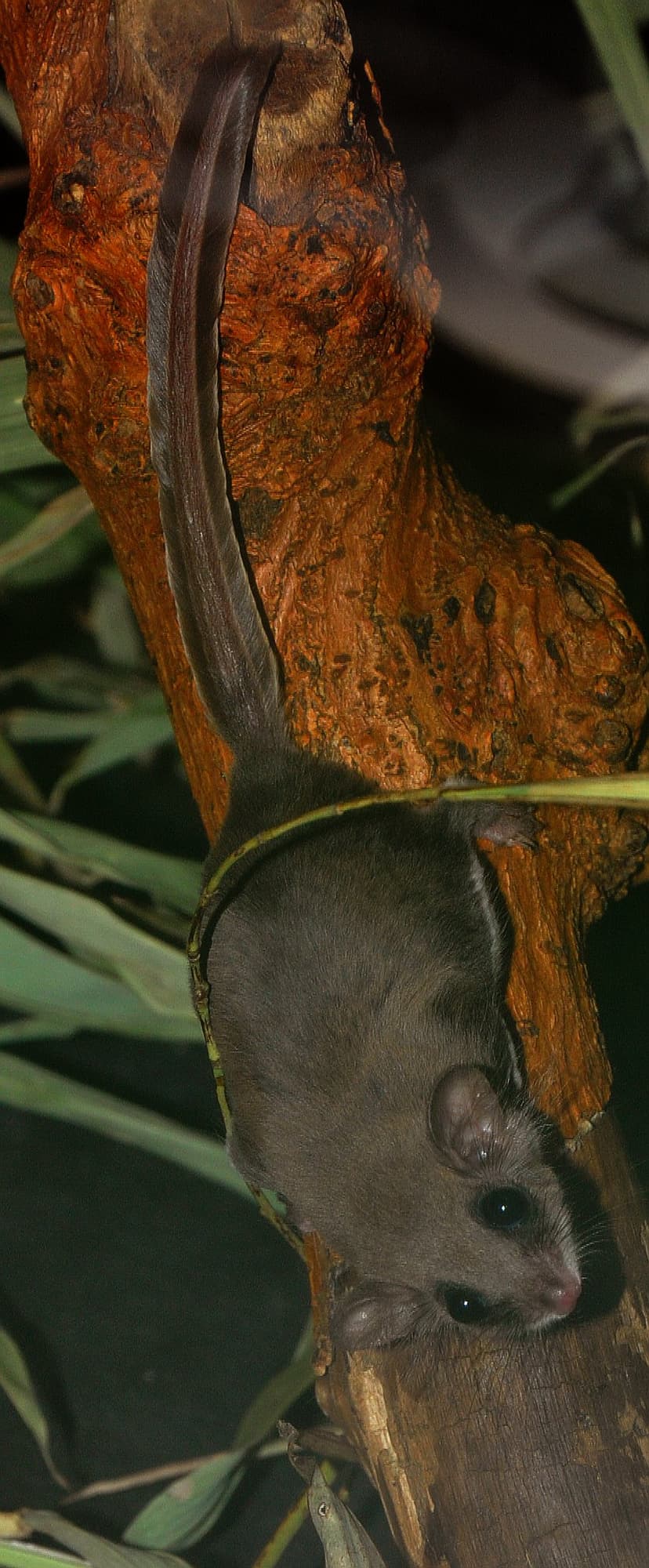
Acrobates
The feathertail glider (Acrobates pygmaeus) is the world's smallest gliding mammal, native to eastern Australia. It is distinguished by its feather-shaped tail and its remarkable ability to climb smooth surfaces, even glass. This nocturnal marsupial is an omnivore, feeding on nectar, pollen, and insects, and is known for its unique adaptation of torpor during cold weather.
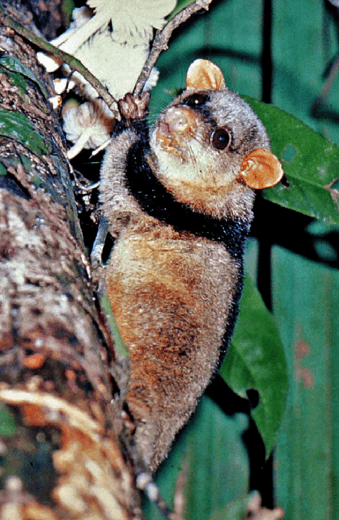
Caluromysiops
The black-shouldered opossum (Caluromysiops irrupta) is a marsupial found in the humid forests of western Brazil and southeastern Peru. It is distinguished by its gray coat, gray underbelly, and striking black stripes that run from its forefeet to its hind feet, meeting on its shoulders. This nocturnal and arboreal animal is known to feed on fruits and rodents, with a lifespan in captivity potentially exceeding seven years.

Ailurops
The Ailurops, commonly known as bear cuscuses, are a genus of arboreal marsupials belonging to the family Phalangeridae. Found exclusively in Indonesia on Sulawesi and nearby islands, their isolation is thought to have led to their unique morphological divergence. Little is currently known about their specific ecological status.