
Antechinus
Dasyuromorphia·Mainly insectivorous, with diet varying by species and habitat; includes beetles, insect larvae, spiders, amphipods, millipedes, centipedes, and occasionally small vertebrates.·Most species nest communally.
Antechinus are a genus of small, mouse-like marsupials endemic to Australia, characterized by their bristly fur. They inhabit forests, woodlands, and grasslands, with most species found along the eastern coast. A distinctive feature of Antechinus is their unusual reproductive strategy, where males experience mass mortality after a short mating period, while females can reproduce multiple times.
Key Facts
- ›Antechinus resemble mice with the bristly fur of shrews.
- ›They are primarily insectivorous, but their diet can include small vertebrates.
- ›Males undergo mass mortality after mating, a phenomenon known as semelparity.
- ›Females possess a skin flap instead of a fully developed pouch.
- ›Antechinus utilize daily torpor to conserve energy and reduce water requirements.
- ›Habitat destruction and introduced predators are the main threats to Antechinus populations.

Broad-Footed Marsupial Mice, Pouched Mice, Antechinus Shrews
Australia
Forests, Woodlands, Rainforests, Heaths, Grasslands
- Small, Mouse-Like Appearance
- Bristly Fur
- Greyish Or Brownish Coloration
- Dense, Generally Soft Fur
- Thin, Tapering Tails Ranging From Slightly Shorter To Slightly Longer Than Body Length
- Conical Heads
- Small To Medium-Sized Ears
- Relatively Long, Narrow Snouts In Some Species
- Females Are Synchronously Monoestrous; Mating Occurs Over A Short, Three-Week Period.
- Males Experience Mass Mortality After Mating.
- Females May Mate Twice Or Three Times In Their Lives.
- Gestation Period Varies Between 25 and 35 Days.
- Offspring Are Independent After Approximately 90-100 Days.
- Breeding Season Is Typically In Winter Or Early Spring , Triggered By Photoperiod Changes.
- Females Control the Synchrony of Mating; Males Are Reproductively Mature Several Weeks Before the Season.
Scansorial, Climbing, Ground Foraging
- Male Semelparity
- Daily Torpor For Energy Conservation
- Skin Flap Instead of A Fully Developed Pouch
- Reproductive Timing Linked To Photoperiod Changes
About Antechinus
Antechinus is a genus of small dasyurid marsupials native to Australia, recognized for their mouse-like appearance and the characteristic bristly fur of shrews. These adaptable creatures inhabit a variety of environments, including forests, woodlands, rainforests, heaths, and grasslands, with a significant portion of their populations found along the eastern coast of Australia.
Description and Characteristics
Antechinus species generally display short, dense fur that is typically greyish or brownish in color, with variations occurring between species. Their tails are thin and tapering, with lengths that can be slightly shorter or longer than their bodies. They possess conical heads and small to medium-sized ears, and some species have a notably long, narrow snout, contributing to their shrew-like appearance. Adult sizes vary, with lengths ranging from 12 to 31 cm and weights between 16 and 170 grams. Sexual dimorphism is common, with males usually being larger and heavier than females.
Diet and Foraging
Primarily insectivorous, the diet of Antechinus is diverse and can be influenced by species and habitat. Key food items include beetles, insect larvae, and spiders, along with amphipods, millipedes, and centipedes. In post-fire environments, ants often become a dietary staple due to their abundance. Some species have been observed consuming small vertebrates, such as lizards or mammals, particularly when food is scarce. Smaller species, like A. stuartii, are scansorial, hunting in trees and leaping between branches to catch insects, while larger species, such as A. swainsonii, forage on the ground in leaf litter.
Reproduction and Life Cycle
Antechinus exhibit a highly unusual reproductive strategy. Females are synchronously monoestrous, with mating concentrated over a brief three-week period. A striking characteristic is the mass mortality experienced by males after mating, a phenomenon linked to increased corticosteroids that suppress their immune systems. Females, however, can often reproduce multiple times throughout their lives. Gestation periods range from 25 to 35 days, and their young become independent after approximately 90 to 100 days, a relatively long development period for marsupials of comparable size. The timing of their breeding season, usually in winter or early spring, is precisely regulated by changes in photoperiod, ensuring that offspring are weaned when food resources are most abundant.
Unique Adaptations and Threats
Antechinus are known for their ability to enter daily torpor, a state of reduced body temperature and metabolic rate that conserves energy and water, particularly useful during rest periods or times of environmental stress. This adaptation helps them cope with their high surface-to-volume ratio and high metabolic rates. Females that survive to reproduce a second time tend to enter torpor more frequently than first-year females. Unfortunately, many Antechinus species face significant threats, primarily from habitat destruction, including deforestation and altered fire regimes, and from introduced predators like foxes and cats. Competition for resources with introduced rodents and disturbance by livestock also negatively impact their populations.
Source: Wikipedia ↗
Frequently Asked Questions
What are antechinus?
Antechinus are a genus of small marsupials native to Australia. They are known for their mouse-like appearance combined with the bristly fur characteristic of shrews.
Where do antechinus live?
Antechinus are found throughout Australia, primarily inhabiting forests, woodlands, rainforests, heaths, and grasslands. Many species are concentrated along the eastern coast, particularly near the Great Dividing Range.
What do antechinus eat?
Antechinus are mainly insectivorous, feeding on beetles, insect larvae, and spiders. They may also consume amphipods, millipedes, centipedes, and occasionally small vertebrates like skinks or mammals.
How do antechinus reproduce?
Antechinus have a unique reproductive system where males die shortly after mating, a strategy that maximizes their reproductive effort. Females mate over a short period, with gestation lasting 25-35 days, and offspring are independent around 90-100 days old.
Do antechinus have a pouch?
Antechinus females do not possess a fully developed pouch like many other marsupials. Instead, they have a flap of skin that covers their teats, providing some protection for the developing young.
What is torpor in antechinus?
Torpor is a state of lowered body temperature and metabolic rate that antechinus use to conserve energy and water. They can enter daily torpor for several hours, which is particularly useful during rest periods or after intense activity.
What are the main threats to antechinus?
The primary threats to antechinus are habitat destruction, including deforestation and changes in fire regimes, and the impact of introduced animals such as foxes and cats. Competition with introduced rodents and trampling by livestock also pose risks.
Related Marsupials

Antechinomys
Antechinomys is a genus of dasyurid marsupials, comprising two living species. It is closely related to the genus Sminthopsis and is known for its distinct taxonomic classification within the Dasyuridae family.
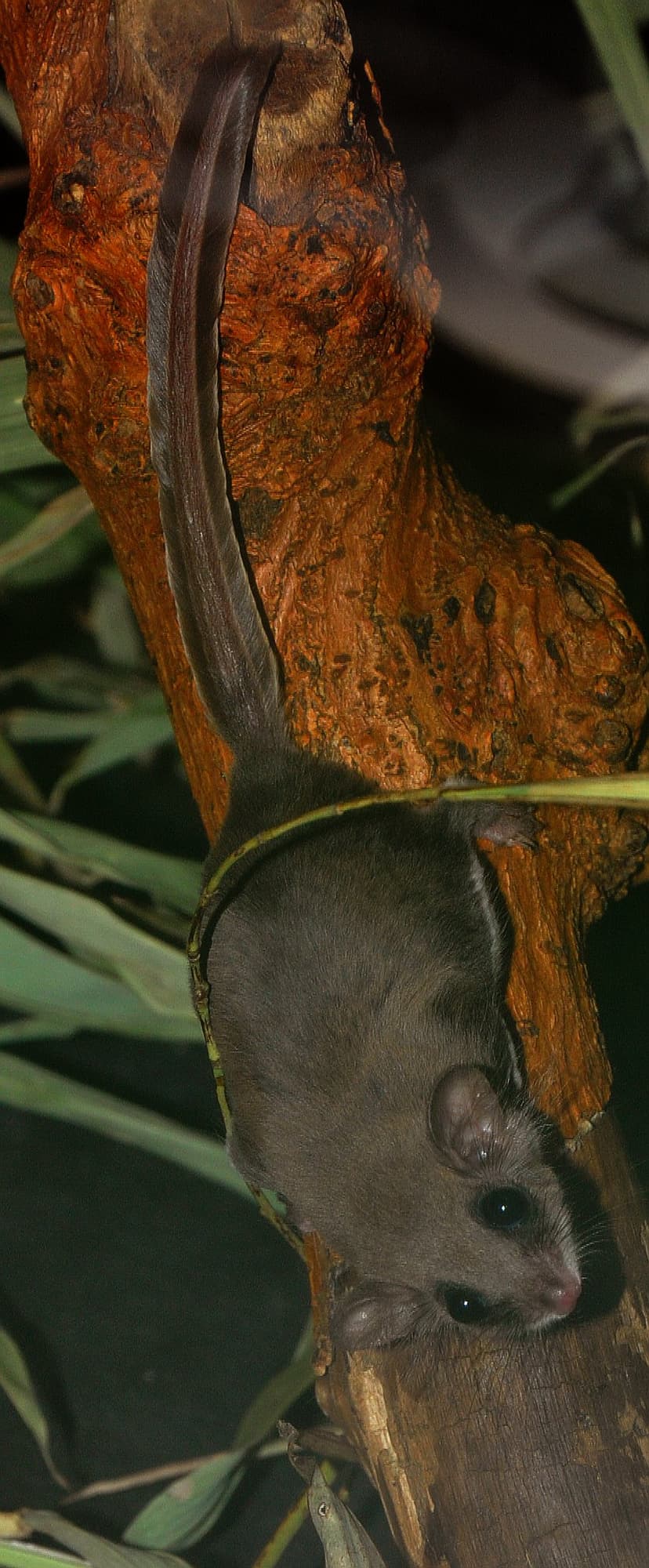
Acrobates
The feathertail glider (Acrobates pygmaeus) is the world's smallest gliding mammal, native to eastern Australia. It is distinguished by its feather-shaped tail and its remarkable ability to climb smooth surfaces, even glass. This nocturnal marsupial is an omnivore, feeding on nectar, pollen, and insects, and is known for its unique adaptation of torpor during cold weather.

Caluromys
Caluromys, commonly known as woolly opossums, are a genus of three species belonging to the order Didelphimorphia. These marsupials are characterized by their woolly fur and are found in the diverse ecosystems of Central and South America. They are primarily arboreal and are known for their omnivorous diet.