
Aepyprymnus
Diprotodontia·Omnivore (primarily herbivorous, feeding on tubers and fungi, but also eats leaves, sedges, seeds, and insect larvae)·May share nests or be solitary; males may cohabit with one or two females (loose, polygynous associations)
The rufous rat-kangaroo (Aepyprymnus rufescens) is a small, rabbit-sized marsupial native to eastern Australia and the sole member of its genus. Distinctive for its ruffled, bristly fur with a rufous tint, this nocturnal creature is known for digging up plant roots and fungi, and for carrying its young in a pouch. Despite a reduced historical range, its population is considered healthy and stable.
Key Facts
- ›It is the largest member of the potoroo and bettong family (Potoroidae).
- ›Its scientific name, Aepyprymnus rufescens, translates to 'reddish high-rump'.
- ›The species is characterized by ruffled, bristly fur with a rufous tint on its upper parts.
- ›It is primarily nocturnal, foraging for fungi, tubers, leaves, and other vegetation.
- ›Breeding can occur year-round once females reach maturity around 11 months old.
- ›Young remain in the pouch for approximately 16 weeks after birth.

Rufous Bettong
Australia
Coastal Regions, Subcoastal Regions, Areas With Dense Under-Story Vegetation
- Rabbit-Sized
- Ruffled and Bristly Pelage
- Rufous Tint of Fur On Upper Parts
- Paler Grey Underparts
- Head and Body Length: 385-390 mm
- Tail Length: 340-390 mm
- Long, Triangular Ears
- Dark Outer Ear Color, Pink Interior, Silver-Haired Fringe
- Hairless Pink Rim Around the Eye
- Breeding Occurs Throughout the Year.
- Females Mature Around 11 Months, Males Around 12-13 Months.
- Females Can Breed At Three-Week Intervals.
- Gestation Period Is Approximately 22-24 Days.
- Young Remain In the Pouch For About 16 Weeks.
- Joeys Stay Near the Mother For About 7 Weeks After Leaving the Pouch.
Jumping, Hopping, Walking
Strong Clawed Forelimbs For Excavating Food
About Aepyprymnus
The Rufous Rat-Kangaroo (Aepyprymnus rufescens)
The rufous rat-kangaroo, scientifically known as Aepyprymnus rufescens, is a distinctive marsupial native to the eastern coastal and subcoastal regions of Australia. It is the sole species within the genus Aepyprymnus and holds the distinction of being the largest member of the Potoroidae family, which includes potoroos and bettongs. This creature is roughly the size of a rabbit and is easily identifiable by its ruffled, bristly fur, which carries a characteristic rufous tint on its upper parts, typically a blend of grey with reddish-brown hues and interspersed silvery hairs. Its scientific name itself, rufescens, hints at this reddish coloration.
Habitat and Behavior
This species is primarily nocturnal, emerging after sunset to forage and returning to its nest before dawn. Nests are usually constructed in shallow clearings beneath dense vegetation, lined with woven plant material. The rufous rat-kangaroo possesses strong, clawed forelimbs adept at digging, which it uses to excavate its favored foods: the subterranean fruiting bodies of fungi and tubers. Its diet is supplemented with leaves, sedges, seeds, and occasionally insect larvae. While historically thought to be solitary, recent observations suggest they may form loose, polygynous associations, with males sometimes cohabiting with one or two females.
Reproduction and Distribution
Breeding in rufous rat-kangaroos can occur year-round once individuals reach maturity, typically around 11 months for females and 12-13 months for males. The gestation period for the young is approximately 22-24 days. After birth, the joey resides in the mother's pouch for about 16 weeks, and upon emerging, it stays close to the mother for an additional 7 weeks as it learns to fend for itself. The natural range of the rufous rat-kangaroo extends from Newcastle in New South Wales to Cooktown in Queensland, though its historical distribution once included the Murray River Valley in New South Wales and Victoria. Despite a reduction in its historical range, the rufous rat-kangaroo is considered to have a healthy and stable population.
Source: Wikipedia ↗
Frequently Asked Questions
What is the rufous rat-kangaroo?
The rufous rat-kangaroo is a small, jumping, rat-like marsupial native to eastern Australia. It is the only species in its genus and is the largest member of the potoroo and bettong family.
What are the key physical characteristics of the rufous rat-kangaroo?
This species is about the size of a rabbit, with ruffled and bristly fur that has a rufous tint on its upper parts, typically grey with silvery interspersing hairs. It has long, triangular ears and a grey-brown tail that may have a white tip.
What does the rufous rat-kangaroo eat?
Its diet consists mainly of subterranean plant roots (tubers) and fungi. It also consumes leaves, grass, seeds, and occasionally insect larvae.
When does the rufous rat-kangaroo breed?
Breeding can occur throughout the year, with females capable of breeding at three-week intervals once they reach maturity, typically around 11 months old. Males mature between 12 and 13 months.
What is the typical habitat of the rufous rat-kangaroo?
The rufous rat-kangaroo is found in coastal and subcoastal regions of eastern Australia. It inhabits areas with dense under-story vegetation where it can construct its nests.
What is the conservation status of the rufous rat-kangaroo?
The population of the rufous rat-kangaroo is considered healthy and stable, indicating a favorable conservation status.
Related Marsupials
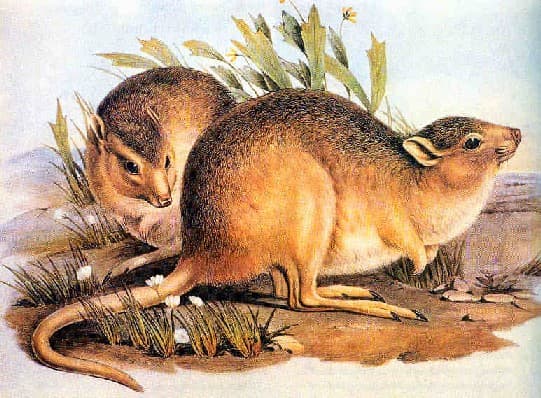
Caloprymnus
The desert rat-kangaroo (Caloprymnus campestris), also known as the buff-nosed rat-kangaroo, was a small, extinct hopping marsupial native to the desert regions of Central Australia. Distinguished by its delicate, slender form, it possessed disproportionately large hind limbs for saltation and a pale, yellowish-brown coat adapted to its arid environment. This species was solitary, built grass-lined nests for shelter, and was primarily herbivorous.
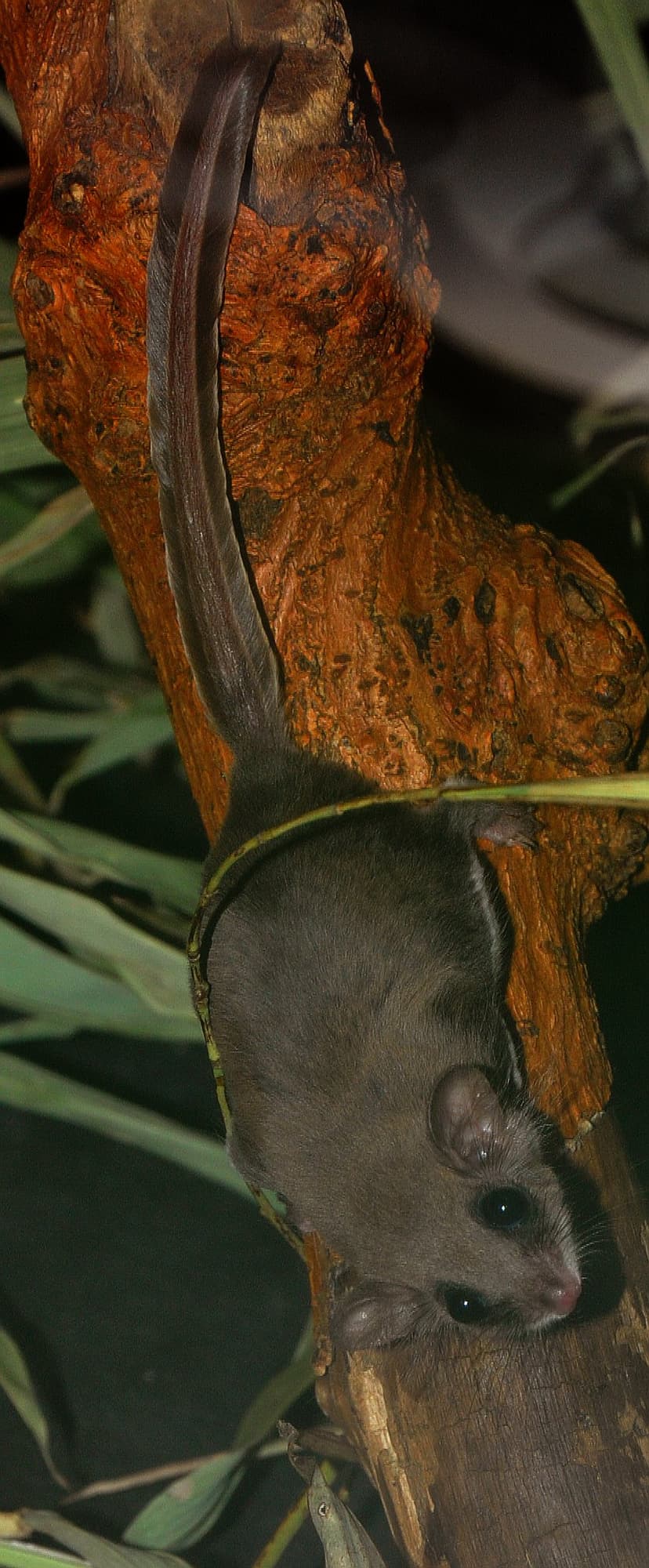
Acrobates
The feathertail glider (Acrobates pygmaeus) is the world's smallest gliding mammal, native to eastern Australia. It is distinguished by its feather-shaped tail and its remarkable ability to climb smooth surfaces, even glass. This nocturnal marsupial is an omnivore, feeding on nectar, pollen, and insects, and is known for its unique adaptation of torpor during cold weather.

Bettongia
Bettongs are a group of marsupials belonging to the genus Bettongia, native to Australia. Once widespread, they are now vulnerable due to habitat loss, altered fire regimes, and introduced predators, with many species confined to islands and reserves. These small, herbivorous marsupials are known for their role as ecosystem engineers.