
Caloprymnus
Diprotodontia·Mainly herbivorous, feeding on foliage and stems of desert vegetation, with some insect consumption.·Extinct·Solitary, except for mothers with young offspring.
The desert rat-kangaroo (Caloprymnus campestris), also known as the buff-nosed rat-kangaroo, was a small, extinct hopping marsupial native to the desert regions of Central Australia. Distinguished by its delicate, slender form, it possessed disproportionately large hind limbs for saltation and a pale, yellowish-brown coat adapted to its arid environment. This species was solitary, built grass-lined nests for shelter, and was primarily herbivorous.
Key Facts
- ›Endemic to the desert regions of Central Australia.
- ›Characterized by a delicate, slender body with disproportionately large hind limbs for hopping.
- ›Nesting behavior involved excavating or finding shallow depressions and lining them with grass.
- ›Primarily herbivorous, feeding on desert vegetation, but also consumed insects.
- ›Last confirmed sighting was in 1935, and it was declared extinct in 1994.
- ›Considered extinct, though unconfirmed sightings and recent remains have led to speculation about possible survival.
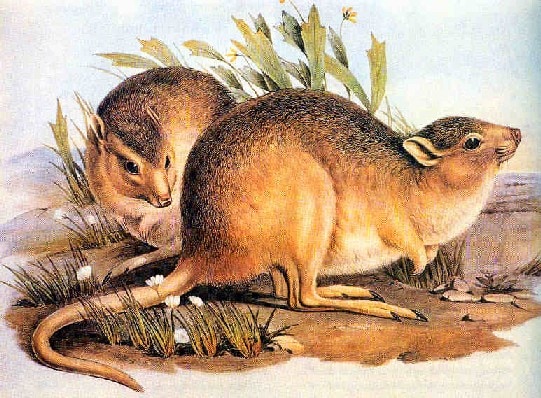
Buff-Nosed Rat-Kangaroo, Plains Rat-Kangaroo, Oolacunta
Australia
Desert Regions, Clay Pans, Loamy Flats, Sand Ridges, Gibber Plains
- Delicate and Slender Form
- Head and Body Length: 254–282 mm
- Tail Length: 307–377 mm
- Short, Blunt, and Wide Head
- Naked Nose
- Short and Rounded Ears
- Pale Yellowish-Brown Fur, Tipped With Sooty Brown
- White Underbelly
- Very Pale Yellowish-Brown Feet and Tail
- Disproportionately Large Hind Limbs Compared To Delicate Forelimbs
- Females Reached Sexual Maturity At Approximately 11 Months; Males At About 13 Months.
- Marked Sexual Dimorphism, With Females Being Larger.
- Females Experienced Estrus At Three-Week Intervals and Could Mate Year-Round.
- Gestation Period Was Likely One To Two Months.
- Pouch Period Lasted Two To Three Months.
- Females Typically Had Only One Young At A Time.
- Young Remained Dependent For Over A Month After Leaving the Pouch.
Hopping, Saltation
Red Fox, Feral Cats
- Disproportionately Large Hind Limbs For Efficient Saltation In Desert Environments.
- Naked, Blunt Nose.
- Nesting Behavior Using Excavated Depressions Lined With Grass For Thermoregulation and Shelter.
- Ability To Survive Without Surface Water By Feeding On Green Plants.
About Caloprymnus
The Desert Rat-Kangaroo: An Extinct Australian Marsupial
The desert rat-kangaroo, scientifically designated as Caloprymnus campestris, is a small, extinct hopping marsupial that was once endemic to the arid desert regions of Central Australia. Also referred to by common names such as the buff-nosed rat-kangaroo, plains rat-kangaroo, and oolacunta, this creature was first documented in the early 1840s. It was known for its delicate and slender build, somewhat resembling a small kangaroo with the bulk of a rabbit. Its fur was a pale yellowish-brown, well-suited to its desert environment, and it featured a naked, blunt nose and short, rounded ears.
Physical Characteristics and Adaptations
A distinctive physical trait of the desert rat-kangaroo was the significant difference in size between its forelimbs and hind limbs. Its forelimbs were delicate, while its hind limbs were large and powerful, adapted for saltation, or hopping locomotion. The head and body length was typically between 254–282 mm, complemented by a tail measuring 307–377 mm, which aided in balance during high-speed movement. Its underbelly was white, and its feet and tail were a pale yellowish-brown. The species was at least partially nocturnal, spending much of the day in nests and emerging at dusk to forage.
Habitat and Behavior
Caloprymnus campestris inhabited a range extending across parts of South Australia, southwestern Queensland, and the Northern Territory. Its preferred habitats included clay pans, loamy flats, sand ridges, and gibber plains, characterized by sparse vegetation such as saltbush and emu bush. This species was primarily solitary, except when females were raising young. They constructed nests over shallow ground depressions, lining them with grass carried by their tails and covering them with twigs for protection from the sun. This nesting behavior was crucial for survival in extreme desert temperatures.
Diet and Reproduction
The diet of the desert rat-kangaroo was mainly herbivorous, consisting of desert vegetation, though it also consumed insects like beetles and weevils. Biomechanical studies of its skull suggest a preference for softer vegetation, and it was notably able to survive without any surface water, deriving moisture from the green plants it ate.
Reproductively, females reached sexual maturity around 11 months old, with males maturing slightly later. Females exhibited estrus cycles every three weeks and could mate throughout the year, although breeding seasons were irregular. Gestation was estimated to be one to two months, followed by a pouch period of two to three months, with females typically bearing a single young at a time. Young remained dependent for over a month after leaving the pouch.
Extinction and Possible Survival
After its initial recording, the desert rat-kangaroo was not widely seen for 90 years, leading to beliefs of its extinction. It was rediscovered in 1931 by Hedley Finlayson, who found a thriving colony. However, the population declined rapidly thereafter. The last confirmed sighting was in 1935. Factors contributing to its extinction included predation by introduced red foxes and feral cats, variable seasonal patterns, and overhunting. Despite being declared extinct in 1994, the finding of recent remains in the 1980s and an unconfirmed sighting in 2011 have led to speculation that small populations might still exist, awaiting favorable conditions.
Source: Wikipedia ↗
Frequently Asked Questions
What are the common names for Caloprymnus campestris?
Caloprymnus campestris is also known by several common names, including the desert rat-kangaroo, buff-nosed rat-kangaroo, plains rat-kangaroo, and oolacunta.
What did the desert rat-kangaroo look like?
It resembled a small kangaroo with the bulk of a rabbit, possessing a delicate and slender form. Its fur was pale yellowish-brown, its nose was naked and blunt, and it had short, rounded ears. A key feature was the significant difference in size between its delicate forelimbs and powerful hind limbs.
Where did the desert rat-kangaroo live?
This species inhabited desert regions of Central Australia, including South Australia and extending into southwestern Queensland and the Northern Territory. Its habitat consisted of clay pans, loamy flats, sand ridges, and gibber plains with sparse cover from plants like saltbush and emu bush.
What was the diet of the desert rat-kangaroo?
The desert rat-kangaroo was mainly herbivorous, consuming foliage and stems of desert vegetation. It also ate insects such as beetles and weevils, though biomechanical analysis suggests its diet was likely limited to softer vegetation. It was notably independent of water, even shunning succulent plants.
How did the desert rat-kangaroo reproduce?
Females reached sexual maturity around 11 months and males about two months later. Females experienced estrus every three weeks and could mate year-round, though breeding seasons were irregular. Gestation was estimated to be one to two months, with a pouch period of two to three months, and females typically had only one young at a time.
Why did the desert rat-kangaroo go extinct?
Predation by introduced species like the red fox and feral cats is considered a primary cause of its rapid decline and extinction. Overhunting by indigenous Australians and variable seasonal patterns were also blamed. The species was declared extinct in 1994.
Is there any possibility the desert rat-kangaroo is still alive?
While declared extinct, there is some speculation about its continued survival due to its remarkable recovery after a 90-year absence prior to its rediscovery. Recent remains found in the 1980s and an unconfirmed sighting in 2011 have fueled this possibility, though no definitive proof exists.
Related Marsupials

Aepyprymnus
The rufous rat-kangaroo (Aepyprymnus rufescens) is a small, rabbit-sized marsupial native to eastern Australia and the sole member of its genus. Distinctive for its ruffled, bristly fur with a rufous tint, this nocturnal creature is known for digging up plant roots and fungi, and for carrying its young in a pouch. Despite a reduced historical range, its population is considered healthy and stable.
Acrobates
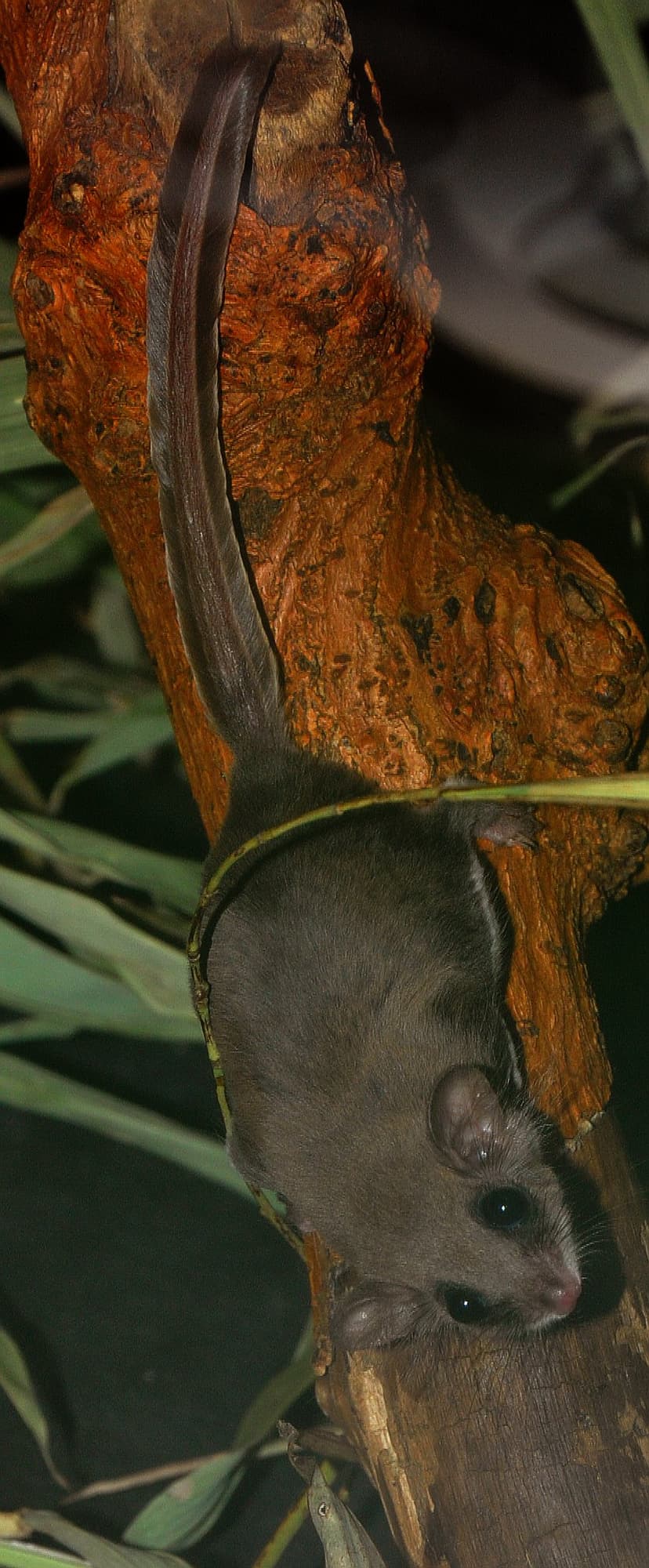
The feathertail glider (Acrobates pygmaeus) is the world's smallest gliding mammal, native to eastern Australia. It is distinguished by its feather-shaped tail and its remarkable ability to climb smooth surfaces, even glass. This nocturnal marsupial is an omnivore, feeding on nectar, pollen, and insects, and is known for its unique adaptation of torpor during cold weather.

Bettongia
Bettongs are a group of marsupials belonging to the genus Bettongia, native to Australia. Once widespread, they are now vulnerable due to habitat loss, altered fire regimes, and introduced predators, with many species confined to islands and reserves. These small, herbivorous marsupials are known for their role as ecosystem engineers.