
Bettongia
Diprotodontia·herbivore
Bettongs are a group of marsupials belonging to the genus Bettongia, native to Australia. Once widespread, they are now vulnerable due to habitat loss, altered fire regimes, and introduced predators, with many species confined to islands and reserves. These small, herbivorous marsupials are known for their role as ecosystem engineers.
Key Facts
- ›Bettongs are potoroine marsupials found in Australia.
- ›They are considered important ecosystem engineers.
- ›All extant species have been severely impacted by ecological changes since European colonization.
- ›Many bettong species are now confined to islands and protected reserves.
- ›Re-population programs are crucial for their survival.
- ›New taxa have been identified from museum specimens.

Bettong
Australia
Terrestrial Environments
Small Marsupials
Fox, Cat
About Bettongia
Bettongs
Bettongs, belonging to the genus Bettongia, are a group of potoroine marsupials that were once common across Australia. These small, herbivorous creatures are recognized as important ecosystem engineers, playing a vital role in the health of their environments through their foraging and burrowing activities.
Historical Context and Conservation Concerns
Since the European colonization of Australia, bettongs have faced severe ecological challenges. Altered fire regimes, extensive land clearing, pastoralism, and the introduction of predatory species such as foxes and cats have led to a drastic decline in their populations. As a result, many species have become extinct, and the surviving ones are now largely confined to islands and protected reserves. Their diversity was not fully understood before their extirpation from the mainland, with new taxa being identified from existing museum collections.
Conservation efforts are underway to combat these threats, including re-population programs. In August 2021, for instance, 40 bettongs were released in various parts of South Australia after being raised in captivity to bolster their numbers. The genus currently includes four recognized extant species: the Eastern bettong (B. gaimardi), Boodie (B. lesueur), Woylie (B. ogilbyi), and Northern bettong (B. tropica). Several species, such as the Desert bettong (B. anhydra) and Nullarbor dwarf bettong (B. pusilla), are now extinct, presumed lost due to predation and habitat changes.
The phylogenetic arrangement of the genus Bettongia places a group of 'brush-tailed' taxa together, including the extant species B. gaimardi, B. tropica, and B. penicillata. Fossil species like Bettongia moyesi also contribute to the understanding of the genus's evolutionary history within the family Potoroidae.
Source: Wikipedia ↗
Frequently Asked Questions
What are bettongs?
Bettongs are a genus of marsupials, Bettongia, native to Australia. They are small, herbivorous animals that play a significant role in their ecosystems.
What is the conservation status of bettongs?
All species within the genus Bettongia have been severely affected by ecological changes since European colonization. Many have become extinct, and the remaining species are vulnerable, often confined to islands and reserves and reliant on re-population efforts.
Why are bettongs vulnerable?
Bettongs are vulnerable to threatening factors such as altered fire regimes, land clearing, pastoralism, and introduced predators like foxes and cats. These factors have led to significant population declines and extinctions.
How are bettongs being helped?
Conservation efforts include re-population programs and confining remaining populations to islands and protected reserves. Captive breeding and release programs, such as the one in South Australia in August 2021, are being used to increase their numbers.
How many species of bettongs are there?
There are four extant species of bettong recognized: the Eastern bettong (B. gaimardi), Boodie (B. lesueur), Woylie (B. ogilbyi), and Northern bettong (B. tropica). Several other species are now extinct.
Related Marsupials
Caloprymnus
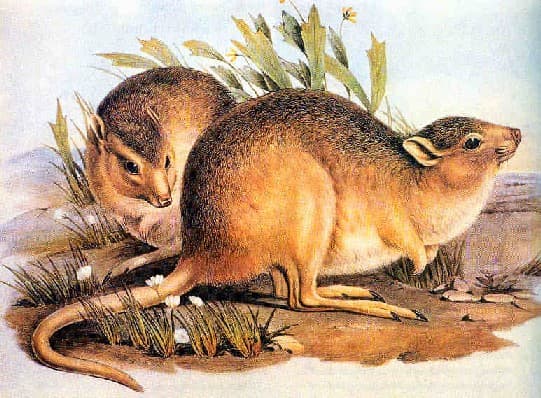
The desert rat-kangaroo (Caloprymnus campestris), also known as the buff-nosed rat-kangaroo, was a small, extinct hopping marsupial native to the desert regions of Central Australia. Distinguished by its delicate, slender form, it possessed disproportionately large hind limbs for saltation and a pale, yellowish-brown coat adapted to its arid environment. This species was solitary, built grass-lined nests for shelter, and was primarily herbivorous.
Acrobates
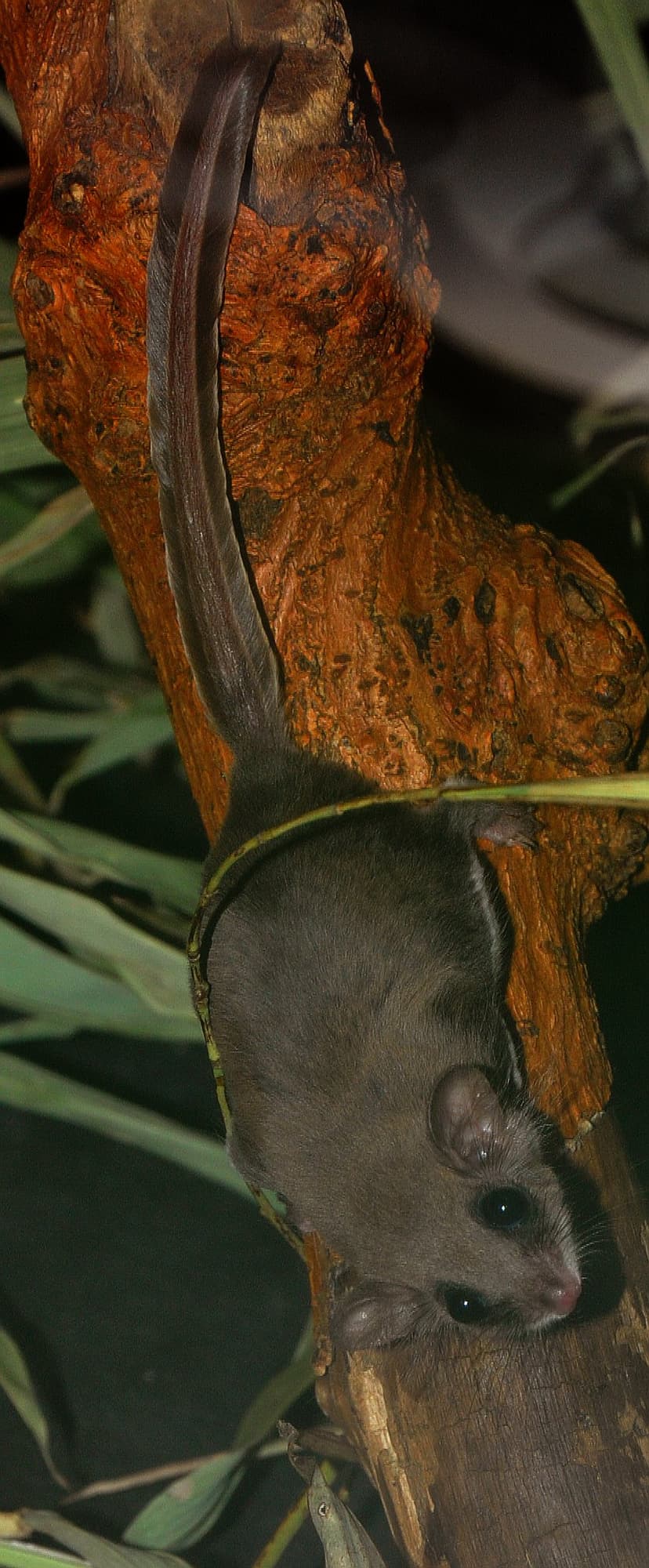
The feathertail glider (Acrobates pygmaeus) is the world's smallest gliding mammal, native to eastern Australia. It is distinguished by its feather-shaped tail and its remarkable ability to climb smooth surfaces, even glass. This nocturnal marsupial is an omnivore, feeding on nectar, pollen, and insects, and is known for its unique adaptation of torpor during cold weather.

Aepyprymnus
The rufous rat-kangaroo (Aepyprymnus rufescens) is a small, rabbit-sized marsupial native to eastern Australia and the sole member of its genus. Distinctive for its ruffled, bristly fur with a rufous tint, this nocturnal creature is known for digging up plant roots and fungi, and for carrying its young in a pouch. Despite a reduced historical range, its population is considered healthy and stable.