
Antechinomys
Dasyuromorphia·Insectivorous·Solitary
Antechinomys is a genus of dasyurid marsupials, comprising two living species. It is closely related to the genus Sminthopsis and is known for its distinct taxonomic classification within the Dasyuridae family.
Key Facts
- ›Antechinomys belongs to the family Dasyuridae.
- ›It is considered the sister genus to Sminthopsis.
- ›As of 2026, four species are assigned to the genus Antechinomys.
- ›Two of these species are currently living.

Australia
Arid and Semi-Arid Regions
Small To Medium-Sized Marsupials, Likely Adapted For Arid Environments
Bipedal Hopping
Long Hind Legs and Feet For Efficient Hopping, Enlarged Hind Feet
About Antechinomys
Antechinomys is a genus of carnivorous marsupials belonging to the family Dasyuridae. These animals are native to arid and semi-arid regions of Australia. They are closely related to the genus Sminthopsis, often referred to as the 'dunnarts', and share a similar ecological niche.
Taxonomy and Species
As of 2026, four species have been assigned to the genus Antechinomys. Two of these species are considered living, while the others may be extinct or have been described from limited specimens. The genus is recognized as the sister genus to Sminthopsis, highlighting a significant evolutionary divergence within the Dasyuridae family.
Physical Characteristics and Behavior
Antechinomys are characterized by their small to medium size and adaptations for life in harsh, dry environments. They possess long hind legs and enlarged hind feet, which are indicative of a bipedal hopping locomotion. This specialized form of movement likely aids in efficient travel across open, arid landscapes. Their diet is primarily insectivorous, meaning they feed on insects and other invertebrates. Antechinomys are nocturnal, meaning they are most active during the night, and are generally solitary in their social structure.
Source: Wikipedia ↗
Frequently Asked Questions
What family do Antechinomys belong to?
Antechinomys belongs to the family Dasyuridae. This family includes many carnivorous marsupials native to Australia and New Guinea.
What is the relationship between Antechinomys and Sminthopsis?
Antechinomys is the sister genus to Sminthopsis. This indicates a close evolutionary relationship between the two genera.
How many species are in the genus Antechinomys?
As of 2026, there are four species assigned to the genus Antechinomys. Two of these species are living, while the other two are extinct or have not been formally described as living.
Related Marsupials

Antechinus
Antechinus are a genus of small, mouse-like marsupials endemic to Australia, characterized by their bristly fur. They inhabit forests, woodlands, and grasslands, with most species found along the eastern coast. A distinctive feature of Antechinus is their unusual reproductive strategy, where males experience mass mortality after a short mating period, while females can reproduce multiple times.
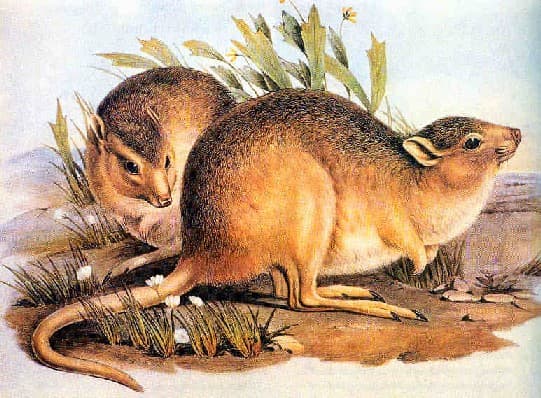
Caloprymnus
The desert rat-kangaroo (Caloprymnus campestris), also known as the buff-nosed rat-kangaroo, was a small, extinct hopping marsupial native to the desert regions of Central Australia. Distinguished by its delicate, slender form, it possessed disproportionately large hind limbs for saltation and a pale, yellowish-brown coat adapted to its arid environment. This species was solitary, built grass-lined nests for shelter, and was primarily herbivorous.
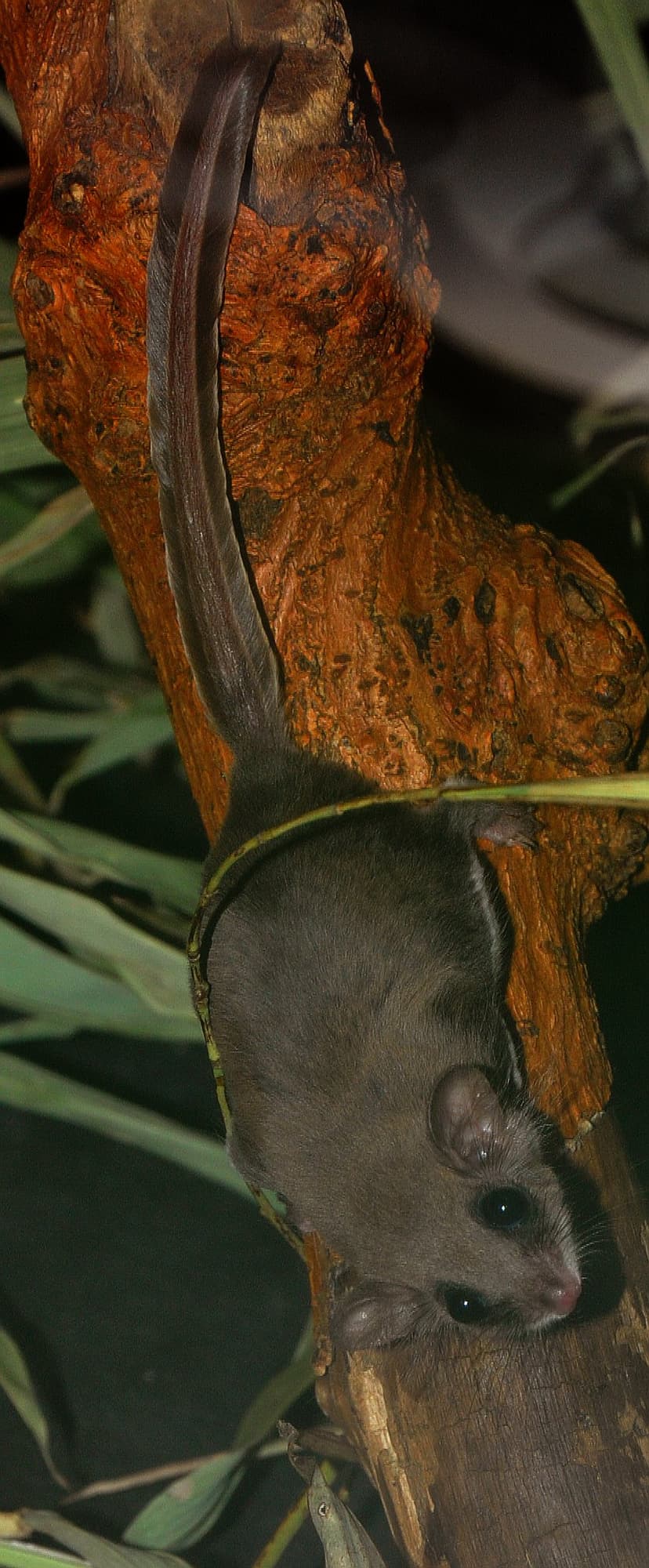
Acrobates
The feathertail glider (Acrobates pygmaeus) is the world's smallest gliding mammal, native to eastern Australia. It is distinguished by its feather-shaped tail and its remarkable ability to climb smooth surfaces, even glass. This nocturnal marsupial is an omnivore, feeding on nectar, pollen, and insects, and is known for its unique adaptation of torpor during cold weather.