
Caluromysiops
Didelphimorphia·fruits and rodents·Least Concern
The black-shouldered opossum (Caluromysiops irrupta) is a marsupial found in the humid forests of western Brazil and southeastern Peru. It is distinguished by its gray coat, gray underbelly, and striking black stripes that run from its forefeet to its hind feet, meeting on its shoulders. This nocturnal and arboreal animal is known to feed on fruits and rodents, with a lifespan in captivity potentially exceeding seven years.
Key Facts
- ›Found in the humid forests of western Brazil and southeastern Peru.
- ›Characterized by a gray coat and distinctive broad black stripes on its back and limbs.
- ›Primarily nocturnal and arboreal, spending much of its time in trees.
- ›Diet consists of fruits and rodents.
- ›Classified as 'least concern' by the IUCN, though deforestation is a potential threat.
- ›Lifespan in captivity can exceed seven years, with up to two young recorded.
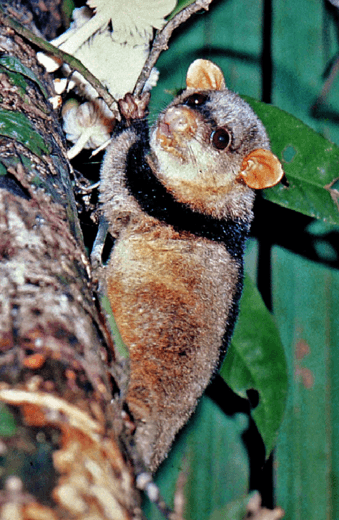
White-Eared Opossum
Brazil, Peru
Humid Forests
- Gray Coat
- Gray Underbelly With Buff-Tipped Hairs
- Broad Black Stripes Extending From Forefeet To Hind Feet, Meeting On Shoulders and Running Along the Midline of the Back
- Indistinct Dark Lines Through the Eyes
- Tail: 60-75% Darker Than Coat Dorsally, Rest Is White, Bushy Except For the Last 75% At the Base
- Soft, Thick, Woolly Fur
- Shorter Rostrum Than Caluromys Species
- Larger Molars Than Caluromys Species
Up To Two Young Have Been Recorded.
Arboreal
About Caluromysiops
What is the Black-Shouldered Opossum?
The black-shouldered opossum, scientifically known as Caluromysiops irrupta, is a species of opossum native to the humid forests of western Brazil and southeastern Peru. It is also referred to by the common name white-eared opossum. This marsupial was first described by Colin Campbell Sanborn in 1951.
Physical Characteristics
This opossum is easily identified by its distinctive coloration. It possesses a gray coat and a gray underbelly, which is further characterized by buff-tipped hairs. Broad black stripes emanate from its forefeet, converge on its shoulders, and continue along the midline of its back, eventually splitting into parallel stripes that extend down its hind feet. Indistinct dark lines are also visible through its eyes. The tail is notably bushy for most of its length, with the posterior 60 to 75 percent being darker than the coat dorsally, while the remainder is white. Its fur is described as soft, thick, and woolly, similar to that of Caluromys species, though it differs in having a shorter rostrum and larger molars.
Ecology and Behavior
Much of the black-shouldered opossum's behavior remains undocumented. However, it is known to be both nocturnal and arboreal, indicating that it is primarily active at night and spends a significant amount of time in trees, particularly on higher branches. Its diet consists of fruits and rodents, with evidence suggesting individual variations in food preferences. In captivity, individuals have been known to live for over seven years, and litters typically contain up to two young.
Distribution and Conservation
The natural range of the black-shouldered opossum is confined to the humid forests of western Brazil and southeastern Peru, with potential occurrences in Bolivia. Sightings near the Peru-Ecuador border are considered less reliable and likely involve captive animals. The species is currently classified by the IUCN as 'least concern' due to its presumed large population and wide distribution. Nevertheless, deforestation is recognized as a significant potential threat to its continued survival.
Source: Wikipedia ↗
Frequently Asked Questions
What is the black-shouldered opossum known for?
The black-shouldered opossum is known for its distinctive physical appearance, featuring a gray coat and broad black stripes that extend from its forefeet to its hind feet. It is also recognized for its nocturnal and arboreal lifestyle within its humid forest habitat.
Where can the black-shouldered opossum be found?
This opossum is native to the humid forests of western Brazil and southeastern Peru. There are also unconfirmed reports near the Peru-Ecuador border, though these are likely based on captive animals.
What does the black-shouldered opossum eat?
The diet of the black-shouldered opossum is known to include both fruits and rodents. Studies suggest individual preferences within its diet.
Is the black-shouldered opossum endangered?
No, the International Union for Conservation of Nature (IUCN) classifies the black-shouldered opossum as 'least concern.' This is due to its wide distribution and presumably large population, although deforestation poses a potential threat.
What is the typical lifespan of a black-shouldered opossum?
While not extensively documented in the wild, the lifespan of the black-shouldered opossum in captivity has been recorded to exceed seven years. Up to two young have been observed in a litter.
Related Marsupials

Caluromys
Caluromys, commonly known as woolly opossums, are a genus of three species belonging to the order Didelphimorphia. These marsupials are characterized by their woolly fur and are found in the diverse ecosystems of Central and South America. They are primarily arboreal and are known for their omnivorous diet.
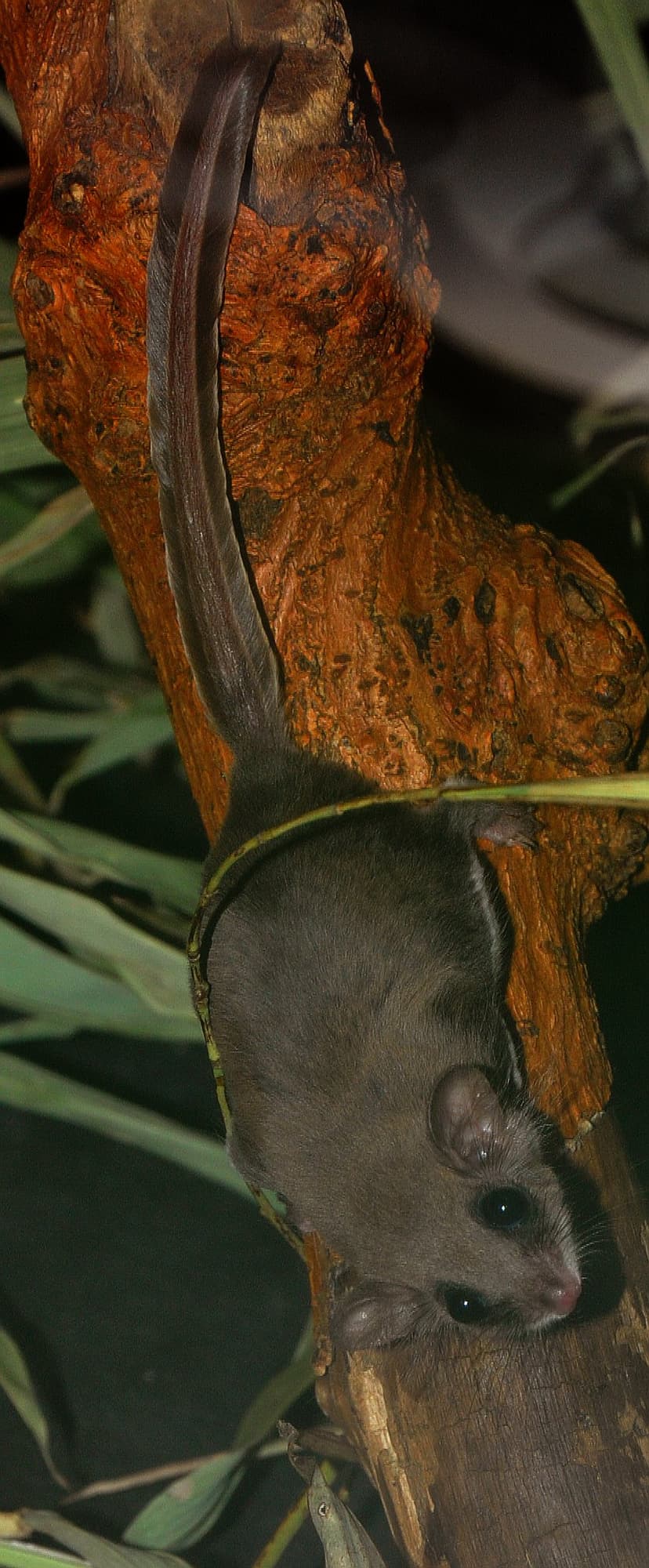
Acrobates
The feathertail glider (Acrobates pygmaeus) is the world's smallest gliding mammal, native to eastern Australia. It is distinguished by its feather-shaped tail and its remarkable ability to climb smooth surfaces, even glass. This nocturnal marsupial is an omnivore, feeding on nectar, pollen, and insects, and is known for its unique adaptation of torpor during cold weather.

Antechinus
Antechinus are a genus of small, mouse-like marsupials endemic to Australia, characterized by their bristly fur. They inhabit forests, woodlands, and grasslands, with most species found along the eastern coast. A distinctive feature of Antechinus is their unusual reproductive strategy, where males experience mass mortality after a short mating period, while females can reproduce multiple times.