
Accursed Mountains
Tectonic collision of the African and Eurasian plates
The Accursed Mountains, also known as Prokletije, are a rugged mountain range in coastal Southeast Europe, forming the southernmost subrange of the Dinaric Alps. This range is notable for its dramatic glacial karst topography, rich biodiversity, and being one of the southernmost glacial masses in Europe. Its challenging terrain and unique geological formations have made it a subject of both scientific interest and local legend.
Key Facts
- ›The Accursed Mountains are the southernmost subrange of the Dinaric Alps.
- ›Maja Jezercë, at 2,694 meters, is the highest peak in the Accursed Mountains and the entire Dinaric Alps.
- ›The range is characterized by steep limestone slopes, abundant karst features, and significant evidence of Pleistocene glaciation.
- ›It is considered one of the wettest areas in Europe, with high annual precipitation.
- ›The Accursed Mountains are a significant center for flora, with numerous endemic and arcto-alpine relict species.
- ›The range hosts a rich fauna, including endangered species like the Balkan lynx and a high diversity of butterflies.

Prokletije, BjeshkëT E Nemuna
Albania, Kosovo, Montenegro
Limestone, Dolomite, Mesozoic Limestone, Jurassic Limestone, Cretaceous Limestone, Late Palaeozoic Rocks, Triassic Rocks, Medium-Triassic Volcanic Rocks, Jurassic Metamorphic Rocks
Alpine, Mediterranean
Scots Pine, Black Pine, Aspens, Mountain Maple, Norway Spruce, Mountain Pine, Snakeskin Pine, Macedonian Pine, Cushion-Sedge, Blue Grass, Alpine Aster, Edelweiss, White Mountain Avens, Tertiary Relic Amphoricarpos Neumayeri, Alpine Wulfenie Variant, Petasites Doerfleri, Albanian Lily, Viola Ducagjinica, Viola Vilaensis, Viola Chelmea, Tertiary Relic Forsythia Europaea
Eurasian Brown Bear, Grey Wolf, Golden Jackal, Red Fox, European Wildcat, Roe Deer, Fallow Deer, Red Deer, Wild Boar, European Otter, Balkan Lynx, Chamois, Mouflon, Golden Eagle, Snake Eagle, Honey Buzzard, Peregrine Falcon, Capercaillie, Rock Partridge, Scops Owl, Eurasian Eagle Owl, Snow Finch, Marble Trout, Alpine Salamander, Fire Salamander, Yellow-Bellied Toad, Fire-Bellied Toad, Fence Lizard, Green Lizard, Greek Tortoise, True Vipers, Horned Viper, Adder, Prokletije Rock Lizard
Tara River, Lim River, VëRmosh River, Drin River, Valbona River, Gashi River, Cem River, Ibar River, Lumbardhi I PejëS River
čAkor Pass
About Accursed Mountains
The Accursed Mountains: A Rugged Alpine Frontier
The Accursed Mountains, known locally as Prokletije or Bjeshkët e Nemuna, are a dramatic and rugged mountain range situated in Southeast Europe, forming the southernmost extension of the vast Dinaric Alps. This formidable range, straddling the borders of Albania, Kosovo, and Montenegro, is renowned for its striking glacial karst topography, characterized by steep limestone cliffs, jagged peaks, and deep valleys carved by ancient glaciers. It is considered one of the wettest areas in Europe, contributing to its lush vegetation and unique ecological features.
Geological Significance and Formation
Geologically, the Accursed Mountains are a product of the colossal collision between the African and Eurasian tectonic plates. This immense geological force resulted in folded rock formations, predominantly composed of Mesozoic limestones and dolomites, with older Palaeozoic and Triassic rocks also present in the eastern sections. The range exhibits pronounced relief differences, with overhanging walls and pointed peaks being typical in its western and central parts, while the eastern mountains are less rugged. The valleys bear the unmistakable marks of Pleistocene glaciation, making these mountains some of the most glaciated in Europe south of the Scandinavian ice sheet. Remarkably, one of the southernmost glacial masses in Europe was discovered in the Albanian part of the range in 2009.
Biodiversity Hotspot
The Accursed Mountains are a critical biodiversity hotspot, particularly for flora. With over 1,600 wild plant species documented in the Albanian section alone, the range is a significant center for arcto-alpine relict flora, hosting a notable proportion of the Balkan Peninsula's ancient glacial flora. Its diverse vegetation ranges from sub-Mediterranean shrubs in lower valleys to alpine meadows and subnivale tundra at higher altitudes. Characteristic flora includes various pine species, aspens, maples, and iconic alpine plants like edelweiss. The fauna is equally rich, supporting large mammals such as the Eurasian brown bear, grey wolf, and the highly endangered Balkan lynx. The range also boasts an exceptional diversity of butterflies and various amphibian and reptile species, including an endemic lizard named after the mountains, the Prokletije rock lizard.
Geography and Notable Features
The range stretches over 60 kilometers, from Lake Skadar to Kosovo, and features numerous massifs and distinct groups. The highest peak, Maja Jezercë, reaches an elevation of 2,694 meters, making it the highest point in the entire Dinaric Alps. Other significant peaks include Gjeravica and Maja Grykat e Hapëta. The landscape is further sculpted by impressive canyons and valleys, such as the Rugova Canyon in Kosovo, which plunges to a depth of 1,000 meters with steep vertical slopes. Numerous glacial lakes, like those in the Buni Jezerce area, dot the landscape, alongside notable waterfalls such as the White Drin Waterfall and the Grunas Waterfall. Several important rivers, including the Tara, Lim, Drin, and Ibar, originate or are fed by tributaries within this mountain system.
Cultural and Historical Context
The name "Accursed Mountains" itself carries a mystique, with local legends offering various explanations for its origin, from the devil's creation to a desperate curse. Historically, the region has been home to diverse tribes, many of whom were sheep herders, and the names of several Albanian tribes are linked to their geographical locations within the range. Despite its challenging terrain, the Accursed Mountains have attracted explorers and climbers, with early ascents of major peaks dating back to the early 20th century. The range remains a destination for tourism, particularly for its natural beauty and opportunities for adventure activities.
Source: Wikipedia ↗
Frequently Asked Questions
What is the meaning of the name "Accursed Mountains"?
The name "Accursed Mountains" is translated from both the Albanian "Bjeshkët e Nemuna" and the Serbo-Croatian "Prokletije." The origin of the name is disputed, with local legends attributing it to the devil, a woman's curse, or Slavic soldiers struggling to traverse the terrain.
Where are the Accursed Mountains located?
The Accursed Mountains are located in coastal Southeast Europe, adjacent to the Adriatic Sea. They extend from northern Albania to western Kosovo and northeastern Montenegro, forming the southernmost part of the Dinaric Alps.
What is the highest peak in the Accursed Mountains?
The highest peak in the Accursed Mountains is Maja Jezercë, which stands at 2,694 meters (8,839 ft). This peak is also the highest point of the entire Dinaric Alps range.
What are the geological features of the Accursed Mountains?
The Accursed Mountains are a typical Dinaric karst high mountain range with a pronounced steep topography and glacial features. They are formed by tectonic collision and feature steep limestone slopes with abundant karst formations, as well as evidence of extensive Pleistocene glaciation.
Are there glaciers in the Accursed Mountains?
Yes, the Accursed Mountains have glaciers. Recent discoveries have identified at least five active glaciers, and evidence of inactive glaciers and extensive glacial erosion from the Pleistocene period. These are among the southernmost glaciers in Europe.
What kind of flora and fauna can be found in the Accursed Mountains?
The Accursed Mountains boast exceptionally rich flora, with many endemic and arcto-alpine relict species, and are a significant center for European flora. The fauna is also diverse, featuring large mammals like the brown bear and wolf, the endangered Balkan lynx, and a notable variety of bird and butterfly species.
Related Mountain ranges

Aberdare ranges
The Aberdare Range is a significant mountain range in west-central Kenya, running north to south and forming part of the eastern rim of the Great Rift Valley. It is a vital water catchment area for Nairobi and for the Tana River, which generates a substantial portion of Kenya's electricity. The range is renowned for its diverse ecosystems, abundant wildlife, and as a protected area within Aberdare National Park.

Ahaggar Mountains
The Ahaggar Mountains, also known as the Hoggar Mountains, are a highland region in the central Sahara desert of southern Algeria. This vast, rocky desert area is significant for its unique biodiversity, ancient geological formations, and rich cultural history, particularly for the Tuareg people. It is home to the highest peak in Algeria, Mount Tahat, and contains the Ahaggar Cultural Park, a protected area of immense ecological and historical importance.
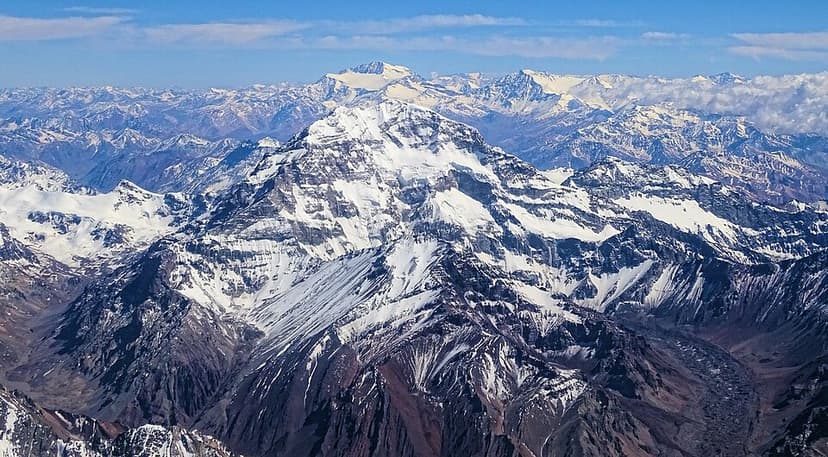
Aconcagua
Aconcagua is the highest mountain in the Americas and the highest peak outside of Asia, located in the Andes mountain range in Mendoza Province, Argentina. It is a significant peak for mountaineers worldwide, often referred to as the highest non-technical mountain, though its extreme altitude presents considerable challenges and risks.