
Alamania
Alamania
Alamania punicea is a small, epiphytic orchid species native to Mexico, and the sole member of its genus. It is distinguished by its ovoid pseudobulbs, leathery leaves, and a terminal inflorescence bearing one to nine vibrant red-orange flowers, typically blooming in the spring and early summer.
Key Facts
- ›It is the only species in the genus Alamania.
- ›Alamania punicea is endemic to Mexico.
- ›The plant is epiphytic, growing on other plants.
- ›Flowers are typically red-orange and appear in spring and early summer.
- ›It prefers a cool climate.
- ›The species has two recognized varieties.

Epiphytic
Red-Orange
Spring, Early Summer
About Alamania
Alamania punicea
Alamania punicea is a species of orchid recognized as the sole member of the genus Alamania. This plant is native to Mexico, where it is found growing as an epiphyte, meaning it typically attaches to and grows on other plants, such as trees.
Description and Growth
As a small, epiphytic plant, Alamania punicea prefers a cool climate for optimal growth. It features an ovoid pseudobulb from which 2 to 3 leathery, oblong-elliptic leaves emerge. These leaves are obtuse, articulate, and broad at the base, contributing to the plant's compact structure.
Flowering
The orchid produces an erect, terminal inflorescence that takes on a cluster-like appearance. This inflorescence can bear anywhere from one to nine flowers, which are characteristically red-orange. The blooming period for Alamania punicea occurs in the spring and extends into the early summer.
Varieties
Alamania punicea is known to have two recognized varieties:
- Alamania punicea subsp. greenwoodiana: Found in the Mexican states of Hidalgo, Oaxaca, Puebla, Querétaro, San Luis Potosí, and Veracruz.
- Alamania punicea subsp. punicea: Occurs within a similar geographical range.
Due to its specific habitat and growth requirements, Alamania punicea is a notable species within Mexican orchid flora.
Source: Wikipedia ↗
Frequently Asked Questions
What is Alamania punicea?
Alamania punicea is a species of orchid and the only member of the genus Alamania. It is known for its small size and epiphytic growth habit.
Where is Alamania punicea found?
This orchid species is endemic to Mexico. It has a range that includes states such as Hidalgo, Oaxaca, Puebla, Querétaro, San Luis Potosí, and Veracruz.
What do Alamania punicea flowers look like?
The flowers of Alamania punicea are typically red-orange in color. The inflorescence can bear between one and nine flowers and is erect and cluster-shaped.
When does Alamania punicea bloom?
Alamania punicea produces its flowers during the spring and early summer months. The flowering season is a notable characteristic of this species.
What are the growing conditions for Alamania punicea?
Alamania punicea is a small, epiphytic plant that thrives in a cool climate. Its leaves are leathery and oblong-elliptic in shape.
Related Orchid species

Brassavola
Brassavola is a genus of 21 orchid species, named in honor of Antonio Musa Brassavola, an Italian nobleman and physician. These orchids are widespread across Mexico, Central America, the West Indies, and South America, distinguished by their succulent leaves and fragrant, nocturnal blooms. They are primarily epiphytic, with a few also growing as lithophytes.
Catasetum
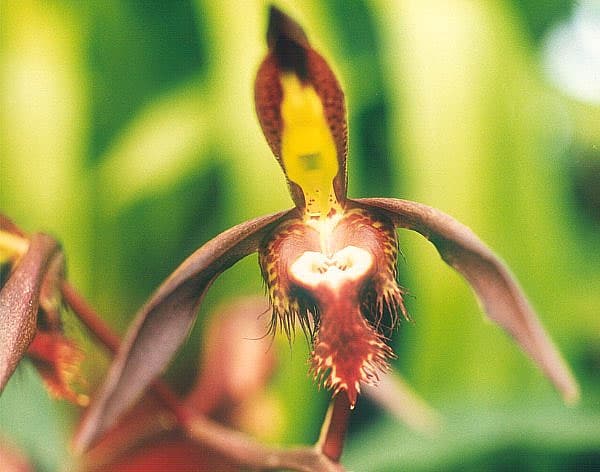
Catasetum is a genus of showy epiphytic orchids belonging to the family Orchidaceae. Native to regions spanning from Mexico to Argentina, many species are highly valued in horticulture for their striking flowers. A distinctive characteristic of Catasetum is its unisexual flowers, with male and female blooms often appearing on separate plants, a phenomenon that historically puzzled botanists until explained by Charles Darwin.
Coryanthes
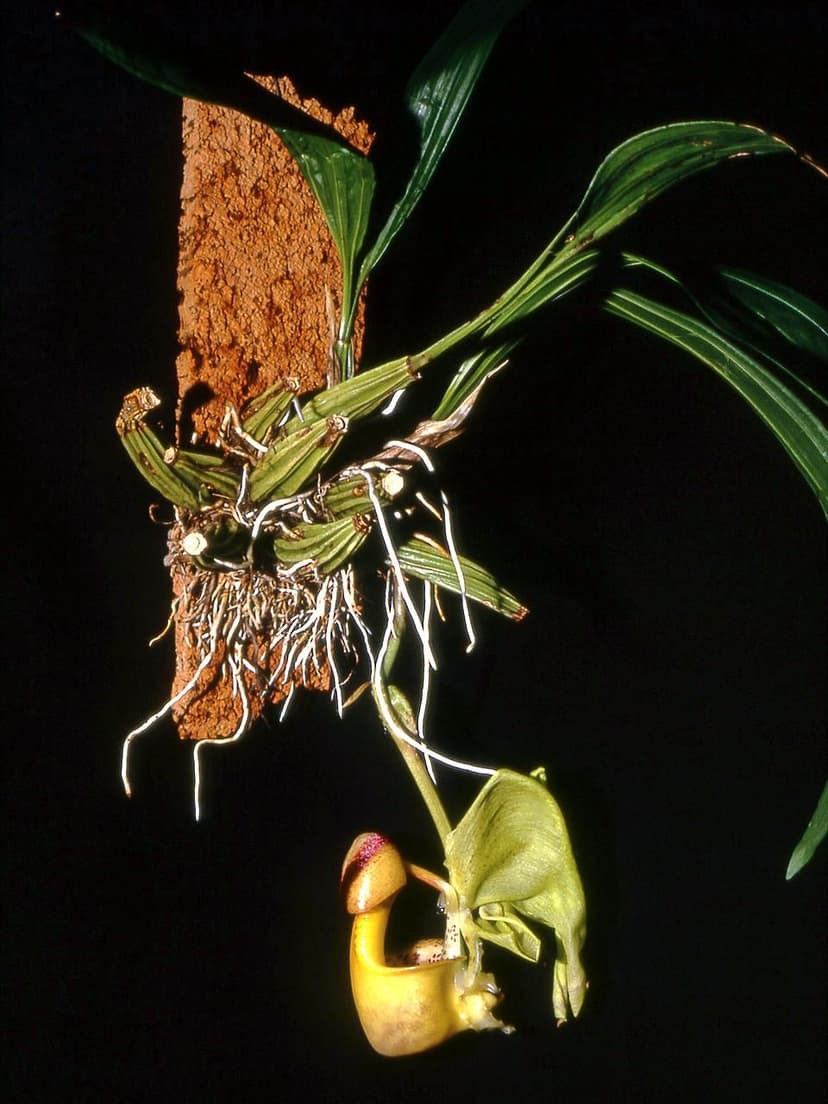
Coryanthes, commonly known as bucket orchids, is a genus of neotropical epiphytic orchids native to South America, Central America, Mexico, and Trinidad. These orchids are renowned for their intricate coevolutionary relationship with male orchid bees, which are essential for their reproduction through a unique pollination mechanism involving a fluid-filled bucket-shaped lip.