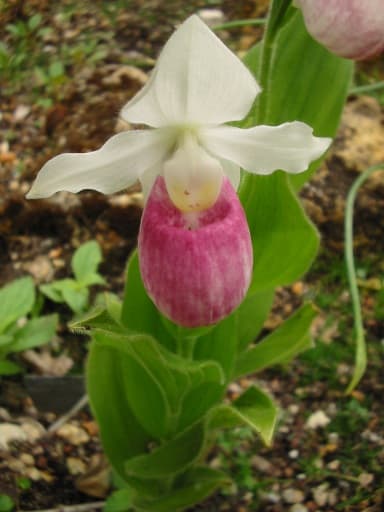
Anacamptis
Anacamptis
Anacamptis is a genus of terrestrial orchids in the family Orchidaceae, known for their distinctive hooded flowers. Derived from the Greek word "anakamptein," meaning "to bend backwards," the genus is found across Eurasia, thriving in grasslands, limestone deposits, or dunes. Historically, many Anacamptis species were classified under the broader genus Orchis before being separated in the late 20th century.
Key Facts
- ›Anacamptis species are terrestrial orchids found in grasslands, limestone, chalk deposits, or dunes.
- ›The genus scientific name originates from the Greek word "anakamptein," meaning "to bend backwards."
- ›Anacamptis contains about one-third of the species formerly placed in the genus Orchis.
- ›A distinguishing feature of Anacamptis from Orchis is the basal fusion of the three sepals.
- ›The genus is distributed across Eurasia, from the Mediterranean region to Central Asia.
- ›The pyramidal orchid (Anacamptis pyramidalis) is the type species for the genus.

Pyramidal Orchid, Green-Winged Orchid, Green-Veined Orchid, Loose-Flowered Orchid, Lax-Flowered Orchid, Jersey Orchid, Butterfly Orchid
Eurasia, Mediterranean Region, Central Asia
Terrestrial
About Anacamptis
Anacamptis is a genus of flowering plants belonging to the orchid family, Orchidaceae. These are terrestrial orchids, meaning they grow in the ground rather than on trees or rocks. The genus name itself is derived from the Greek word "anakamptein," which translates to "to bend backwards," likely referencing a characteristic physical trait of the flowers.
Distribution and Habitat
The natural range of Anacamptis species extends across Eurasia, from the Mediterranean region eastward into Central Asia. They are typically found in open habitats such as grasslands, on limestone or chalky soils, and also colonize sand dunes. This adaptability to varied terrestrial environments contributes to their widespread presence.
Taxonomy and Classification
Established by Louis Claude Richard in 1817, the genus Anacamptis now encompasses approximately one-third of the species that were previously classified under the broader genus Orchis. This reclassification occurred following the division of Orchis at the end of the 20th century. A notable characteristic that distinguishes Anacamptis from Orchis is the basal fusion of its three sepals. The genus often exhibits a diploid chromosome number of either 32 or 36.
Species and Hybrids
As of May 2014, the World Checklist of Selected Plant Families recognized eleven species within the Anacamptis genus, with some species having recognized subspecies. Notable species include Anacamptis pyramidalis (the pyramidal orchid), Anacamptis morio (the green-winged orchid), and Anacamptis papilionacea (the butterfly orchid). The genus is also known to form hybrids, both within the genus (nothospecies) and with closely related genera such as Serapias, Platanthera, Dactylorhiza, Gymnadenia, and Ophrys.
Source: Wikipedia ↗
Frequently Asked Questions
What is the meaning of the scientific name Anacamptis?
The scientific name Anacamptis is derived from the Greek word "anakamptein," which translates to "to bend backwards." This name likely refers to a characteristic feature of the orchid's flower structure.
Where are Anacamptis orchids found naturally?
Anacamptis orchids are terrestrial plants that occur naturally in Eurasia. Their habitats include grasslands, limestone or chalk deposits, and dunes, with a distribution ranging from the Mediterranean region eastward to Central Asia.
What is the relationship between Anacamptis and the genus Orchis?
Anacamptis was established as a distinct genus in 1817. It now includes about one-third of the species that were previously classified under the genus Orchis, a change that occurred following the splitting of Orchis at the end of the 20th century.
What are some common names for Anacamptis species?
Some common names associated with Anacamptis species include the pyramidal orchid for *A. pyramidalis*, the green-winged orchid or green-veined orchid for *A. morio*, and the butterfly orchid for *A. papilionacea*. The loose-flowered orchid or lax-flowered orchid is also a common name for *A. laxiflora*.
How can Anacamptis be distinguished from the genus Orchis?
A key characteristic used to differentiate Anacamptis from Orchis is the basal fusion of the three sepals. This feature is present in Anacamptis species, whereas it is absent in many Orchis species.