
Artorima
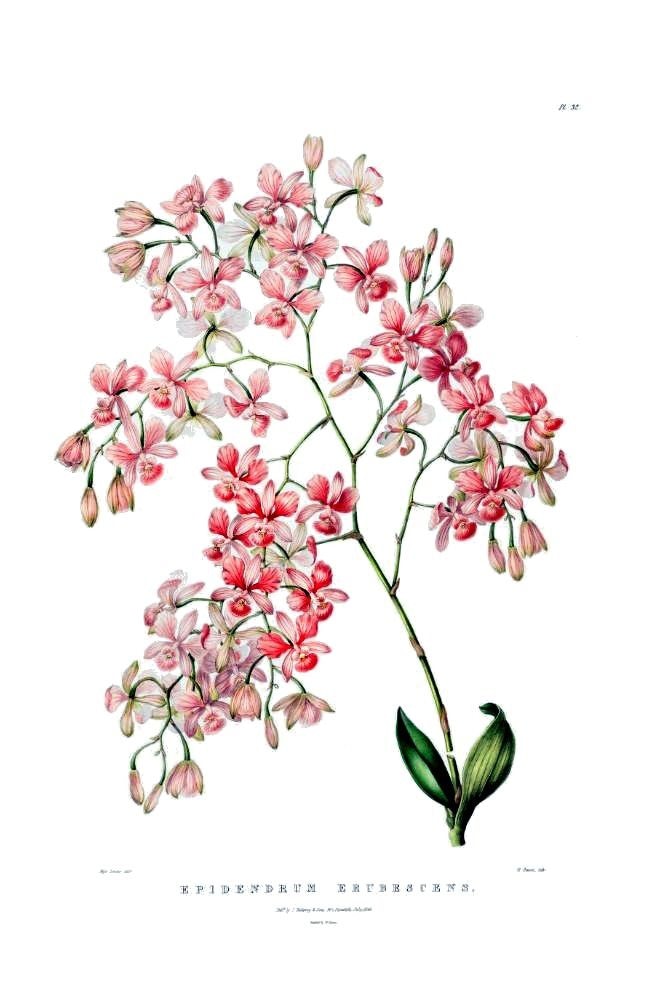
Artorima is a genus of flowering plants in the orchid family, known for its single species, Artorima erubescens. This epiphytic orchid originates from the high-altitude cloud forests of southern Mexico, specifically Guerrero and Oaxaca. It is distinctive for its large, fragrant flowers that bloom from winter through early spring.
Key Facts
- ›Artorima erubescens is the only known species in the genus Artorima.
- ›It is an epiphytic orchid, meaning it grows on other plants.
- ›The plant features large, fragrant flowers that bloom from winter to early spring.
- ›It is found in the high-elevation cloud forests of Guerrero and Oaxaca in southern Mexico.
- ›Flowers can range from a few to many (6-100) on a loose terminal panicle.
- ›Leaves are elliptic to oblong-lanceolate and can be quite long, measuring 20-120 cm.
Epiphytic
Winter, Early Spring
About Artorima
Artorima is a genus recognized within the Orchidaceae family, comprising flowering plants. As of current botanical records, only one species has been identified within this genus: Artorima erubescens.
Description and Growth
Artorima erubescens is characterized as an epiphytic orchid, meaning it naturally grows upon other plants, typically trees, rather than in the ground. The plant features a thick rhizome and a broad, conical-ovoid pseudobulb. From this structure arise 3 to 6 leaves, which are elliptic to oblong-lanceolate in shape and can range significantly in length, from 20 to 120 cm. The inflorescence is a loose terminal panicle that bears numerous flowers, potentially numbering between 6 and 100. These flowers are noted for their fragrance.
Distribution and Habitat
This orchid species is found exclusively in the high-altitude cloud forests of the Mexican states of Guerrero and Oaxaca. It inhabits the highest peaks within these regions, typically at elevations ranging from 2,400 to 3,100 meters. The environment is described as cool, suitable for cold-growing orchids.
Flowering Period
The blooming season for Artorima erubescens spans from winter through to early spring. During this period, the plant produces its fragrant floral displays.
Source: Wikipedia ↗
Frequently Asked Questions
What is Artorima erubescens?
Artorima erubescens is a species of flowering plant belonging to the genus Artorima within the orchid family, Orchidaceae. It is the only known species currently described in this genus.
Where does Artorima erubescens grow naturally?
This orchid species is native to the ever-cloud forests of Guerrero and Oaxaca in southern Mexico. It thrives at high elevations, typically between 2,400 and 3,100 meters, in cool growing conditions.
What are the characteristics of Artorima erubescens flowers?
Artorima erubescens produces fragrant flowers on a loose terminal panicle, which can contain anywhere from a few to as many as 100 blooms. These flowers are known to bloom during the winter through early spring months.
How does Artorima erubescens grow?
As an epiphytic orchid, Artorima erubescens grows on other plants, such as trees, rather than in the soil. It has a thick rhizome and stout pseudobulbs from which its leaves emerge.
Related Orchid species
Aerides
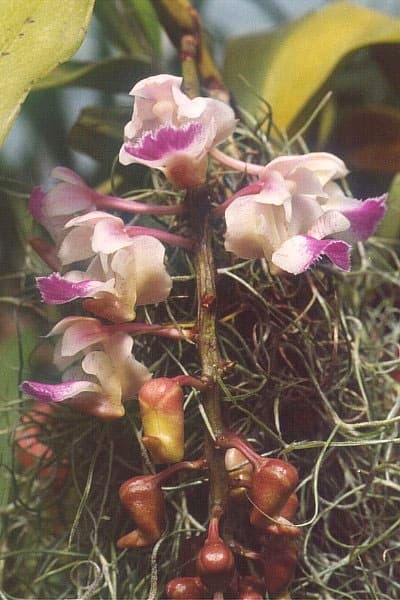
Aerides, commonly known as cat's-tail orchids and fox brush orchids, is a genus of tropical epiphytic orchids native to Asia. These orchids are highly valued in horticulture for their showy, fragrant, and long-lasting flowers, which typically appear in racemes and are often white with colorful edges.
Koellensteinia
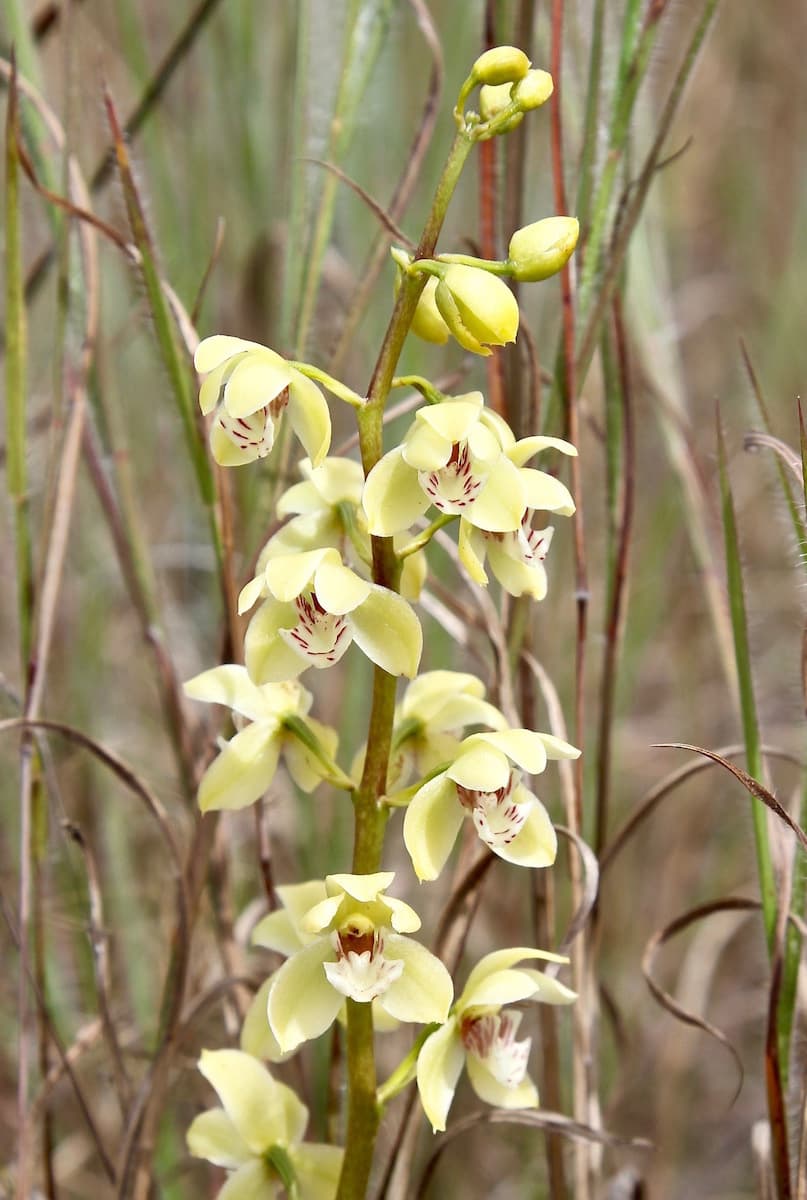
Koellensteinia is a genus of approximately 19 orchid species native to South America, Belize, Trinidad, and Puerto Rico. These plants are characterized by their short, leafy stems, often forming pseudobulbs, and produce small to medium-sized, fragrant flowers that are typically yellow or white, often with magenta or violet barring. They are found in low to mid-elevation forests and are cultivated under intermediate conditions with moderate shade and high humidity.
Ancistrochilus
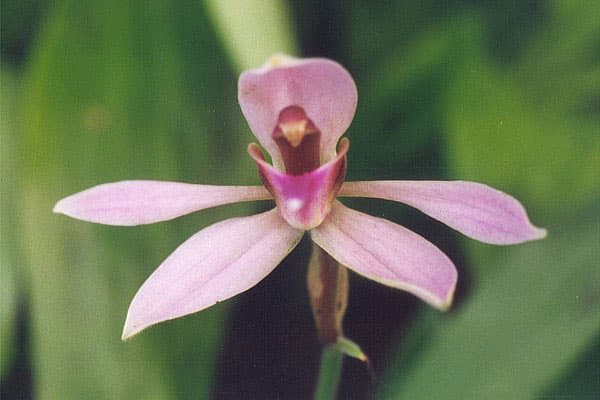
Ancistrochilus is a small genus of orchids, recognized for its large, fragrant flowers with striking rose-pink petals and sepals and magenta lips. These sympodial epiphytic plants are native to tropical West Africa, extending to Tanzania and Uganda, where they grow on tree trunks and branches at moderate elevations.