
Bletilla
Bletilla·none
Bletilla, commonly known as the urn orchid, is a temperate, terrestrial orchid genus found across East Asia and Southeast Asia. Its pseudobulbs resemble spreading corms, and the plants are characterized by pleated leaves and racemes of flowers that emerge in spring and early summer, varying in color from white to purple. Bletilla striata, the most common species, is particularly noted for its hardiness and ease of cultivation.
Key Facts
- ›Bletilla is a terrestrial orchid genus with pseudobulbs resembling spreading corms.
- ›The genus is distributed through China, Japan, Taiwan, Vietnam, Thailand, and Myanmar.
- ›Flowers emerge from the center of new growth before it matures, typically in spring and early summer.
- ›Flower colors range from white to purple, and all species possess four pollinia.
- ›Bletilla striata is widely cultivated, known for its hardiness and rose-mauve flowers.
- ›The tubers are grayish-white or yellowish-white, with a hard texture and concentric rings.
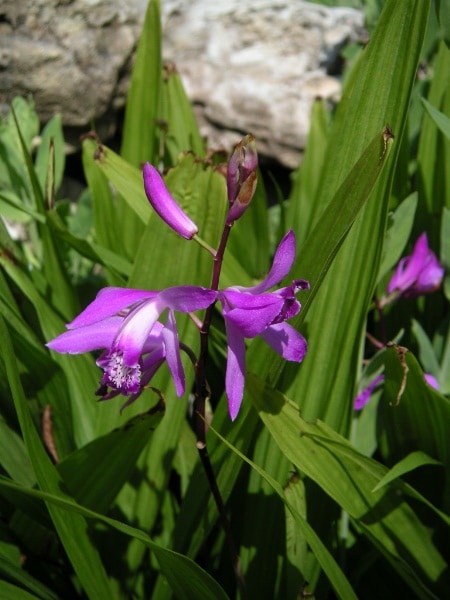
Urn Orchid, Hardy Orchid, Chinese Ground Orchid
Terrestrial
Spring, Early Summer, Late Spring
Well-Drained Media, Soil High In Organic Material
About Bletilla
Bletilla, commonly recognized as the urn orchid, is a genus of terrestrial orchids thriving in temperate climates. The genus is native to a wide geographic range encompassing East Asia and Southeast Asia, including China, Japan, Taiwan, Vietnam, Thailand, and Myanmar. The name 'Bletilla' is a diminutive of the New World genus Bletia, reflecting a morphological resemblance between the two.
Morphology and Growth
Plants in the Bletilla genus possess pseudobulbs that are described as spreading corms, typically situated at or near ground level. Each pseudobulb usually supports several leaves that are pleated and can reach lengths of approximately 40 cm. The flower racemes emerge from the center of new growth before it fully matures, typically during the spring and early summer months. The flowers themselves display a range of colors, from white to shades of purple, and all recognized species share the characteristic of having four pollinia.
Tubers
The tubers of Bletilla orchids are distinctively horn- or claw-shaped, presenting a grayish-white or yellowish-white appearance. They are marked with concentric rings and feature brown rootlets, possessing a hard texture that makes them resistant to easy breakage. These tubers are a key feature of the genus's underground structure.
Species and Cultivation
As of recent botanical acceptance, the genus Bletilla comprises five recognized species, with several others having been formerly placed within it. The most commonly encountered species in cultivation and trade is Bletilla striata. This species is often labeled as 'Hardy Orchid' or 'Chinese Ground Orchid' due to its resilience and ease of growth. It was one of the earliest orchids introduced to cultivation in England around 1794. Bletilla striata is a deciduous orchid whose sympodial root system is flat and knob-like. Established plants frequently produce flower spikes before their leaves fully develop, bearing up to fourteen rose-mauve flowers with a ruffled lip, which are scentless and likened to miniature Cattleya blooms. These plants rarely exceed two feet in height and are surprisingly hardy, capable of surviving in ground zones as cold as USDA Zone 5 with adequate mulch. Unlike many tropical orchids, B. striata exhibits attractive foliage even when not in bloom. Other species, such as Bletilla ochracea, are less common but are becoming more available to collectors, noted for their distinct yellow sepals and petals with a red-marked white lip.
Cultivation of Bletilla species generally involves keeping them in pots of well-drained media to prevent water from accumulating around the roots during their winter dormancy. Watering should be done sparingly at the start of the growing season, as new roots may take time to develop. They prefer well-draining, consistently moist soils rich in organic material, avoiding conditions that are either too dry or waterlogged. While generally hardy, some species may require protection from severe frost. For potted plants, a frost-free location is advisable if winter temperatures drop below freezing.
Source: Wikipedia ↗
Frequently Asked Questions
What is Bletilla commonly called?
Bletilla is commonly known as the urn orchid. The species Bletilla striata is also frequently referred to as 'Hardy Orchid' or 'Chinese Ground Orchid'.
Where are Bletilla orchids native to?
Bletilla orchids are native to a broad region including China, Japan, Taiwan, south to Vietnam, Thailand, and Myanmar. Specific species have more localized distributions within these areas.
What do Bletilla orchids look like?
They have pseudobulbs that resemble spreading corms, usually situated at ground level. Each pseudobulb typically supports several pleated leaves about 40 cm long. Their flowers emerge in racemes, varying in color from white to purple.
What are the cultivation requirements for Bletilla orchids?
Bletilla species are generally hardy terrestrial orchids that prefer well-drained, evenly moist soils high in organic material. They should be kept in pots with well-drained media to avoid waterlogging roots during winter dormancy. Protection from severe frost is recommended for some species.
Is Bletilla striata easy to grow?
Yes, Bletilla striata has a strong reputation for being one of the easiest orchids for beginners to cultivate. It is a hardy, deciduous orchid that grows in soil and does not require the specialized care often associated with tropical epiphytic orchids.
What is the typical flower size of Bletilla striata?
Flowers of Bletilla striata typically have a diameter of about 30 mm (1.2 inches). These flowers are often described as rose-mauve with a ruffled lip and resemble miniature Cattleya orchid flowers.
Related Orchid species
Erythrorchis
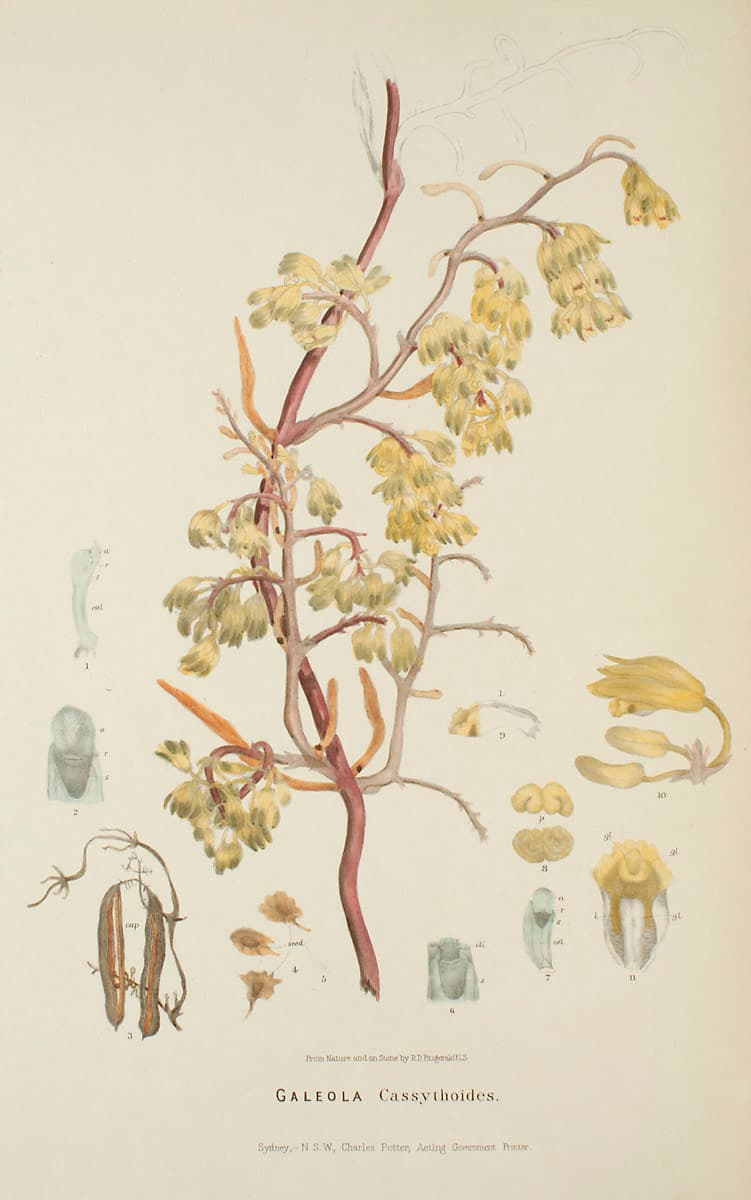
Erythrorchis, also known as bootlace orchids or by its Chinese name 倒吊兰属 (dao diao lan shu), is a genus of two species of climbing, leafless orchids in the Orchidaceae family. These myco-heterotrophic vines cling to tree trunks with small roots and produce densely crowded flowers on branched stems, distinguished by their fleshy sepals and petals and a wide labellum.

Arundina
Arundina graminifolia, commonly known as the bamboo orchid, is a terrestrial orchid species native to tropical Asia. It is distinguished by its reedy stems, grass-like leaves, and showy, lilac and white flowers with a purple lip. This species has also naturalized in various regions worldwide and holds medicinal value in traditional Chinese medicine.

Aplectrum
Aplectrum hyemale, commonly known as putty root or Adam and Eve, is a unique orchid species found in eastern North America. It is distinguished by its singular, season-spanning leaf with striking silvery-white and green stripes, and its small, spurless flowers that bloom in late spring. The species is notable for its ability to self-pollinate and its underground tuber system that allows it to form large colonies.