
Chiloglottis
Chiloglottis
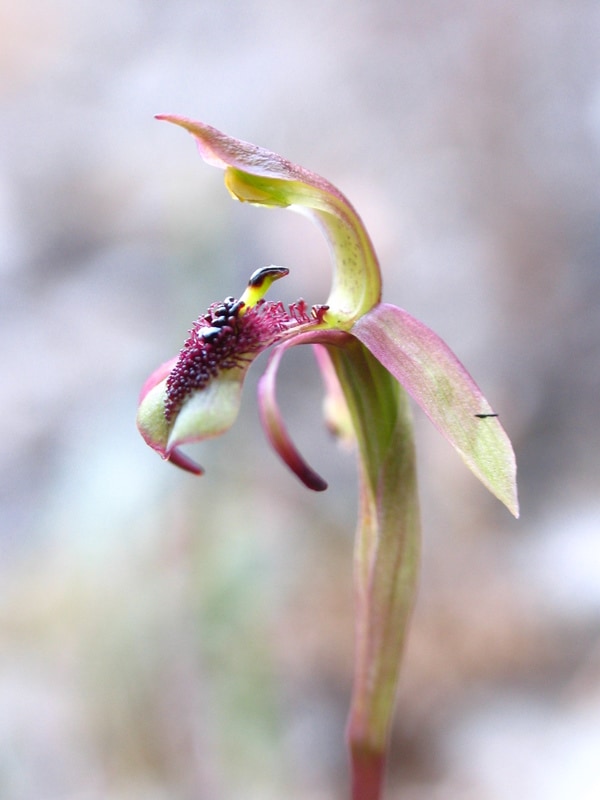
Chiloglottis, commonly known as wasp orchids, ant orchids, or bird orchids, is a genus of approximately 25 terrestrial flowering plants in the orchid family, Orchidaceae. These orchids are native to eastern Australia and New Zealand and are distinguished by their single, resupinate flower with a diamond-shaped labellum featuring calli that mimic the body of a wingless female wasp, attracting male thynnine wasps for pollination.
Key Facts
- ›Chiloglottis is a genus of about 25 species in the orchid family.
- ›They are found in eastern Australia and New Zealand.
- ›Wasp orchids are terrestrial herbs that grow in colonies.
- ›The flowers typically have a diamond-shaped labellum with calli resembling a wingless female wasp.
- ›Pollination occurs through sexual deception of thynnine wasps, except for self-pollinating species.
- ›Each orchid species is pollinated by a specific species of wasp.
Wasp Orchids, Ant Orchids, Bird Orchids
Terrestrial
Thynnine Wasps
About Chiloglottis
Chiloglottis, commonly referred to as wasp orchids, ant orchids, or bird orchids, represents a genus of approximately 25 species within the orchid family, Orchidaceae. These plants are native to the eastern regions of Australia and New Zealand, including its offshore islands such as Chatham Island and the Antipodes Islands. Chiloglottis are characterized as terrestrial herbs, often found growing in colonies of genetically identical individuals. A distinctive feature of the genus is its single, resupinate (upside-down) flower, which possesses a labellum that is typically diamond-shaped. This labellum is adorned with calli that bear a striking resemblance to the body of a wingless female wasp, a key element in their unique pollination strategy.
Ecology and Pollination
The reproductive success of most Chiloglottis species relies on a fascinating form of pollination known as sexual deception, or pseudocopulation. Male thynnine wasps are drawn to the flowers by wind-borne pheromones released from glands on the sepals, which mimic the scent of female wasps. Upon arrival, the male wasp attempts to mate with the flower, mistaking the labellum's calli for a female. This interaction inadvertently leads to pollination, as the wasp's body comes into contact with the orchid's reproductive structures. A remarkable aspect of this mechanism is that each species of Chiloglottis orchid is pollinated by a distinct species of wasp, demonstrating a high degree of co-evolution. The process involves the male wasp either landing on the labellum directly or crawling over it in search of the perceived female. During these attempts, pollinia (pollen masses) are either transferred to the stigma if the wasp is already carrying them from another orchid, or they are collected by the flower's sticky rostellum and then attached to the wasp's thorax for transport to another flower.
Taxonomy
The genus Chiloglottis was first formally described by Robert Brown in 1810, who also described Chiloglottis diphylla as its type species. While taxonomic revisions have proposed moving certain species, particularly those known as "bird orchids" (Simpliglottis) and "ant orchids" (Myrmechila), to different genera, these changes have not gained widespread acceptance within the botanical community. The genus continues to be recognized for its unique floral morphology and specialized pollination syndrome.
Source: Wikipedia ↗
Frequently Asked Questions
What are Chiloglottis orchids commonly called?
Chiloglottis orchids are commonly known as wasp orchids, ant orchids, or bird orchids. These names reflect their appearance and their unique pollination method.
Where are Chiloglottis orchids found naturally?
This genus of orchids is native to Australia and New Zealand, including islands like Chatham Island and the Antipodes Islands. They are typically found growing in terrestrial colonies.
How do Chiloglottis orchids attract pollinators?
The flowers of Chiloglottis orchids attract male thynnine wasps through a process of sexual deception. Glands on the sepals release wind-borne pheromones that mimic those of female wasps, luring the males to the flower.
What is special about the Chiloglottis flower's labellum?
The labellum, or lip, of the Chiloglottis flower is typically diamond-shaped. It features calli that closely resemble the body of a wingless female wasp, which is crucial for attracting male wasps.
Are all Chiloglottis species pollinated by wasps?
Most Chiloglottis species are pollinated by thynnine wasps through sexual deception. However, Chiloglottis cornuta is an exception and is known to be self-pollinating.
Related Orchid species

Calochilus
Calochilus, commonly known as beard orchids, is a genus of approximately 30 terrestrial orchid species belonging to the family Orchidaceae. These orchids are distinctive for their densely hairy labellum, which gives them their common name. Primarily found in Australia, with some species extending to New Zealand, New Guinea, and New Caledonia, they are terrestrial herbs that typically have a single leaf or are leafless, and reproduce through self-pollination if cross-pollination fails.

Corybas
Corybas, commonly known as helmet orchids, is a genus of about 120 species of small, perennial, terrestrial herbs in the orchid family. Native to a wide range including Australia, New Zealand, Southeast Asia, and the Himalayas, these orchids are distinctive for their single, fungus-like flower, dominated by a large dorsal sepal and labellum, often resembling a helmet.
Cryptostylis
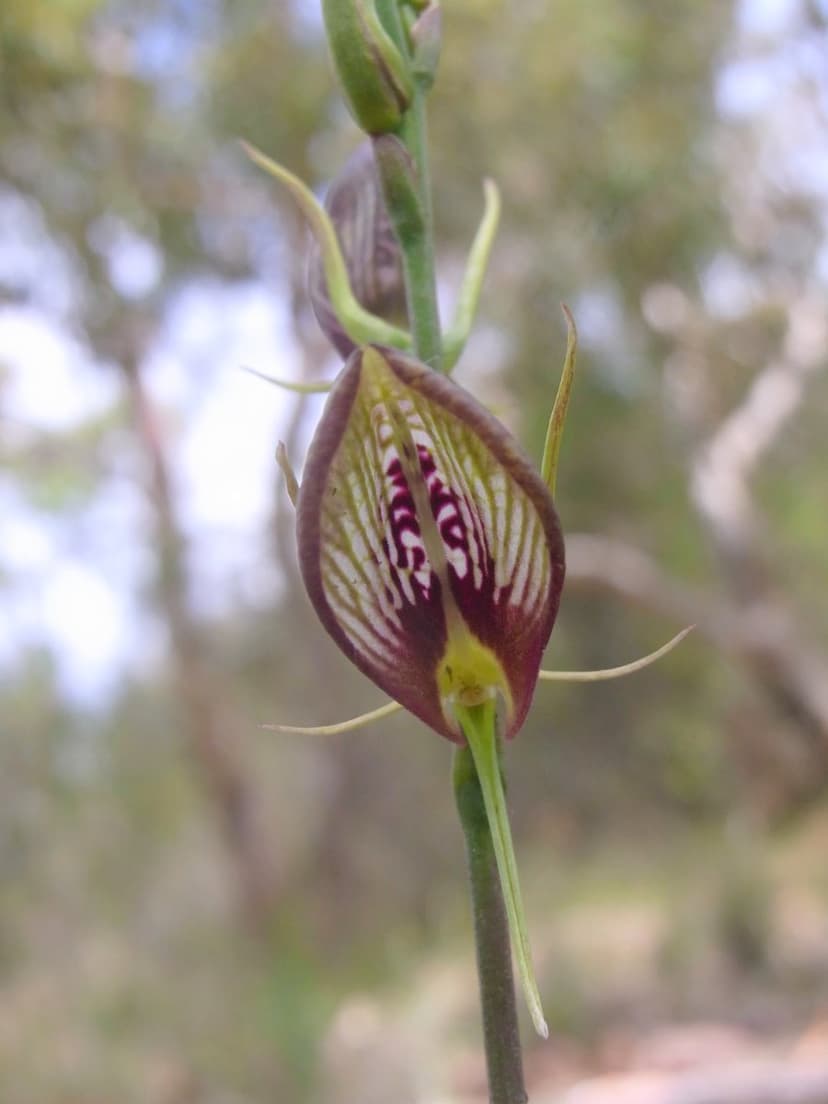
Cryptostylis, commonly known as tongue orchids, is a genus of terrestrial orchids found in South Asia, Southeast Asia, and the South Pacific. These orchids are distinguished by their prominent labellum, which is the most conspicuous part of the flower, and their unique pollination strategy involving wasps attempting to mate with the flowers. At least some species are pollinated through a process called pseudocopulation, where male wasps mistake the flower for a female wasp.