
Chiloschista
Chiloschista
Chiloschista is a genus of orchids known for being typically leafless, with flat, green, photosynthetic roots. These epiphytic or lithophytic plants are found across India, Southeast Asia, and Australia, producing small, short-lived flowers arranged on long stems. The genus name itself reflects the distinctive split or divided nature of the labellum's lip.
Key Facts
- ›Typically leafless orchids with green, photosynthetic roots.
- ›Found in India, Southeast Asia, and Australia.
- ›Flowers are small, resupinate, and short-lived, lasting only a few hours to two days.
- ›The labellum has three lobes, with erect side lobes larger than the slipper-shaped middle lobe.
- ›Grows as an epiphyte (on trees) or lithophyte (on rocks).

Starfish Orchids
Epiphytic, Lithophytic
About Chiloschista
Chiloschista, commonly referred to as starfish orchids, is a genus of orchids recognized for its typically leafless nature. These plants are characterized by their flat, green, photosynthetic roots that radiate from a short, central rhizome, enabling them to thrive without prominent leaves.
Geographic Distribution and Habitat
The natural range of Chiloschista orchids extends across India, Southeast Asia, and Australia. Within these regions, they predominantly adopt an epiphytic or lithophytic growth habit, meaning they grow on other plants, usually trees, or on rocks, respectively. This adaptation allows them to access sunlight and air circulation in their native environments.
Floral Characteristics
The flowers of Chiloschista are a notable feature, despite their small size and short duration. They are arranged on long, thin flowering stems and open sporadically in groups, lasting only a few hours to one or two days. The flowers are resupinate, with sepals and petals that are similar in size and shape. The labellum, or lip, is distinctively three-lobed, featuring erect side lobes that are larger than the middle lobe, which is characteristically slipper-shaped. The genus name itself, derived from Greek words for 'lip' and 'split,' directly references this unique labellum structure.
Taxonomy and Diversity
Established in 1832 by John Lindley, the genus Chiloschista currently encompasses approximately 30 accepted species according to Plants of the World Online. This diversity includes species such as Chiloschista phyllorhiza, known as the white starfish orchid and found in Australia, and many others described across its native regions. While specific details on their fragrance or precise blooming seasons are not universally documented for all species, their ephemeral blooms and unique root systems make them subjects of interest for orchid enthusiasts.
Source: Wikipedia ↗
Frequently Asked Questions
What are Chiloschista orchids?
Chiloschista are a genus of orchids characterized by their usually leafless appearance, relying on flat, green roots for photosynthesis. They are typically found growing on trees or rocks in various parts of Asia and Australia.
Where do Chiloschista orchids grow naturally?
These orchids are native to a broad geographic range that includes India, Southeast Asia, and Australia. Within these regions, they adapt to growing in epiphytic or lithophytic conditions.
What do Chiloschista flowers look like?
Chiloschista flowers are small and resupinate, meaning they are upside down. They feature sepals and petals that are similar in size and shape, differing from a distinctive three-lobed labellum. The side lobes of the labellum are erect and larger than the middle, slipper-shaped lobe.
How long do Chiloschista flowers last?
The blooms of Chiloschista orchids are ephemeral, typically lasting for only a few hours to one or two days. They tend to open sporadically in small groups on long, thin flowering stems.
What does the name Chiloschista mean?
The name Chiloschista is derived from Ancient Greek words. 'Cheilos' translates to 'lip' or 'rim,' and 'schistos' means 'split' or 'divided,' referring to the characteristic structure of the orchid's labellum.
Related Orchid species
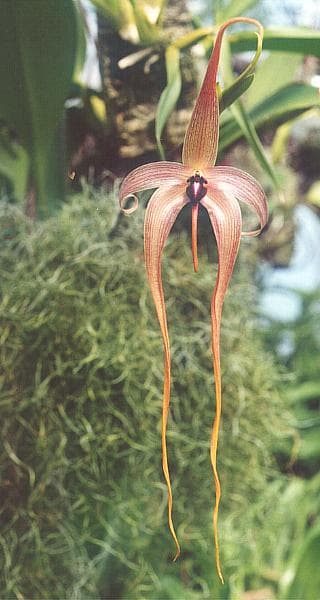
Bulbophyllum
Bulbophyllum is a large genus of orchids primarily found in warmer regions of the world, known for their diverse habitats and unique floral mechanisms. Characterized by creeping rhizomes and pseudobulbs, these orchids exhibit a wide range of flower forms and often emit strong odors to attract pollinators.

Corybas
Corybas, commonly known as helmet orchids, is a genus of about 120 species of small, perennial, terrestrial herbs in the orchid family. Native to a wide range including Australia, New Zealand, Southeast Asia, and the Himalayas, these orchids are distinctive for their single, fungus-like flower, dominated by a large dorsal sepal and labellum, often resembling a helmet.
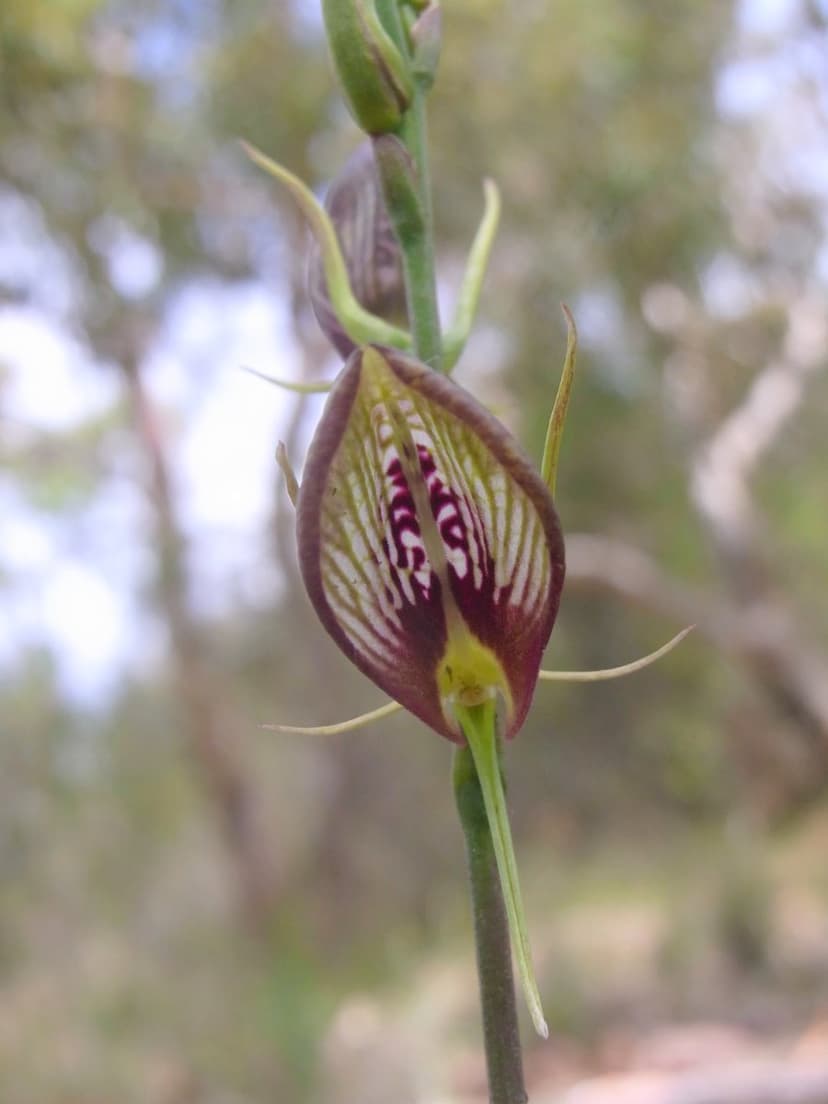
Cryptostylis
Cryptostylis, commonly known as tongue orchids, is a genus of terrestrial orchids found in South Asia, Southeast Asia, and the South Pacific. These orchids are distinguished by their prominent labellum, which is the most conspicuous part of the flower, and their unique pollination strategy involving wasps attempting to mate with the flowers. At least some species are pollinated through a process called pseudocopulation, where male wasps mistake the flower for a female wasp.