
Cyrtorchis
Cyrtorchis is a genus of fragrant orchids native to Africa, belonging to the Orchidaceae family. These plants are characterized by their white, star-shaped flowers that are distinctly spurred and utilize crassulacean acid metabolism for water conservation. The genus is divided into two sections based on the structure of the viscidium, with 19 accepted species.
Key Facts
- ›Cyrtorchis species are epiphytic or lithophytic herbs, lacking pseudobulbs.
- ›Their flowers are white, star-shaped, fragrant, and distinctly spurred.
- ›These orchids employ crassulacean acid metabolism (CAM) photosynthesis to conserve water.
- ›The genus is native to Africa and is found in dense forests, rainforests, and plantations.
- ›Several species have varying conservation statuses, including Least Concern, Endangered, and near Threatened.
- ›Cyrtorchis species are generally easy to cultivate in well-drained substrates.

Epiphytic, Lithophytic
Well Drained Substrate
Hippotion Hawk Moths
About Cyrtorchis
The genus Cyrtorchis encompasses a group of flowering plants belonging to the Orchidaceae family, with native origins in Africa. These orchids are recognized for their epiphytic or lithophytic growth habits, meaning they typically grow on other plants, such as tree trunks and branches, or on rocks, rather than in soil. A notable characteristic of Cyrtorchis species is their lack of pseudobulbs, which are common in many other orchid genera.
Floral Characteristics and Physiology
Cyrtorchis orchids are distinguished by their star-shaped flowers, which are predominantly white and possess a distinct spur. These blossoms are also known for their fragrance. Physiologically, the genus exhibits crassulacean acid metabolism (CAM), a water-conservation mechanism that involves photosynthesis during the day and gaseous exchange through open stomata at night. This adaptation is crucial for their survival in environments where water availability might be a limiting factor.
Taxonomy and Ecology
Taxonomically, the genus Cyrtorchis has been confirmed as monophyletic. It is divided into two main sections: Cyrtorchis section Homocolleticon and Cyrtorchis section Cyrtorchis, differentiated by the shape of their viscidium. As of December 2022, there are 19 currently accepted species within the genus. These orchids are found in diverse habitats, including dense forests, rainforests, and plantations, often preferring locations that receive high levels of sunlight.
Conservation and Horticulture
Several species within the Cyrtorchis genus have been assessed for their conservation status. While some, like Cyrtorchis letouzeyi and Cyrtorchis henriquesiana, are listed as Least Concern (LC), others face greater threats. Cyrtorchis glaucifolia is categorized as Endangered (EN), and Cyrtorchis okuensis is listed as Near Threatened (NT). Horticulturally, Cyrtorchis orchids are generally easy to cultivate, provided they are planted in a well-drained substrate. The species Cyrtorchis arcuata is particularly common in private collections.
Source: Wikipedia ↗
Frequently Asked Questions
What are the defining characteristics of Cyrtorchis orchids?
Cyrtorchis orchids are known for their white, star-shaped flowers that possess a distinct spur and emit a fragrance. They are typically epiphytic or lithophytic herbs and do not have pseudobulbs. A unique physiological trait is their use of crassulacean acid metabolism (CAM) for photosynthesis to conserve water.
Where are Cyrtorchis orchids found in the wild?
This genus is native to Africa. Cyrtorchis species can be found growing in dense forests, rainforests, and even in plantations. They are typically observed growing on tree trunks and branches that receive ample sunlight, or as lithophytes attached to rocks.
How do Cyrtorchis orchids conserve water?
Cyrtorchis orchids utilize a physiological process called crassulacean acid metabolism (CAM). This method allows them to perform photosynthesis during the day while opening their stomata for gaseous exchange primarily at night, which significantly reduces water loss through transpiration.
What is the pollination process for Cyrtorchis?
Hawk moth species, particularly those from the genus Hippotion, have been identified as likely pollinators for some Cyrtorchis species, such as Cyrtorchis okuensis. After pollination or as the flowers senesce, their white petals often shift to an orange hue, which may signal reduced attractiveness to pollinators.
Are there any endangered Cyrtorchis species?
Yes, some species within the Cyrtorchis genus face conservation concerns. For instance, Cyrtorchis glaucifolia Summerh. is categorized as Endangered (EN) according to IUCN Red List criteria. Cyrtorchis okuensis Droissart, Azandi & M.Simo is listed as Near Threatened (NT).
How easy is it to grow Cyrtorchis orchids?
Cyrtorchis orchids are generally considered easy to cultivate. They thrive in well-drained substrates, making them suitable for home collections. Cyrtorchis arcuata is a species that is frequently found in private collections.
Related Orchid species
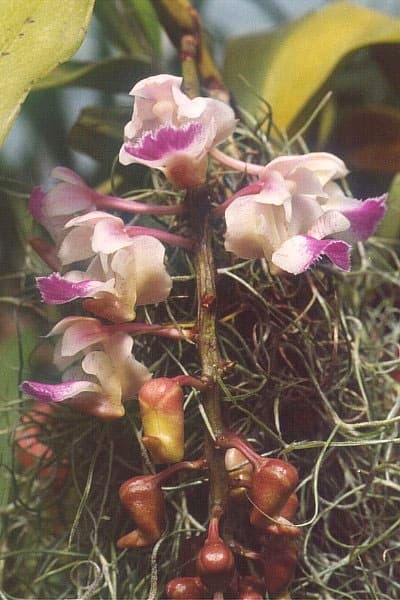
Aerides
Aerides, commonly known as cat's-tail orchids and fox brush orchids, is a genus of tropical epiphytic orchids native to Asia. These orchids are highly valued in horticulture for their showy, fragrant, and long-lasting flowers, which typically appear in racemes and are often white with colorful edges.
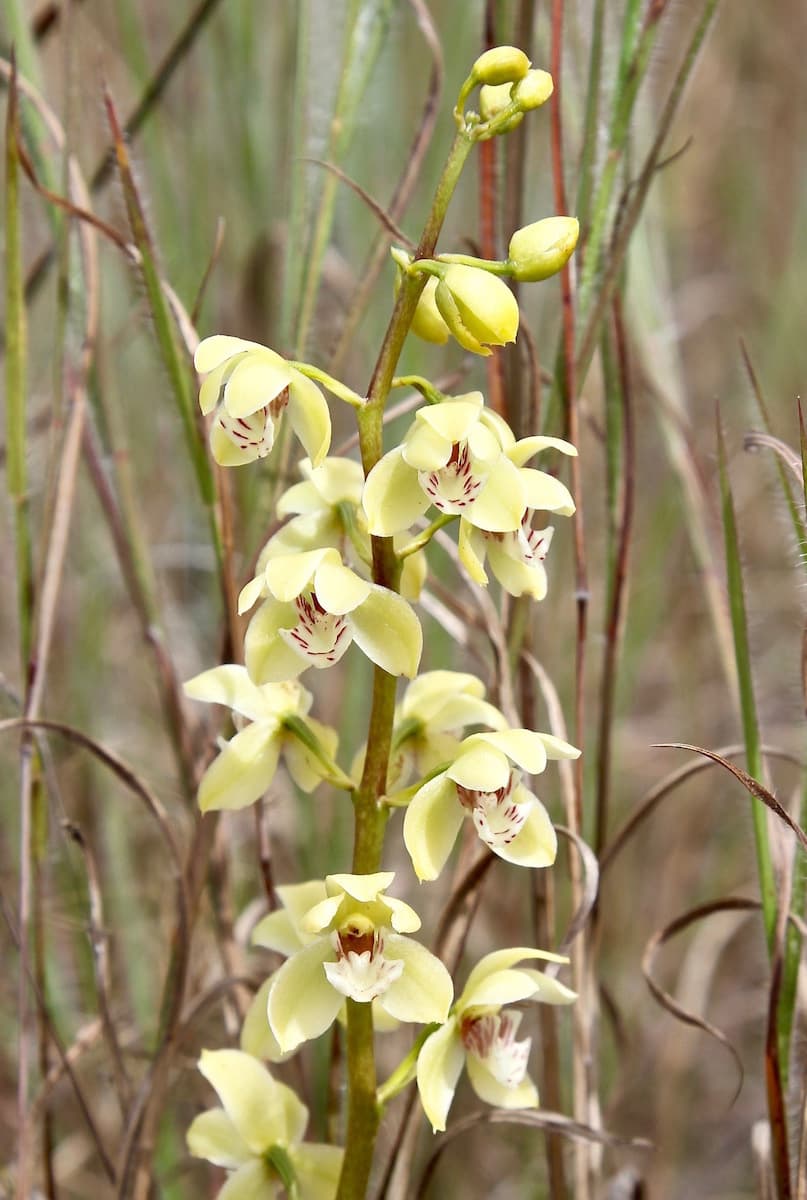
Koellensteinia
Koellensteinia is a genus of approximately 19 orchid species native to South America, Belize, Trinidad, and Puerto Rico. These plants are characterized by their short, leafy stems, often forming pseudobulbs, and produce small to medium-sized, fragrant flowers that are typically yellow or white, often with magenta or violet barring. They are found in low to mid-elevation forests and are cultivated under intermediate conditions with moderate shade and high humidity.
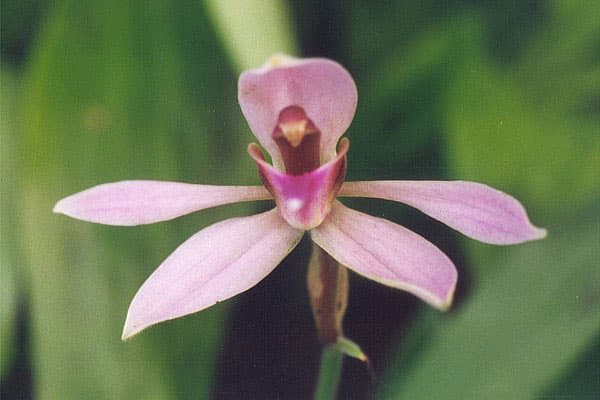
Ancistrochilus
Ancistrochilus is a small genus of orchids, recognized for its large, fragrant flowers with striking rose-pink petals and sepals and magenta lips. These sympodial epiphytic plants are native to tropical West Africa, extending to Tanzania and Uganda, where they grow on tree trunks and branches at moderate elevations.