
Drakaea
Drakaea, commonly known as hammer orchids, is a genus of 10 orchid species native exclusively to the southwest of Western Australia. These orchids are distinguished by a remarkable pollination mechanism involving an insectoid labellum that mimics the shape, color, and scent of female thynnid wasps, tricking male wasps into attempting to mate with the flower and thus facilitating pollination.
Key Facts
- ›All 10 species of Drakaea are found only in the southwest of Western Australia.
- ›Hammer orchids are pollinated by a specific species of male thynnid wasp.
- ›The labellum of the orchid mimics a female thynnid wasp in appearance and scent.
- ›The pollination mechanism involves the male wasp attempting to carry away the labellum, bringing it into contact with the flower's pollen.
- ›The genus name Drakaea honors Sarah Drake, a 19th-century botanical artist.
- ›Several species are classified as Threatened or Priority one by the Western Australian government.
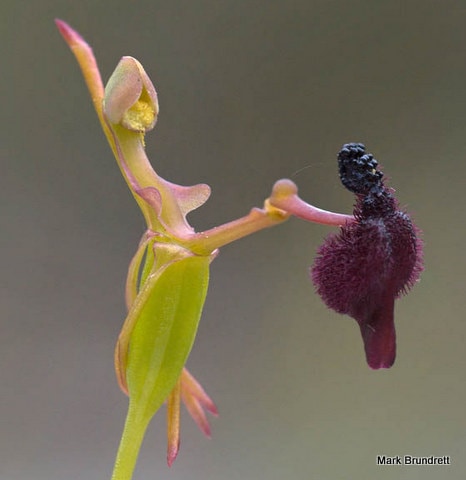
Hammer Orchid
Terrestrial
Thynnid Wasp
About Drakaea
Drakaea: The Hammer Orchids
Drakaea is a genus comprising 10 species of orchids, commonly known as hammer orchids. These remarkable plants are found exclusively in the southwestern region of Western Australia. Their most distinguishing feature is a highly specialized labellum, which is shaped and colored to mimic a female thynnid wasp. This mimicry extends to scent, as the orchid produces a chemical that imitates the female wasp's pheromones, serving as a powerful attractant for male wasps.
Unique Pollination Mechanism
The pollination strategy of hammer orchids is exceptionally unique. Male thynnid wasps, attracted by the orchid's appearance and scent, attempt to grasp the insectoid labellum as if it were a female wasp. This action causes the hinged stem supporting the labellum to swing backward, bringing the male wasp's thorax into contact with the flower's pollinia (pollen masses). The wasp, attempting to fly away with the perceived female, eventually tires and departs. For successful pollination to occur, the male wasp must then visit another individual hammer orchid, where the pollen from the first flower is deposited onto the stigma, thereby fertilizing the second plant.
Description and Taxonomy
Hammer orchids typically possess a single, thumbnail-sized, fleshy, heart-shaped leaf that hugs the ground. A long, thin, wiry stem emerges from this leaf, bearing a single flower at its apex. The flower itself is dramatically modified, with the labellum being the most prominent feature. The genus name, Drakaea, was given in honor of Sarah Drake, a 19th-century botanical artist who contributed significantly to the study of orchids. While the limits of the genus have remained stable, there has been some debate regarding the classification within the genus itself.
Distribution and Conservation
All ten species of Drakaea are native to the south-west botanical province of Western Australia, generally found growing in sandy soils in loose, scattered colonies. Conservation is a significant concern for several species within the genus. The Western Australian government has classified five Drakaea species as 'Threatened,' indicating a high risk of extinction, and one species is listed as 'Priority One,' meaning it is known from very few, potentially vulnerable locations. Studies suggest that the rarity of many hammer orchid species is primarily due to habitat loss, the scarcity of their specific pollinators, or narrow habitat requirements, rather than issues with fungal associations or germination rates.
Source: Wikipedia ↗
Frequently Asked Questions
What are hammer orchids?
Hammer orchids are a genus of 10 species in the Orchidaceae family, characterized by a unique insectoid labellum that plays a crucial role in their pollination.
Where do hammer orchids grow?
All species of Drakaea are endemic to the southwest botanical province of Western Australia, typically found in sandy soils in scattered colonies.
How do hammer orchids get pollinated?
Pollination occurs through a unique interaction with male thynnid wasps. The orchid's labellum mimics a female wasp in shape, color, and scent, attracting the male. When the male attempts to fly off with the labellum, its thorax comes into contact with the pollen, which is then transferred to the stigma of another orchid.
What makes the pollination of hammer orchids unique?
Unlike most insect pollination involving sexual attraction, hammer orchids engage in a process where the male insect attempts to carry away a part of the flower, making it a unique form of pseudocopulation.
Why is the labellum of a hammer orchid shaped the way it is?
The labellum is shaped to precisely resemble a female thynnid wasp, which is the specific pollinator for each species. This mimicry includes not only shape and color but also a scent that imitates the female wasp's pheromones.
Are hammer orchids endangered?
Several species of Drakaea face conservation concerns. Five species have been classified as 'Threatened' by the Western Australian government, and one is listed as 'Priority One,' indicating they are at risk or known from very few locations.
Related Orchid species

Leporella
Leporella fimbriata, commonly known as the hare orchid or fringed hare orchid, is the sole species within the genus Leporella in the Orchidaceae family. It is endemic to mainland southern Australia and is distinguished by its unusual labellum, lack of hairy leaves, and unique pollination mechanism involving bull-ants. This terrestrial orchid typically blooms from March to June.

Geodorum
Geodorum is a genus of eight deciduous, terrestrial orchid species found across southern Japan, tropical Asia, Australia, and the southwest Pacific islands. These orchids are distinguished by their underground pseudobulbs, broad pleated leaves, and small to medium-sized, bell-shaped or tube-shaped flowers that hang downwards on a drooping flowering stem.
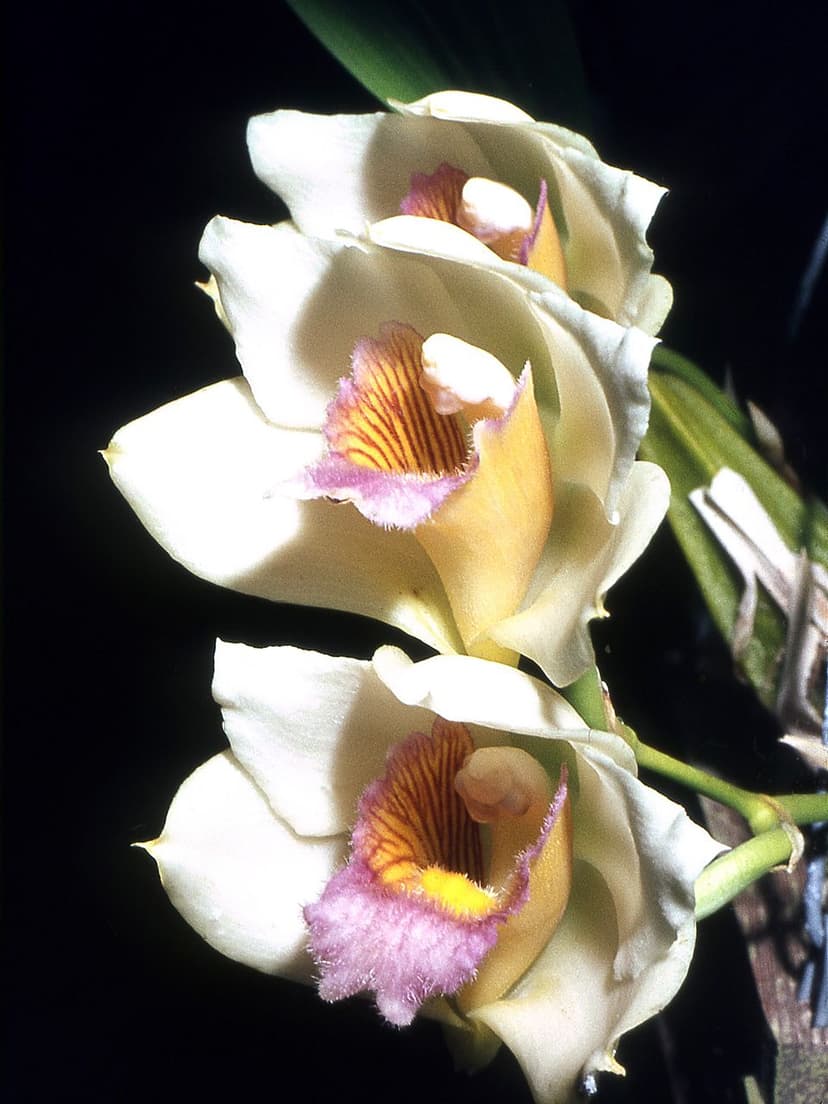
Bifrenaria
Bifrenaria is a genus of orchids comprising about twenty species native to Panama, Trinidad, and South America, primarily found in the Amazon and Atlantic Forests of Brazil. These orchids are admired by growers for their abundant and striking flowers, which are often strongly scented and possess a distinctive calcar at the base of the sepals.