
Epidendrum
Epidendrum, often abbreviated as Epi in horticulture, is a vast neotropical genus within the orchid family, distinguished by its Greek name meaning "upon trees," reflecting its common epiphytic growth habit. This large genus, encompassing over 1,500 species, is found across the American continents, from North Carolina to Argentina, and exhibits diverse ecological preferences, including terrestrial and lithophytic forms.
Key Facts
- ›Epidendrum is one of the largest orchid genera, with over 1,500 recognized species and potentially more yet to be discovered.
- ›Native to the tropical and subtropical Americas, its range extends from North Carolina to Argentina.
- ›While many species are epiphytic, the genus also includes terrestrial and lithophytic members.
- ›Flowers are typically small to medium in size and often not conspicuously displayed, though many species are fragrant.
- ›Epidendrum species are known to hybridize readily with members of other related orchid genera.
- ›Some high-elevation cloud forest species are difficult to cultivate outside their natural habitat due to potential dependencies on specific mycorrhizal fungi.
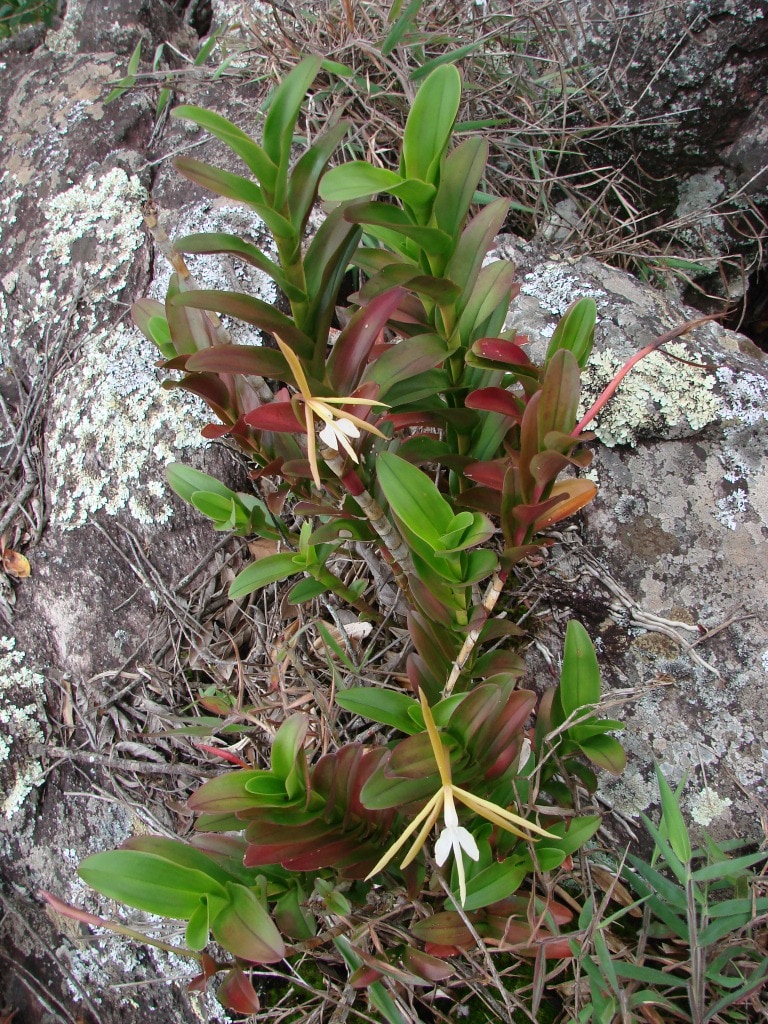
Epi
North Carolina, Argentina, American Continents
Epiphytic, Terrestrial, Lithophytic
Rich Humus Compost, Sand, Humus Rich, Well Aerated Substrate, Bark Garden
About Epidendrum
The genus Epidendrum, often abbreviated as "Epi" in the horticultural trade, stands as one of the largest and most diverse genera within the neotropical Orchidaceae family. Its name, derived from the Greek words "epi" (upon) and "dendron" (tree), aptly describes the common epiphytic growth habit of many of its species, though the genus is notable for also including terrestrial and lithophytic members.
Distribution and Ecology
Epidendrum species are widespread across the tropical and subtropical regions of the American continents, with a range extending from North Carolina in the United States to Argentina. Their habitats are incredibly varied, encompassing humid jungles, dry tropical forests, sunny grassy slopes, cool cloud forests, and even sandy barrier islands. Many species thrive in the Andes at elevations between 1,000 and 3,000 meters. This genus is known for its ability to colonize disturbed habitats aggressively, with human activities sometimes leading to increased abundance along road cuts, for example.
Characteristics
The flowers of Epidendrum are quite diverse in size and appearance, often growing in racemose inflorescences, sometimes forming corymbs or panicles. While typically small to medium in size and not always conspicuously displayed, many species are fragrant. The genus is characterized by a slit rostellum, a lip that is adnate to the column (often forming a nectary tube), and a pollinarium containing four pollinia. The stems can be erect, pendent, or creeping, and may be reed-like, simple, branching, or even pseudobulbous in some former members of the genus.
Taxonomy and Hybridization
Historically, Epidendrum was a catch-all genus for many newly discovered epiphytic orchids. Over time, numerous species have been segregated into new or resurrected genera based on more detailed morphological and molecular analysis. Despite this, Epidendrum remains a "mega-genus" with a vast number of accepted names and many more species awaiting description. Epidendrum orchids hybridize readily with members of other related genera, such as Cattleya and Brassavola, contributing to diversification within the group. Several natural hybrids have also been documented within the genus.
Cultivation
Many Epidendrum species are widely cultivated, appreciated for their varied flowers and, in many cases, their fragrance. While some, like E. conopseum, can tolerate freezing temperatures, most require cool to intermediate or warm conditions. They are typically grown in pots with a humus-rich, well-aerated substrate, though some can be grown in bark gardens or mounted on trees. However, certain high-elevation cloud forest species are notoriously difficult to cultivate outside their native environments, possibly due to a dependence on specific mycorrhizal fungal symbionts.
Source: Wikipedia ↗
Frequently Asked Questions
What does the name Epidendrum mean?
The name Epidendrum originates from Greek words 'epi' (upon) and 'dendron' (tree), which translates to 'upon trees'. This name reflects the genus's characteristic epiphytic growth habit, where many species grow on trees.
Where are Epidendrum orchids found naturally?
Epidendrum orchids are native to the tropical and subtropical regions of the American continents, with a natural distribution spanning from North Carolina in the United States down to Argentina.
What are the different growth habits of Epidendrum species?
While commonly known for their epiphytic (growing on trees) nature, Epidendrum species exhibit diverse growth habits. Some are terrestrial, growing in soil, while others are lithophytic, found growing on bare rock.
Are Epidendrum flowers large and showy?
The flowers of Epidendrum species are quite varied, but many are described as small to medium in size and not always conspicuous. However, some species, like Epidendrum ibaguense, are noted for being showy.
Can Epidendrum orchids be easily cultivated?
Many commonly cultivated Epidendrum species are relatively easy to grow, often preferring rich, well-aerated media. However, some high-elevation cloud forest species can be challenging to cultivate outside their specific natural environments.
Do Epidendrum flowers have a scent?
Yes, many Epidendrum species are known to be fragrant. The intensity and type of fragrance can vary significantly between different species within the large genus.
How do Epidendrum orchids reproduce?
Epidendrum orchids reproduce through seeds produced in 3-ribbed capsules, and they also readily hybridize with members of other related orchid genera, both naturally and through human intervention.
Related Orchid species

Leptotes
Leptotes is a genus of nine small orchid species native to the dry jungles of south and southeast Brazil, Paraguay, and Argentina. These epiphytic plants are characterized by their thin, terete leaves and delicate, often showy flowers, some of which are used as a vanilla substitute. While some species are widely cultivated, many remain rare and recently described.
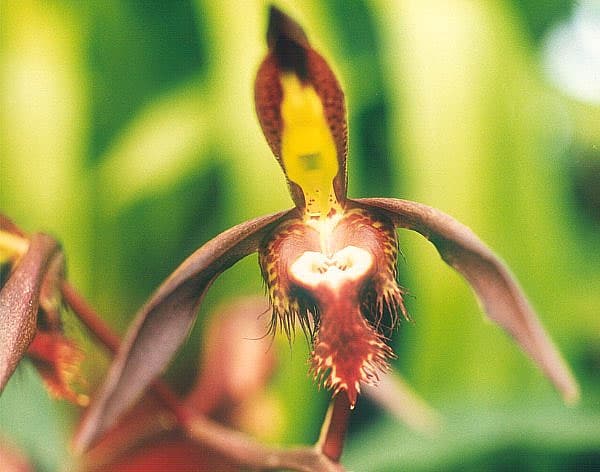
Catasetum
Catasetum is a genus of showy epiphytic orchids belonging to the family Orchidaceae. Native to regions spanning from Mexico to Argentina, many species are highly valued in horticulture for their striking flowers. A distinctive characteristic of Catasetum is its unisexual flowers, with male and female blooms often appearing on separate plants, a phenomenon that historically puzzled botanists until explained by Charles Darwin.

Cattleya
Cattleya is a genus of orchids native to Central and South America, ranging from Costa Rica to Argentina. These epiphytic or terrestrial plants are distinguished by their fleshy roots, upright pseudobulbs, and showy, often fragrant flowers with a distinctive lip that partially envelops the column.