
Epipactis
Epipactis
Epipactis, commonly known as helleborine, is a genus of approximately 70 terrestrial orchid species found in temperate and subtropical climates across America, Asia, and Europe. These orchids are distinctive for their creeping, fleshy rhizomes, lanceolate leaves that can be blue-purple in species with reduced chlorophyll, and colorful, bilaterally symmetrical flowers that grow from a terminal raceme. Some species, like the violet helleborine, can survive without chlorophyll due to their reliance on mycorrhizal symbiosis.
Key Facts
- ›Epipactis is a genus of terrestrial orchids with around 70 species.
- ›They are found in temperate and subtropical regions of America, Asia, and Europe.
- ›Flowers are bilaterally symmetrical and vary in color from greenish-white to violet and purple.
- ›Some species can survive without chlorophyll due to mycorrhizal symbiosis.
- ›They grow in diverse habitats including forests, dune-slacks, wet areas, and even flooded environments.
- ›Many Epipactis species are protected.

Helleborine, Weed Orchid
Terrestrial
About Epipactis
Epipactis, commonly referred to as helleborine, is a genus of terrestrial orchids that encompasses approximately 70 species. These orchids are distributed across temperate and subtropical climates in America, Asia, and Europe. The genus is abbreviated as Epcts in the horticultural trade.
Description and Characteristics
The plants of the Epipactis genus are characterized by their creeping, fleshy rhizomes, from which stems emerge annually, reaching heights of 20 to 70 cm. They possess four to eight alternate, lanceolate leaves that become progressively shorter towards the apex. The leaf margins are entire, and the tip is acute. Notably, species with reduced chlorophyll content may exhibit blue-purple foliage.
The flowers of Epipactis are bilaterally symmetrical and grow in a terminal raceme. Each flower features three sepals and two lateral petals that are ovate and acuminate. The flower coloration can vary widely, ranging from greenish-white to shades of violet and purple. A distinctive feature is the lip, which is divided into a bowl-shaped hypochile, typically greenish-white with dark veins, and a wavy, snow-white, fan-shaped epichile. The ovary is inferior, and the plant produces a dry capsule containing numerous minute seeds.
Mycorrhizal Symbiosis
As is typical for all orchids, Epipactis species are dependent on a mycorrhizal symbiosis. This relationship allows some species to develop reduced leaves and require very little chlorophyll. In extreme cases, such as the violet helleborine (Epipactis viridiflora), the plant can survive entirely without chlorophyll, a trait that can sometimes be indicated by purple rather than violet flowers.
Habitat and Distribution
Epipactis species thrive in open spaces within forests, in undergrowth, and on calcareous soils. They are frequently found in wet dune-slacks near coastal areas. The genus is widespread, with occurrences in America, Asia, and Europe. The giant helleborine (Epipactis gigantea) is the only native American species, found in the American west and extending into southern Canada, often in wet areas and alongside streams, where it can grow up to 1 meter in height. The marsh helleborine (Epipactis palustris) is unique among European orchids for its ability to survive in flooded environments. The broad-leaved helleborine (Epipactis helleborine) demonstrates remarkable adaptability, growing in diverse habitats from sheltered sandy beaches to open deciduous or coniferous forests, roadsides, meadows, and moist soils, earning it the nickname 'weed orchid'. It is worth noting that the broad-leaved helleborine has become an invasive species in North America. Most species within the Epipactis genus are protected.
Diversity
The genus Epipactis contains 54 accepted species and also includes 22 known natural hybrids.
Source: Wikipedia ↗
Frequently Asked Questions
What is Epipactis?
Epipactis, also known as helleborine, is a genus of terrestrial orchids. It comprises about 70 different species.
Where do Epipactis orchids grow?
These orchids are found in temperate and subtropical climates across America, Asia, and Europe. They inhabit various environments such as open forest spaces, undergrowth, calcareous soils, and wet dune-slacks near the sea.
What are the characteristics of Epipactis flowers?
Epipactis flowers are bilaterally symmetrical and grow from a terminal raceme. Their color can range from greenish-white to shades of violet and purple. The lip is divided into a bowl-shaped hypochile and a wavy, fan-shaped epichile.
Can Epipactis orchids grow without chlorophyll?
Yes, some Epipactis species, like the violet helleborine (Epipactis viridiflora), can survive without chlorophyll. This is due to their essential dependence on mycorrhizal symbiosis, which provides them with nutrients.
What are some examples of Epipactis species and their habitats?
The marsh helleborine (Epipactis palustris) is notable for surviving in flooded habitats. The giant helleborine (Epipactis gigantea) is found in wet areas and streams in the American west and southern Canada. Broad-leaved helleborine (Epipactis helleborine) is adaptable and can be found in diverse locations, sometimes referred to as the 'weed orchid'.
Related Orchid species
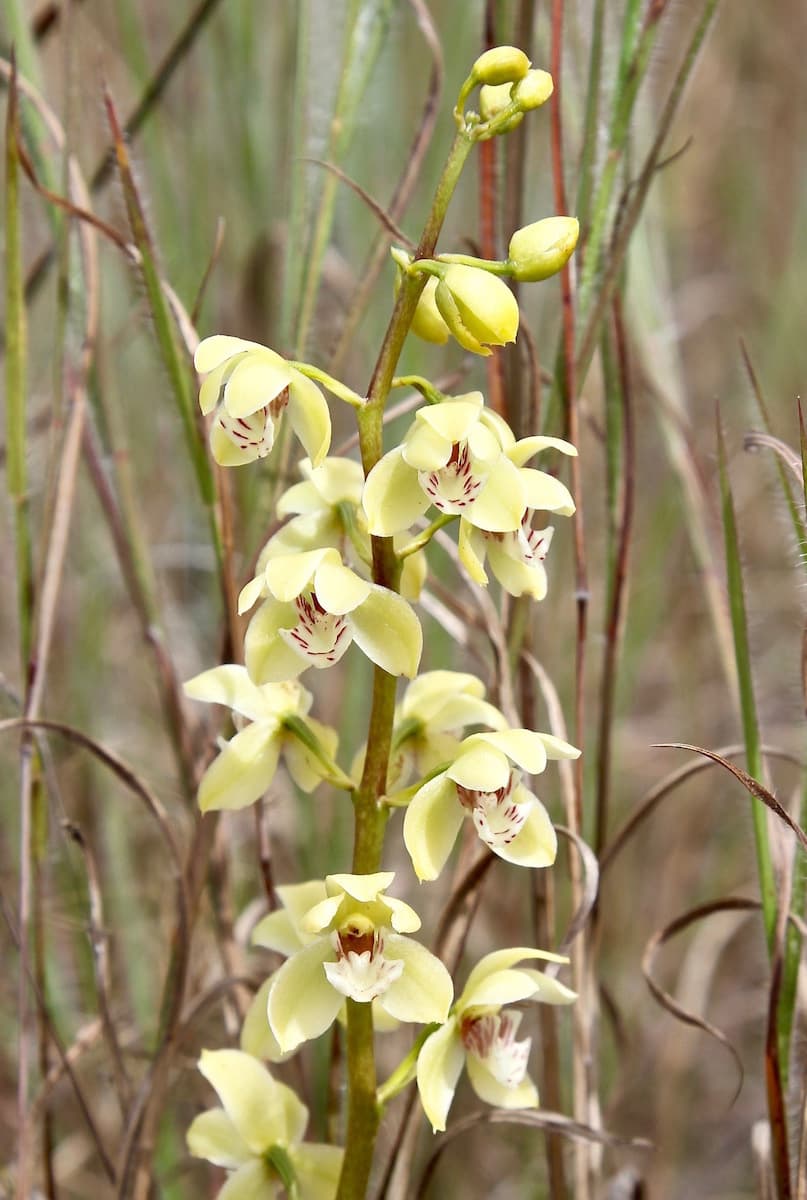
Koellensteinia
Koellensteinia is a genus of approximately 19 orchid species native to South America, Belize, Trinidad, and Puerto Rico. These plants are characterized by their short, leafy stems, often forming pseudobulbs, and produce small to medium-sized, fragrant flowers that are typically yellow or white, often with magenta or violet barring. They are found in low to mid-elevation forests and are cultivated under intermediate conditions with moderate shade and high humidity.

Cypripedioideae
Cypripedioideae, commonly known as lady's slipper orchids, are a subfamily of perennial herbaceous plants characterized by their distinctive slipper-shaped flower pouches. These orchids are found across various regions of the Americas, Europe, Asia, and Africa, and are notable for their unique pollination mechanism that traps insects within the modified labellum.

Gymnadenia
Gymnadenia is a genus of 22 terrestrial orchid species belonging to the Orchidaceae family, known for their hardy nature and fragrant flowers. Native to damp meadows, fens, and alpine regions across Europe and Asia, these orchids are characterized by their long, lanceolate leaves and dense, cylindrical spikes of small, pleasant-smelling flowers that bloom in summer. The genus was expanded to include species formerly classified under Nigritella, and some species, like Gymnadenia conopsea, have been introduced to North America.