
Hexalectris
Hexalectris
Hexalectris, commonly known as crested coralroot, is a genus of myco-heterotrophic orchids within the Orchidaceae family. These unique plants are found across North America, with a significant concentration of diversity in northern Mexico. Unlike most orchids, Hexalectris species lack chlorophyll and obtain nutrients from fungi associated with trees, often oaks.
Key Facts
- ›Hexalectris comprises 10 known species of fully myco-heterotrophic orchids.
- ›These orchids are found in North America, with diversity centered in northern Mexico.
- ›They lack chlorophyll and derive nutrients from ectomycorrhizal fungi, often associated with oak trees.
- ›None of the species are particularly common; some are rare and others are threatened or endangered.
- ›Hexalectris spicata is the most widespread and likely most abundant species, though still infrequent.

Crested Coralroot
North America, Northern Mexico
Myco-Heterotrophic
About Hexalectris
Hexalectris (Crested Coralroot)
The genus Hexalectris, commonly known as crested coralroot, encompasses 10 species of fully myco-heterotrophic orchids. These unique plants are found across North America, with a notable concentration of species diversity in northern Mexico. Unlike the majority of orchids that rely on photosynthesis, Hexalectris species lack chlorophyll and obtain their nourishment through symbiotic associations with ectomycorrhizal fungi. These fungi are often connected to the root systems of surrounding trees, particularly oaks (Quercus).
Ecology and Distribution
None of the Hexalectris species are considered common. Hexalectris spicata possesses the widest distribution and is likely the most abundant member of the genus, yet it remains infrequent throughout its range. Other species are notably rare, with some, such as H. colemanii, facing significant threats and being classified as endangered. The myco-heterotrophic nature of these orchids makes their survival intricately linked to the health of their fungal partners and the forest ecosystems they inhabit.
Source: Wikipedia ↗
Frequently Asked Questions
What are myco-heterotrophic orchids?
Myco-heterotrophic orchids, like those in the Hexalectris genus, are plants that do not perform photosynthesis. Instead, they obtain their nutrients by forming symbiotic relationships with specific fungi in the soil, which in turn are often connected to the roots of trees.
Where are Hexalectris orchids found?
Hexalectris species are native to North America. While the genus is found across the continent, the center of its species diversity is in northern Mexico.
Are Hexalectris orchids common?
No, none of the known Hexalectris species are considered particularly common. Many are rare, and some, like Hexalectris colemanii, face threats and are endangered.
What is the relationship between Hexalectris and trees?
Many Hexalectris species have been observed to form associations with ectomycorrhizal fungi that are likely linked to surrounding trees. Oak trees (Quercus) are frequently found in association with these orchids, suggesting a significant ecological connection.
Related Orchid species
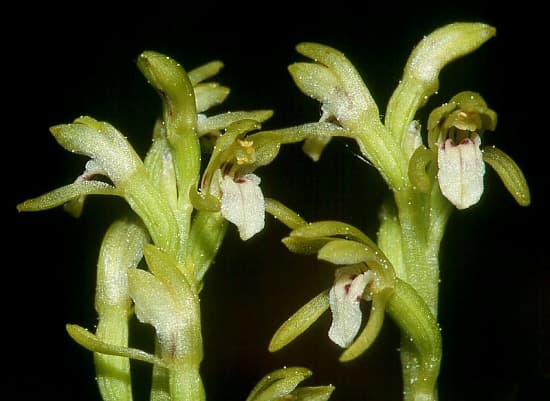
Corallorhiza
Corallorhiza, commonly known as coralroot, is a genus of orchids found primarily in North America, with one circumboreal species. These plants are largely myco-heterotrophic, meaning they rely entirely on fungi for nutrients, leading to leafless, rootless, and often chlorophyll-lacking structures. Their unique parasitic lifestyle makes them exceptionally difficult to cultivate.

Cypripedioideae
Cypripedioideae, commonly known as lady's slipper orchids, are a subfamily of perennial herbaceous plants characterized by their distinctive slipper-shaped flower pouches. These orchids are found across various regions of the Americas, Europe, Asia, and Africa, and are notable for their unique pollination mechanism that traps insects within the modified labellum.
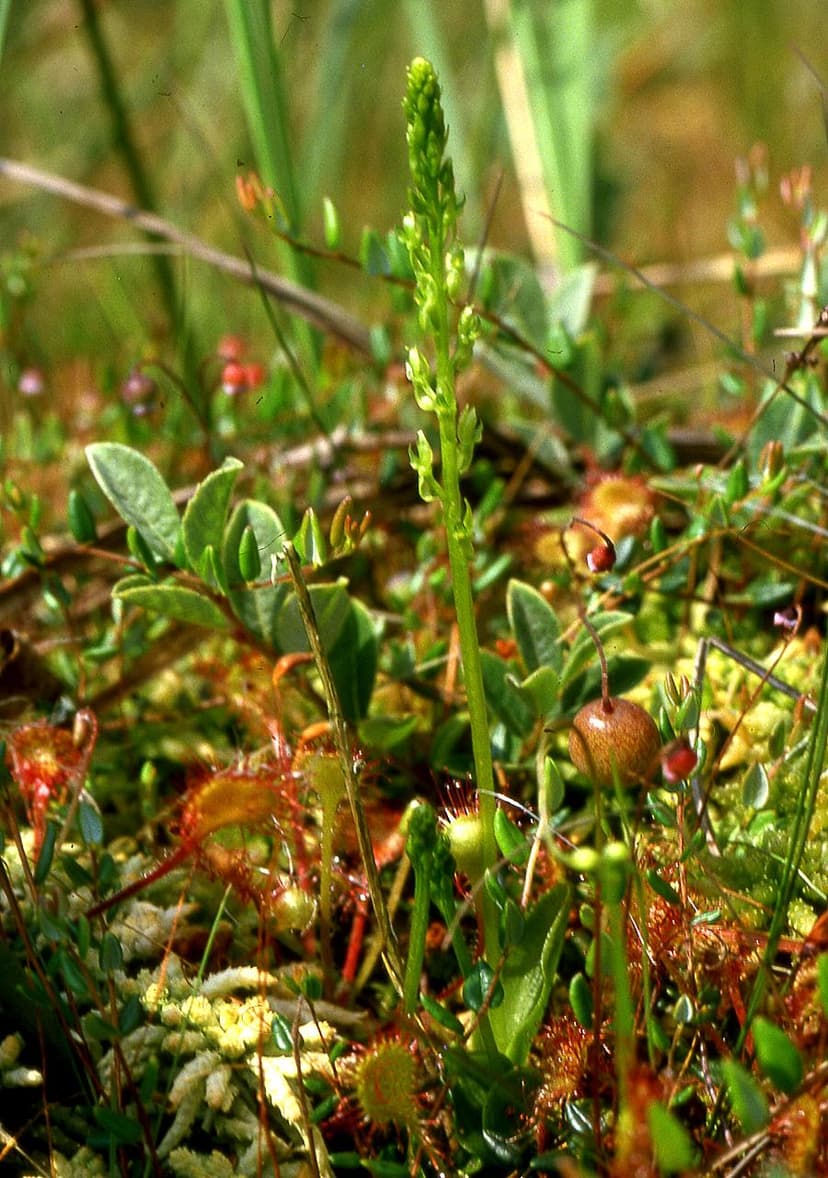
Hammarbya
Hammarbya paludosa, commonly known as the bog orchid, is a unique species in the Orchidaceae family, notable for being the only orchid to produce plantlets on its leaf tips. It is found across the Circumboreal Region, thriving in boggy and swampy environments. Its distinctive floral structure, with an upward-pointing lip, has made it a subject of study in orchid evolution.