
Ipsea
Ipsea·Endangered (for Ipsea malabarica)
Ipsea is a small genus of orchids belonging to the Orchidaceae family, with three recognized species primarily found in India, Sri Lanka, and Thailand. These orchids are known for their delicate flowers and are often found in moist, sunny, rocky environments.
Key Facts
- ›Ipsea is a genus of orchids with three known species.
- ›Species are found in India, Sri Lanka, and Thailand.
- ›Ipsea speciosa was the first species described, discovered in Sri Lanka in 1829.
- ›Ipsea malabarica is an endangered species with a very narrow distribution in southern India.
- ›These orchids typically flower between October and December.

Lithophytic, Terrestrial
October, November, December
About Ipsea
Ipsea is a genus of orchids comprising three species, native to India, Sri Lanka, and Thailand. These orchids are part of the large Orchidaceae family and are characterized by their growth in specific environmental niches.
Species and Distribution
The three recognized species within the genus are:
- Ipsea malabarica (Rchb.f.) Hook.f.: Found in southern India, this species is notable for its endangered status and very restricted distribution in Silent Valley, northern Kerala. It thrives on steep mountain slopes in moist, sunny, rocky areas, often alongside a variety of other herbaceous plants like mosses and grasses.
- Ipsea speciosa Lindl.: This species is found in southern India and Sri Lanka. It holds significance as the type species for the genus, having been discovered in Nuwara Eliya, Sri Lanka, in 1829 by James Macrae and later described by John Lindley.
- Ipsea thailandica Seidenf.: This species is found in Thailand.
Flowering Period
Information regarding the bloom season indicates that these orchids typically flower from October to December. This period is specifically noted for Ipsea malabarica, suggesting a consistent autumn and early winter blooming pattern for at least one species within the genus.
Source: Wikipedia ↗
Frequently Asked Questions
How many species are in the genus Ipsea?
There are three recognized species within the genus Ipsea. These are Ipsea malabarica, Ipsea speciosa, and Ipsea thailandica.
Where are Ipsea orchids found naturally?
Ipsea orchids are native to South and Southeast Asia. Their natural distribution includes parts of India, Sri Lanka, and Thailand.
What is distinctive about Ipsea malabarica?
Ipsea malabarica is an endangered species with a very restricted range in Silent Valley, southern India. It grows on steep mountain slopes in sunny, moist rocky areas.
When do Ipsea orchids typically bloom?
The available information indicates that Ipsea orchids generally flower from October to December. This bloom period is noted for Ipsea malabarica.
Who discovered the type species Ipsea speciosa?
Ipsea speciosa, the type species for the genus, was discovered in Nuwara Eliya, Sri Lanka, in 1829 by James Macrae. It was first described by John Lindley.
Related Orchid species

Corymborkis
Corymborkis is a genus of terrestrial orchids found across tropical regions worldwide. These evergreen plants are known for their leafy stems, pleated leaves, and widely-opening flowers, which are typically greenish-white and arranged in crowded clusters. The genus name itself reflects the characteristic bunched arrangement of their blooms.
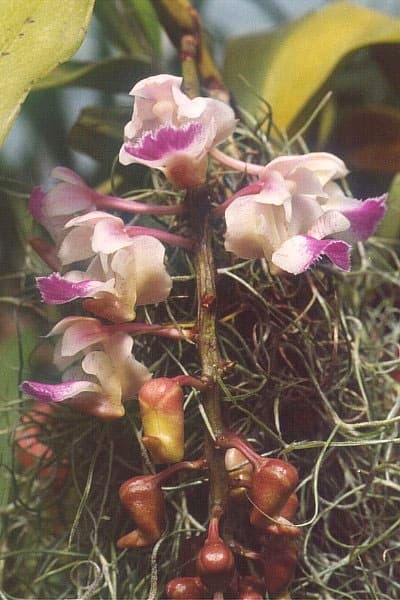
Aerides
Aerides, commonly known as cat's-tail orchids and fox brush orchids, is a genus of tropical epiphytic orchids native to Asia. These orchids are highly valued in horticulture for their showy, fragrant, and long-lasting flowers, which typically appear in racemes and are often white with colorful edges.
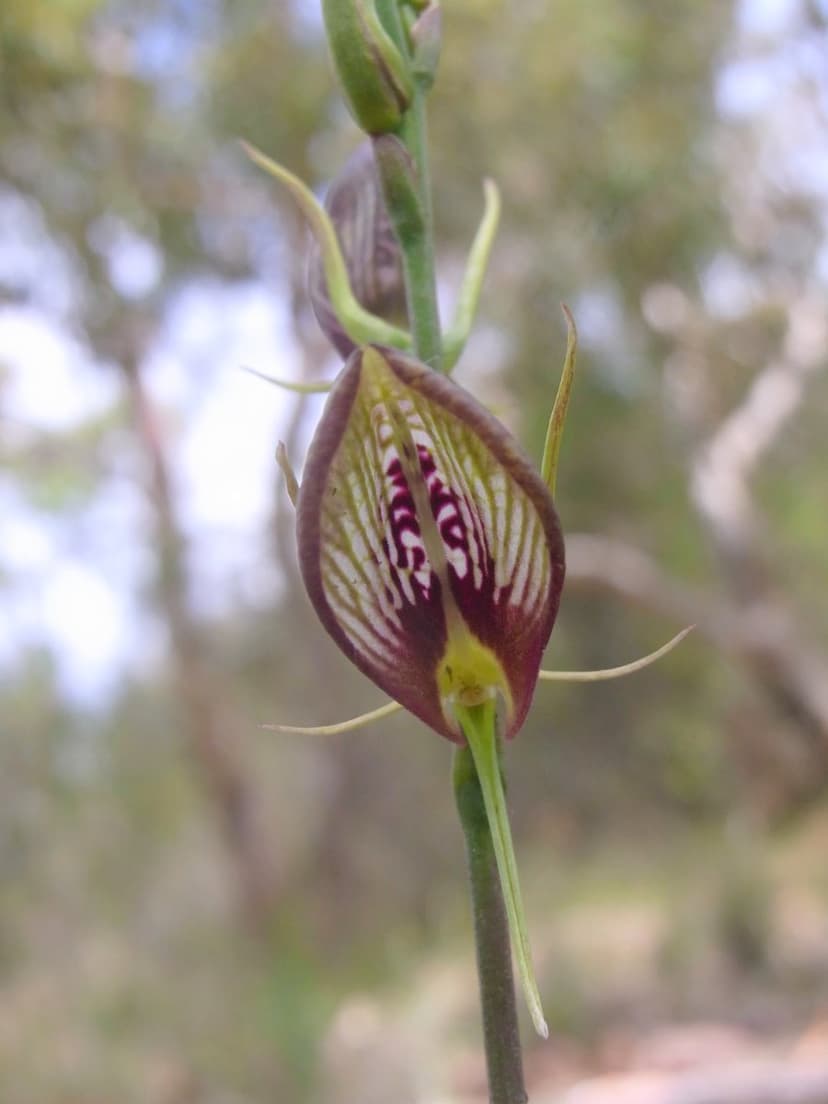
Cryptostylis
Cryptostylis, commonly known as tongue orchids, is a genus of terrestrial orchids found in South Asia, Southeast Asia, and the South Pacific. These orchids are distinguished by their prominent labellum, which is the most conspicuous part of the flower, and their unique pollination strategy involving wasps attempting to mate with the flowers. At least some species are pollinated through a process called pseudocopulation, where male wasps mistake the flower for a female wasp.