
African wood owl
The African wood owl (Strix woodfordii), also known as Woodford's owl, is a common forest owl species native to sub-Saharan Africa. It is distinguished by its rounded head, large dark eyes with white eyebrows, and a distinctive hooting call that can be heard over long distances. This owl is strictly nocturnal and primarily inhabits indigenous forests and woodlands.
Key Facts
- ›The African wood owl is considered the most common forest owl in Africa.
- ›It has a distinctive vocalization, a duet between male and female, with hoots audible over 500 meters.
- ›This species has a typical owl appearance with a rounded head, large dark eyes, and a yellow beak.
- ›Its diet consists mainly of insects, but also includes reptiles, small mammals, and other birds.
- ›African wood owls are strictly nocturnal, roosting in dense cover during the day and foraging at night.
- ›They are found throughout much of sub-Saharan Africa, inhabiting forests, woodlands, and even well-wooded suburban areas.

Woodford's Owl
Indigenous Forests, Woodlands, Riparian Forests, Coastal Forests, Escarpment Forests, Plantations, Well-Wooded Suburban Areas
Sub-Saharan Africa, Senegal, the Gambia, Gulf of Guinea, Congo Basin, Angola, Ethiopia, Kenya, Tanzania, Zambia, Mozambique, Caprivi Region, Botswana, Zimbabwe, Eswatini, South Africa
Insects, Reptiles, Small Mammals, Other Birds
About African wood owl
The African wood owl, scientifically known as Strix woodfordii and sometimes referred to as Woodford's owl, is a prominent member of the typical owl family (Strigidae) found across sub-Saharan Africa. It is widely considered the most common forest owl on the continent, inhabiting a variety of wooded environments from indigenous forests and woodlands to riparian areas and even well-wooded suburban zones.
Description and Identification
This medium-sized owl possesses the characteristic rounded head typical of the Strix genus, similar to its Palearctic relatives. Its most striking features include large, dark eyes outlined by conspicuous white eyebrows and a prominent yellow beak. The adult plumage is predominantly rich brown, often with paler underparts, though coloration can vary significantly across its extensive range. A distinctive pattern of brown barring marks its white belly. Juvenile owls are recognizable by their paler, rufous coloration.
Vocalizations
A key characteristic of the African wood owl is its distinctive vocalization, which often serves as a duet between the male and female. The male produces a series of rapid, clear hoots, answered by the female with higher-pitched, more leisurely hoots. Each individual's hooting pattern comprises three distinct groups of syllables. These calls, which begin after dusk, are remarkably audible, capable of being heard over 500 meters away, and researchers have noted that individuals can be differentiated by their unique calls. Beyond their hooting, African wood owls can also produce a monosyllabic howl and engage in bill clicking, sounds often heard at the nest or when the owl feels threatened.
Distribution and Habitat
The African wood owl's geographic range is extensive, covering much of sub-Saharan Africa. Its distribution includes countries from Senegal and The Gambia eastward along the Gulf of Guinea into the Congo Basin and Angola. In eastern Africa, they are found from Ethiopia southwards through Kenya and Tanzania into Zambia and Mozambique. While largely absent from most of Namibia, they do occur in the Caprivi region and are also present in Botswana, Zimbabwe, Eswatini, and as far south as the Cape Town region in South Africa. They prefer indigenous forests and woodlands but are adaptable enough to be found in plantations and well-wooded suburban areas.
Diet and Foraging Behavior
As a strictly nocturnal species, the African wood owl is active primarily after sunset. Its diet consists mainly of insects, but it is an opportunistic hunter and will also prey on reptiles, small mammals, and other birds. Prey is typically captured by the owl swooping from a perch.
Reproduction
The breeding season for the African wood owl generally occurs between July and October. They are cavity nesters, typically laying their eggs in tree hollows, though rare instances of ground nesting have been documented. Clutch sizes usually range from one to three eggs. Incubation begins with the first egg laid, resulting in asynchronous hatching, which can sometimes lead to siblicide if food resources become scarce. The incubation period lasts approximately 31 days. Young owls fledge the nest about five weeks after hatching and gain flight capability two weeks later. The fledglings typically remain under the care of their parents for about four months, occasionally extending their stay until the following breeding season.
Taxonomy and Naming
The African wood owl belongs to the genus Strix, a classification that reflects its close relationship to other owls within this group, including the Omani Owl (Strix butleri), which is considered its sister species. Historically, it was sometimes placed in the genus Ciccaba but is now widely treated within Strix. The species is named in honor of Colonel E.J.A. Woodford, a British soldier and naturalist notable for his service during the Napoleonic Wars. Four subspecies are currently recognized, each with its own specific geographic distribution within the broader range of the species.
Source: Wikipedia ↗
Frequently Asked Questions
What is the typical appearance of an African wood owl?
The African wood owl has a rounded head and large, dark eyes outlined by white eyebrows. Its plumage is generally rich brown with paler underparts, though this can vary across its range. It also possesses a prominent yellow beak and a white belly with brown barring.
What does the African wood owl eat?
The diet of the African wood owl is primarily composed of insects. However, they are known to supplement their diet with other prey such as reptiles, small mammals, and other birds, which they typically catch by swooping from a perch.
Where can African wood owls be found?
African wood owls inhabit wooded areas across much of sub-Saharan Africa. Their range extends from Senegal and The Gambia eastward through the Congo Basin and Angola, and from Ethiopia southward through eastern Africa into Southern Africa, including parts of South Africa.
What are the distinctive sounds of the African wood owl?
The most characteristic sound is a duet between the male and female, consisting of rapid, clear hoots from the male and higher-pitched, leisurely hoots from the female. They also produce a monosyllabic howl and bill clicking, particularly when alarmed or at the nest.
When does the African wood owl breed and what are its nesting habits?
The breeding season for the African wood owl is typically from July to October. They lay 1 to 3 eggs in tree hollows, and the young hatch asynchronously, sometimes leading to siblicide if food is scarce. Young owls remain with their parents for several months.
Related Owl species
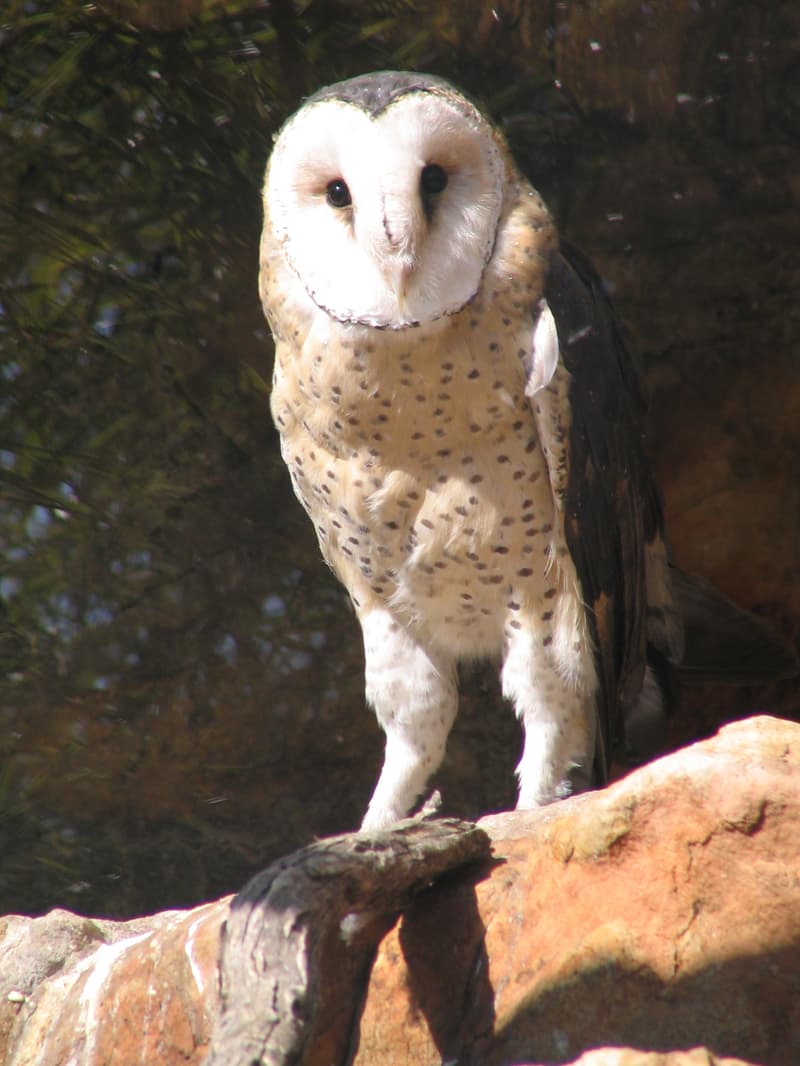
African grass owl
The African grass owl (Tyto capensis) is a medium-sized owl found in sub-Saharan Africa, known for its uniform sooty blackish-brown upperparts and heart-shaped facial disc. It primarily inhabits moist grasslands and savannas, where it hunts rodents and other small mammals at night.

African scops owl
The African scops owl (Otus senegalensis) is a small owl native to sub-Saharan Africa, characterized by its cryptic greyish-brown plumage and bright yellow eyes. It is a strictly nocturnal hunter, often overlooked during the day due to its remarkable camouflage. Its distinctive call is a monotonous "prrrp" sound.
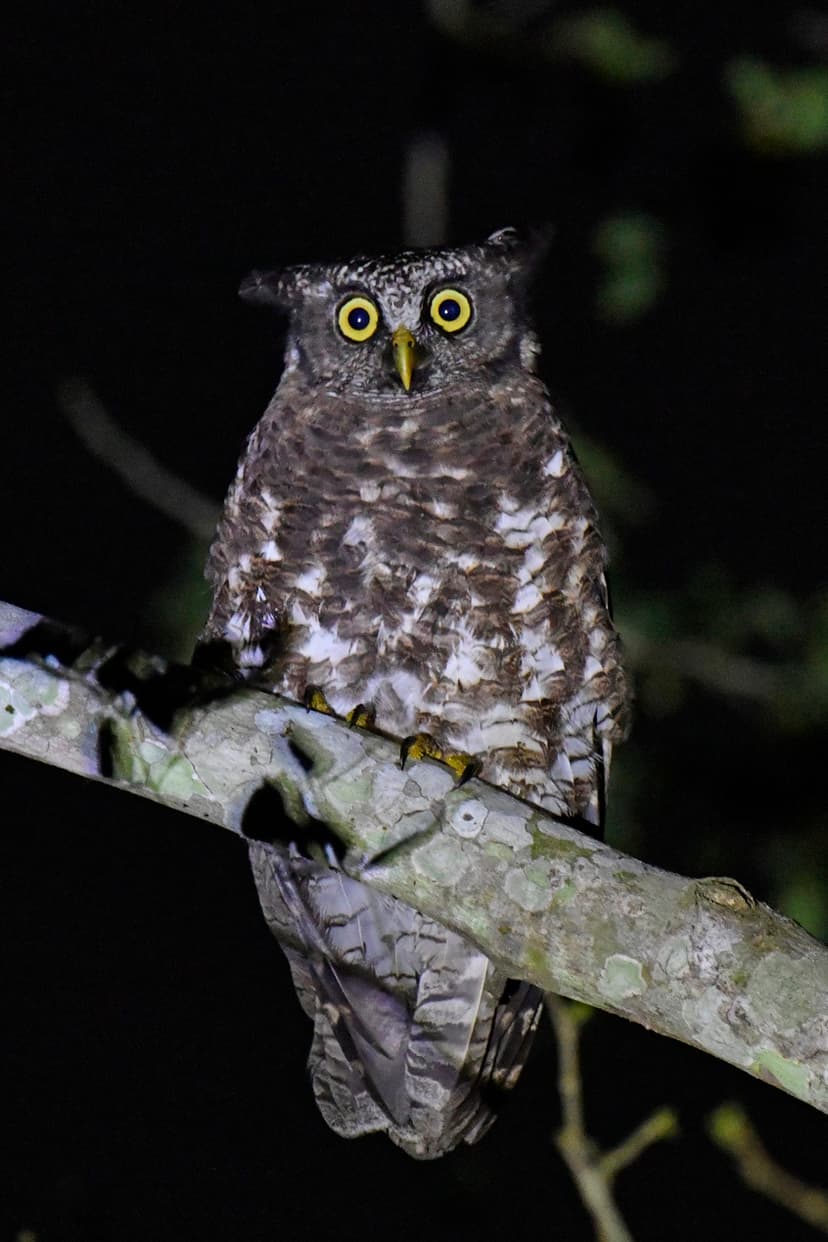
Akun eagle-owl
The Akun eagle-owl is a species of owl native to the African tropical rainforest, specifically found in countries bordering the Gulf of Guinea. It is distinguished by its relatively small size for an eagle-owl, predominantly dark to reddish-brown plumage with white markings, and a diet that primarily consists of insects.