
Akun eagle-owl
The Akun eagle-owl is a species of owl native to the African tropical rainforest, specifically found in countries bordering the Gulf of Guinea. It is distinguished by its relatively small size for an eagle-owl, predominantly dark to reddish-brown plumage with white markings, and a diet that primarily consists of insects.
Key Facts
- ›Native to African tropical rainforests.
- ›Primarily feeds on insects, a rarity for eagle-owls.
- ›Possesses prominent dark brown ear tufts with white spots.
- ›Found in lowland primary and secondary rainforests, often near water.
- ›Known for a distinctive low, accelerating clucking rattle call.
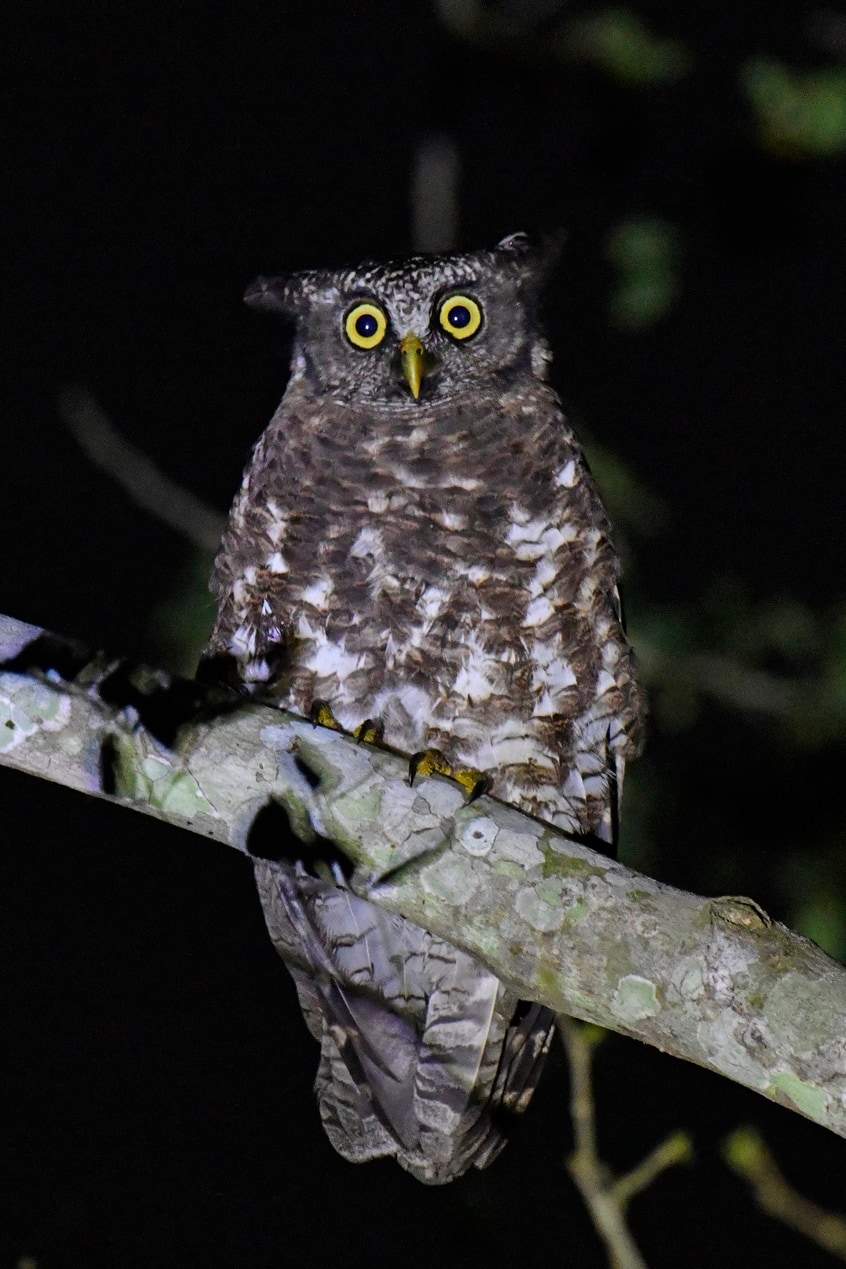
Akun Eagle-Owl
Lowland Primary Rainforest, Lowland Secondary Rainforest, Forest Edges, Forest Clearings, River Edges, Forested River Islands
Guinea, Cameroon, Angola, Central African Republic, Congo, Democratic Republic of Congo
Insects, Beetles, Cicadas, Locusts
About Akun eagle-owl
The Akun eagle-owl (Ketupa leucosticta) is a species of owl belonging to the Strigidae family, native to the tropical rainforests of Africa. Formally described in 1855 by Gustav Hartlaub from a specimen collected in Ghana, its specific epithet, 'leucostictus,' derives from Ancient Greek meaning 'white-speckled.' It is now classified within the genus Ketupa.
Description and Appearance
This owl is considered one of the smaller eagle-owls, measuring between 40–46 cm in length. Males typically weigh between 486–536 g, while females are slightly heavier, ranging from 524–607 g. Its plumage is predominantly dark to reddish-brown on the head and upperparts, with dusky brown bars on the wings and back, and distinctive white markings on the shoulders. A notable feature is the presence of two large, dark brown ear tufts, each marked with white spots. The eyes are pale yellow. The upper breast exhibits a light reddish-brown color with dark barring, contrasting with the white lower breast, belly, and vent, which are marked with reddish-brown vermiculations and prominent blackish spots. Juvenile owls are distinguished by a whitish head and body, accompanied by reddish-brown barring and brown wings and tail.
Distribution and Habitat
The Akun eagle-owl has a fragmented geographic range that spans several West African countries bordering the Gulf of Guinea. Its distribution extends from Guinea eastward to Cameroon and southward to Angola, with extensions inland into the southern Central African Republic, Congo, and the northern parts of the Democratic Republic of Congo. The species primarily inhabits lowland primary and secondary rainforests. It shows a preference for areas around forest edges and clearings, as well as the banks of rivers and forested river islands.
Behavior and Ecology
Like most owls, the Akun eagle-owl is a nocturnal species, emerging from its daytime roost at dusk to hunt. A unique characteristic for an eagle-owl is its diet, which appears to consist almost exclusively of insects. Its relatively small feet and a weaker bill suggest adaptations for this specialized prey, preventing it from tackling larger animals. Its main food sources include beetles, cicadas, and locusts, which it captures either by gleaning them from foliage or by intercepting them in flight. Prey is typically brought back to a perch, held in the feet, and then torn into smaller pieces with the bill.
Details regarding the breeding biology of the Akun eagle-owl are limited. However, in West Africa, egg-laying seems to occur between November and January. Young owlets have been recorded in nests in Liberia from February to April, indicating a potential breeding period. In common with some other eagle-owls, the Akun eagle-owl constructs its nest on the ground. The typical call is a low, accelerating, clucking rattle, and it can produce an unusual quacking sound when alarmed.
Source: Wikipedia ↗
Frequently Asked Questions
What is the scientific name of the Akun eagle-owl?
The scientific name of the Akun eagle-owl is Ketupa leucosticta. It was first formally described in 1855 by Gustav Hartlaub.
Where is the Akun eagle-owl found?
The Akun eagle-owl has a patchy distribution across West African countries bordering the Gulf of Guinea, including Guinea, Cameroon, and Angola, extending inland to the Central African Republic and the Democratic Republic of Congo.
What does the Akun eagle-owl eat?
Unusually for an eagle-owl, the Akun eagle-owl feeds almost exclusively on insects, such as beetles, cicadas, and locusts. Its smaller size and weaker bill likely contribute to this specialized diet.
What does the Akun eagle-owl look like?
This owl has predominantly dark to reddish-brown upperparts and head, with pale dusky brown bars on its wings and back, and white shoulder markings. It features two large, dark brown ear tufts with white spots and pale yellow eyes. The breast is light reddish-brown with dark bars, while the lower parts are white with reddish-brown vermiculations and blackish spots.
What kind of sounds does the Akun eagle-owl make?
The usual call of the Akun eagle-owl is described as a low, accelerating, clucking rattle. When alarmed, it can produce an unusual quacking sound.
Where does the Akun eagle-owl nest?
Similar to some other eagle-owls, the Akun eagle-owl builds its nest on the ground. Young owlets have been observed in nests between February and April in Liberia, suggesting breeding activity around that period.
Related Owl species
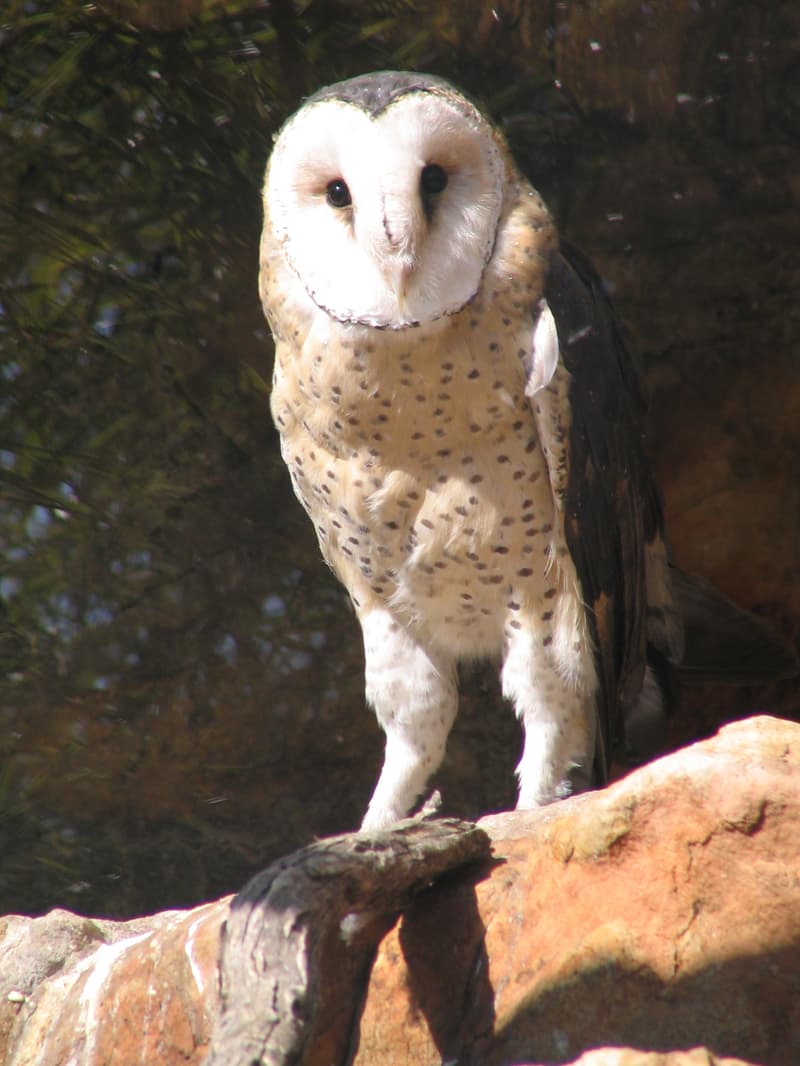
African grass owl
The African grass owl (Tyto capensis) is a medium-sized owl found in sub-Saharan Africa, known for its uniform sooty blackish-brown upperparts and heart-shaped facial disc. It primarily inhabits moist grasslands and savannas, where it hunts rodents and other small mammals at night.

African scops owl
The African scops owl (Otus senegalensis) is a small owl native to sub-Saharan Africa, characterized by its cryptic greyish-brown plumage and bright yellow eyes. It is a strictly nocturnal hunter, often overlooked during the day due to its remarkable camouflage. Its distinctive call is a monotonous "prrrp" sound.

African wood owl
The African wood owl (Strix woodfordii), also known as Woodford's owl, is a common forest owl species native to sub-Saharan Africa. It is distinguished by its rounded head, large dark eyes with white eyebrows, and a distinctive hooting call that can be heard over long distances. This owl is strictly nocturnal and primarily inhabits indigenous forests and woodlands.