
American barn owl
Strigiformes·Least Concern (globally, but locally threatened in some areas)
The American barn owl, scientifically known as Tyto furcata, is a widespread owl species native to North and South America. It is distinguished by its pale, heart-shaped facial disc, long wings, and undulating flight pattern, and plays a crucial role in rodent control due to its specialized diet.
Key Facts
- ›Native to North and South America, with introductions to Hawaii.
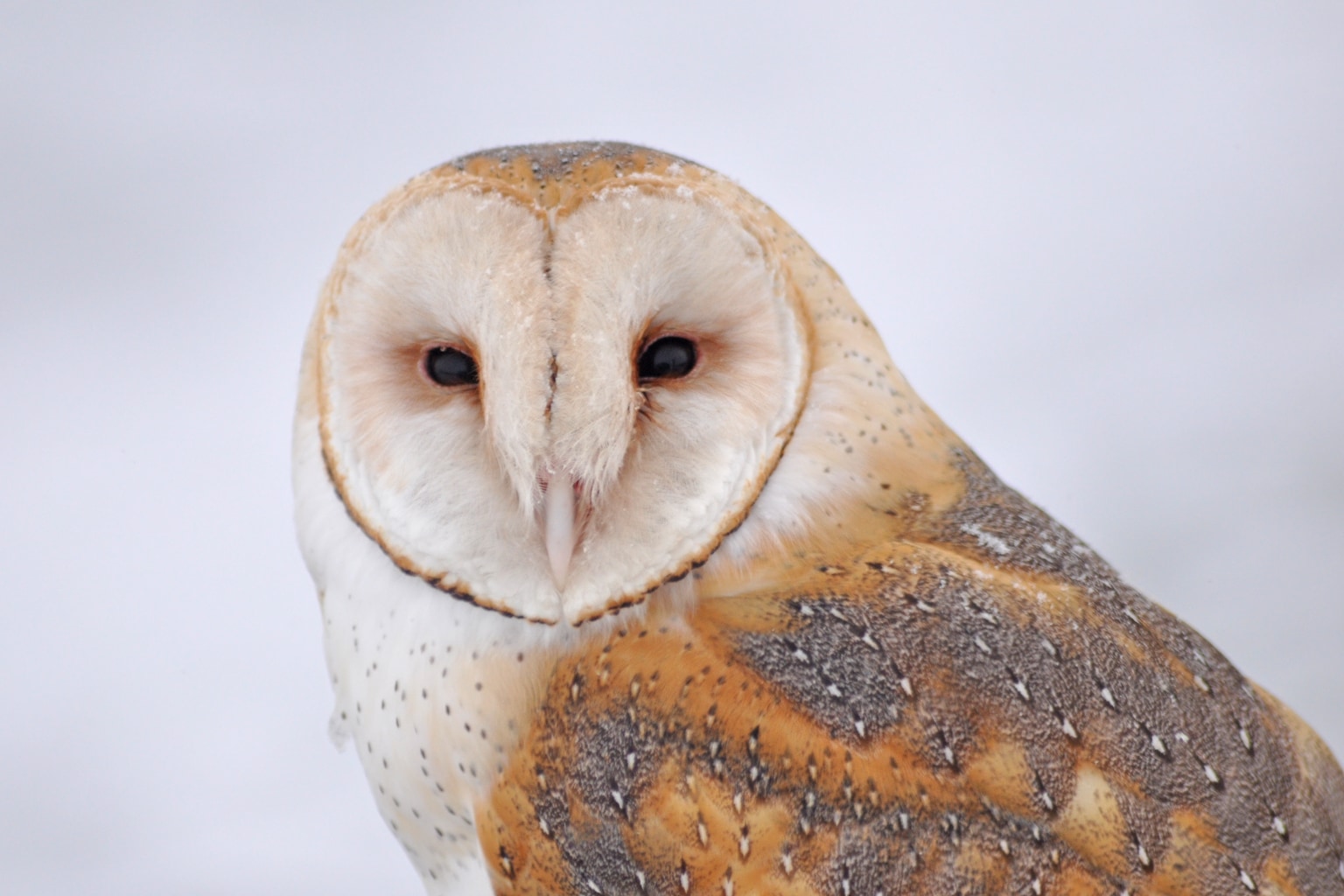
- ›Possesses a distinctive heart-shaped facial disc and black eyes.
- ›Primarily nocturnal, relying heavily on acute hearing for hunting.
- ›Diet consists mainly of small mammals, particularly voles and shrews.
- ›Known for silent flight due to specialized feather adaptations.
- ›Can live up to 20 years in captivity, with a shorter lifespan in the wild.
Ashy-Faced Owl, American Barn Owl
Open Country Such As Farmland and Grassland, Interspersed Woodland, Edges of Woods, Rough Grass Strips Adjoining Pasture, Cavities In Trees, Fissures In Cliff Faces, Old Nests of Other Birds, Disused Buildings, Chimneys, Haysheds
North America, South America, Hawaii
Small Mammals, Mice, Rats, Bats, Birds, Lizards, Amphibians, Insects, Termites, Katydids, Crickets, Frogs, Snakes
Large American Opossums, Common Raccoon, Other Carnivorous Mammals, Eagles, Larger Hawks, Great Horned Owl
About American barn owl
The American barn owl (Tyto furcata) is a medium-sized owl recognized for its pale coloration, long wings, and distinctive heart-shaped facial disc. Native to North and South America, this cosmopolitan species has also been introduced to Hawaii. It is a vital component of its ecosystem, primarily acting as a predator of small mammals, which it hunts with exceptional auditory acuity in near-total darkness.
Description and Identification
The American barn owl is characterized by its pale plumage, which can range from light brown to grey on its upperparts, often adorned with fine black-and-white speckles. The underparts are typically white to reddish buff, sometimes with small dark speckles. Its most striking feature is the pale, heart-shaped facial disc that frames its large black eyes, giving it a ghost-like appearance in flight. The tail is short and squarish, and its flight is often described as undulating and silent, aided by specialized feather adaptations that minimize noise.
Habitat and Range
This owl thrives in open country, including farmland, grasslands, and the edges of woodlands, generally at altitudes below 2,000 meters, though it can be found higher in tropical regions. They often hunt along woodland borders or in rough grassy areas adjacent to pastures. They are cavity nesters, utilizing a variety of locations such as tree hollows, cliff fissures, old nests of other birds, and man-made structures like barns and chimneys.
Diet and Hunting Behavior
The diet of the American barn owl is heavily skewed towards small mammals, particularly voles and shrews, which constitute the vast majority of their prey, especially in North America. Their acute hearing, with asymmetrically placed ears, allows them to pinpoint prey in complete darkness, making them highly effective hunters. They hunt by flying low over the ground, listening intently, and then diving with precise accuracy to seize their prey. Their silent flight is a significant advantage in ambushing unsuspecting rodents.
Reproduction and Lifespan
American barn owls are typically monogamous and exhibit strong site fidelity, returning to established nesting sites year after year. In temperate climates, nesting usually occurs between March and June. Females lay an average of five eggs, which are incubated by the female while the male provides food. Chicks hatch over a prolonged period and are fed by both parents. While wild barn owls have an average lifespan of about four years, individuals in captivity have been known to live for over twenty years. Significant threats to their survival include starvation, adverse weather, collisions with vehicles and power lines, and historically, pesticide poisoning.
Source: Wikipedia ↗
Frequently Asked Questions
What is the scientific name of the American barn owl?
The scientific name of the American barn owl is Tyto furcata. It is recognized as a distinct species by some taxonomic authorities.
Where does the American barn owl live?
The American barn owl is native to North and South America. It has also been introduced to Hawaii, specifically the island of Kauai, to help control rodent populations.
What does the American barn owl eat?
The diet of the American barn owl primarily consists of small mammals, such as voles and shrews, which typically make up over 90% of their prey. They may also consume bats, birds, lizards, amphibians, and insects depending on local abundance.
How does the American barn owl hunt?
The American barn owl is a nocturnal hunter that relies on its exceptional hearing to locate prey in darkness. It hunts by flying slowly, quartering the ground, and hovering over potential prey locations, utilizing its silent flight and keen senses.
What are the distinctive physical features of the American barn owl?
The American barn owl is characterized by its pale coloration, long wings, and a short, squarish tail. Its most striking feature is its heart-shaped facial disc, which surrounds its black eyes, giving it a unique appearance.
What is the conservation status of the American barn owl?
The American barn owl is generally considered relatively common and not globally threatened. However, some populations have experienced local declines due to pesticide poisoning and habitat loss from agricultural intensification.
How long do American barn owls typically live?
In the wild, the average lifespan of an American barn owl is about four years, with many succumbing to starvation or environmental hazards. However, individuals in captivity can live much longer, with some reaching 20 years or more.
Related Owl species

Australian boobook
The Australian boobook (Ninox boobook) is the smallest owl species native to mainland Australia, also found in southern New Guinea, Timor, and the Sunda Islands. It is distinguished by its characteristic "boo-book" call and its predominantly dark-brown plumage marked with pale spots. This nocturnal hunter primarily preys on insects and small vertebrates, nesting in tree hollows and is considered of least concern by the IUCN.

Chaco owl
The Chaco owl is a species of owl native to southern South America, inhabiting the Gran Chaco region of Argentina, Bolivia, and Paraguay. It is distinguished by its lack of ear tufts, pale facial disk with dark lines, and barred plumage. Primarily nocturnal hunters, they are vocally active during twilight hours.

Cinereous owl
The cinereous owl (Strix sartorii), also known as the Mexican barred owl, is a species of owl endemic to Mexico. Historically considered a subspecies of the barred owl, recent vocal and genetic studies support its classification as a distinct species. It is characterized by its brownish-gray upperparts with whitish bars and pale, streaked underparts.