
Chaco owl
The Chaco owl is a species of owl native to southern South America, inhabiting the Gran Chaco region of Argentina, Bolivia, and Paraguay. It is distinguished by its lack of ear tufts, pale facial disk with dark lines, and barred plumage. Primarily nocturnal hunters, they are vocally active during twilight hours.
Key Facts
- ›Found in Argentina, Bolivia, and Paraguay.
- ›Lacks ear tufts and has a pale facial disk with dark concentric lines.
- ›Inhabits the Gran Chaco biome, preferring varied forest types.
- ›Hunts small mammals, birds, reptiles, and invertebrates from a perch.
- ›Vocalizations include a frog-like croaking song, with females having a higher pitch.
- ›Listed as near Threatened by the IUCN due to declining population from habitat loss.

Gran Chaco Biome, Hilly Terrain, Rolling Terrain, Flat Terrain, Dense Forests, Semi-Open Forests
Bolivia, Paraguay, Argentina
Small Mammals, Birds, Reptiles, Invertebrates
About Chaco owl
The Chaco owl (Strix chacoensis) is a species of owl native to the Gran Chaco region of southern South America. Its range extends through Bolivia, Paraguay, and into Argentina. This owl is characterized by its lack of ear tufts, a round head, and a pale facial disk marked with dark, concentric lines. Its plumage is a mix of dusky brownish-black and off-white, with distinctive barring on both its upperparts and underparts, as well as its tail.
Distribution and Habitat
This owl inhabits the Gran Chaco, a biome known for its low rainfall. It can be found in varied terrain, including hilly, rolling, and flat areas, within a diverse array of forest types, from dense woodlands to more open environments. Its elevational range in Argentina is noted to be between 500 and 1,300 meters.
Behavior and Diet
The Chaco owl is primarily a nocturnal hunter, though it is vocally active during the twilight hours of dawn and dusk. It employs a sit-and-wait strategy, perching before dropping onto or flying to capture its prey. Its diet consists of small mammals, birds, reptiles, and invertebrates.
Reproduction and Vocalization
Details regarding the breeding phenology of the Chaco owl are not extensively known but are expected to resemble that of related Strix owl species. It is believed to nest in tree cavities or possibly in ground burrows. Captive individuals have been observed laying clutches of two to three eggs. The male's song is described as a frog-like "crococro craorr-craorr craorr-craorr," with a higher-pitched variation sung by the female.
Conservation Status
Initially assessed as Least Concern by the IUCN, the Chaco owl's status was updated to Near Threatened in 2018. This reclassification is due to its declining population, a trend attributed to ongoing forest loss throughout its natural range.
Source: Wikipedia ↗
Frequently Asked Questions
What is the scientific name of the Chaco owl?
The scientific name of the Chaco owl is Strix chacoensis. It was initially described as a distinct species and later reclassified as a subspecies before strong evidence re-established its species status.
Where can the Chaco owl be found?
The Chaco owl is distributed across southern South America, specifically in the Santa Cruz Department of Bolivia, western Paraguay, and into north-central Argentina, reaching provinces like Córdoba and Buenos Aires.
What does the Chaco owl look like?
This owl is about 35 to 38 cm long with a round head and no ear tufts. Adults have a pale grayish-white facial disk, dusky brownish-black upperparts with barring, and off-white underparts also with dark barring.
What does the Chaco owl eat?
The Chaco owl hunts from a perch, preying on small mammals, birds, reptiles, and invertebrates. Its diet consists of a variety of small animals found within its habitat.
What is the conservation status of the Chaco owl?
The Chaco owl is currently listed as Near Threatened by the IUCN. Its population is believed to be declining due to ongoing forest loss across its native range.
When is the Chaco owl most active?
The Chaco owl is primarily nocturnal, meaning it is most active at night. However, it is also vocally active during the transitional periods of dawn and dusk.
Related Owl species

Javan scops owl
The Javan scops owl (Otus angelinae), also known locally as Celepuk Jawa, is a small owl endemic to the high volcanic mountains of western Java. It is distinguished by its rusty-brown facial disc, prominent white eyebrows and ear-tufts, and a unique alarm call. This nocturnal predator primarily hunts insects and other small invertebrates in montane forests.

Mantanani scops owl
The Mantanani scops owl is a small owl species found on islands between Borneo and the Philippines. It is characterized by its buff facial disk, dark brown upperparts with pale markings, and pale underparts with dark streaks. The species is listed as "near threatened" due to its limited and fragmented range and the ongoing degradation of its forest habitat.
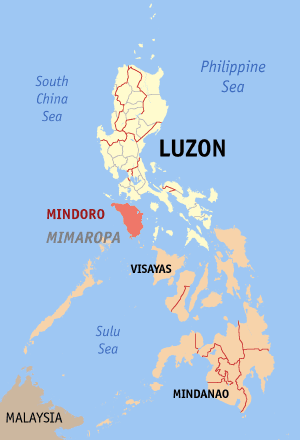
Mindoro scops owl
The Mindoro scops owl is a small owl species endemic to the island of Mindoro in the Philippines. It inhabits tropical moist montane forests at high elevations and is distinguished by its unique morphology compared to related scops owls. This species is considered near threatened due to ongoing habitat loss.