
Andean pygmy owl
The Andean pygmy owl is a small owl species native to the Andes mountains of South America, found in countries like Colombia, Ecuador, Peru, and Venezuela. It is distinguished by its two color morphs, white facial markings including prominent "brows" and "moustaches," and a distinctive face-like pattern on its nape. This owl is an opportunistic predator, active both day and night, feeding on a variety of small invertebrates, birds, and mammals.
Key Facts
- ›Found in Colombia, Ecuador, Peru, and Venezuela.
- ›Exhibits two distinct color morphs: dark brown or dark chestnut.
- ›Possesses prominent white facial markings, including "brows" and "moustaches."
- ›Hunts invertebrates, small birds, and small mammals.
- ›Nests in tree cavities, often old woodpecker holes.
- ›Assessed by the IUCN as Least Concern.
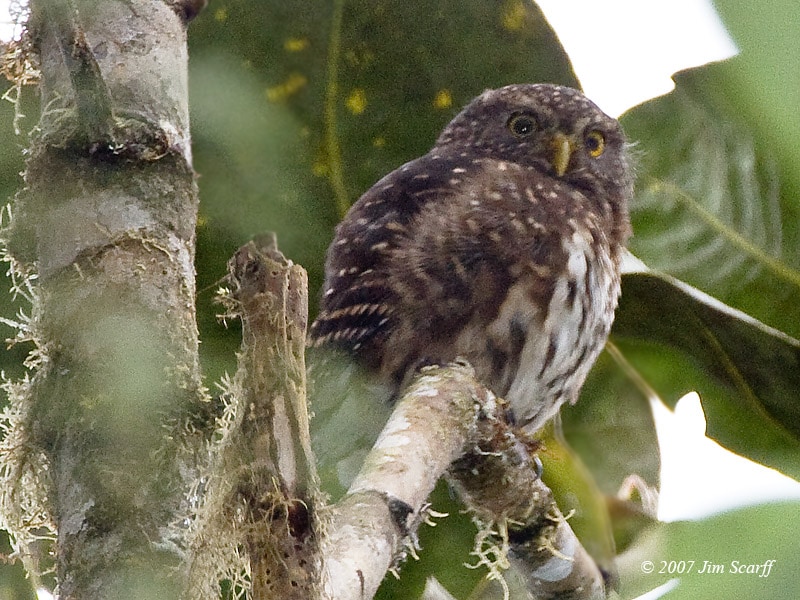
Andean Pygmy Owl
Cloudforest, Elfin Forest, Polylepis Woodland, Forest Edge, Pastures With Scattered Trees
Colombia, Ecuador, Peru, Venezuela
Invertebrates, Small Birds, Small Mammals
About Andean pygmy owl
The Andean pygmy owl (Glaucidium jardinii) is a small owl species found in the high-altitude Andes mountains of South America. Its range extends across western Venezuela, Colombia, Ecuador, and central Peru, where it inhabits diverse mountain environments including cloudforests, elfin forests, and Polylepis woodlands.
Description and Identification
This owl typically measures between 15 and 16 cm in length. It is characterized by two distinct color morphs: one with dull dark brown plumage and white markings, and another with dark chestnut plumage and buff markings. Both morphs share prominent white facial features, including "brows" above yellow eyes, "moustaches," and a broad white throat. A distinctive characteristic is the face-like pattern of black and white on its nape. The back is spotted, and the tail bears white or buff bars. The underparts are streaked, with the breast sides being dark brown or chestnut and the breast and belly being white with heavy dark brown or chestnut streaks.
Behavior and Diet
The Andean pygmy owl is notable for being active both during the day and at night. Its diet is varied, consisting of invertebrates, small birds, and small mammals, which it hunts from the mid-levels to the canopy of its forest habitat.
Reproduction
Details regarding the breeding phenology of the Andean pygmy owl are not extensively documented. However, it is known to utilize tree cavities for nesting, frequently repurposing old woodpecker holes. The typical clutch size consists of three eggs.
Distribution and Habitat
The species occupies a significant portion of the Andes mountain range, from middle elevations around 1,500 meters up to 3,500 meters, and potentially higher in some regions. Its habitat preferences include a variety of mountain forest types, as well as more open areas like forest edges and pastures with scattered trees.
Conservation Status
The International Union for Conservation of Nature (IUCN) has assessed the Andean pygmy owl as a species of Least Concern. Despite an unknown population size, it is considered fairly common and benefits from a large geographic range that includes several protected areas. Nevertheless, the species is considered potentially vulnerable to forest destruction.
Source: Wikipedia ↗
Frequently Asked Questions
What is the Andean pygmy owl's scientific name?
The scientific name of the Andean pygmy owl is Glaucidium jardinii. This binomial nomenclature is used to classify it within the scientific community.
What are the different color variations of the Andean pygmy owl?
The Andean pygmy owl has two distinct color morphs. One morph features dull dark brown plumage with white markings, while the other has dark chestnut plumage with buff markings on the head, body, wings, and tail.
Where does the Andean pygmy owl live?
This owl species inhabits the Andes mountain range, specifically found in far western Venezuela, central and western Colombia, Ecuador, and central Peru. Its preferred habitats include cloudforest, elfin forest, Polylepis woodland, and forest edges with scattered trees.
What does the Andean pygmy owl eat?
The diet of the Andean pygmy owl consists of invertebrates, small birds, and small mammals. It is an active hunter, preying on these animals from the middle levels of the forest to the canopy.
How does the Andean pygmy owl reproduce?
Information about the Andean pygmy owl's breeding habits is limited. However, it is known to nest in tree cavities, often utilizing old woodpecker holes. Typically, a clutch consists of three eggs.
What is the conservation status of the Andean pygmy owl?
The Andean pygmy owl is classified as Least Concern by the IUCN. While its exact population size is unknown, it is considered fairly common and has a broad distribution encompassing several protected areas.
Related Owl species

Austral pygmy owl
The austral pygmy owl is a small owl species found in central and southern Chile and parts of southern Argentina. It is distinctive for its gray-brown and red color morphs and its ability to hunt both during the day and at night. This owl is known for its varied vocalizations, including contact whistles, territorial trills, and courtship calls.
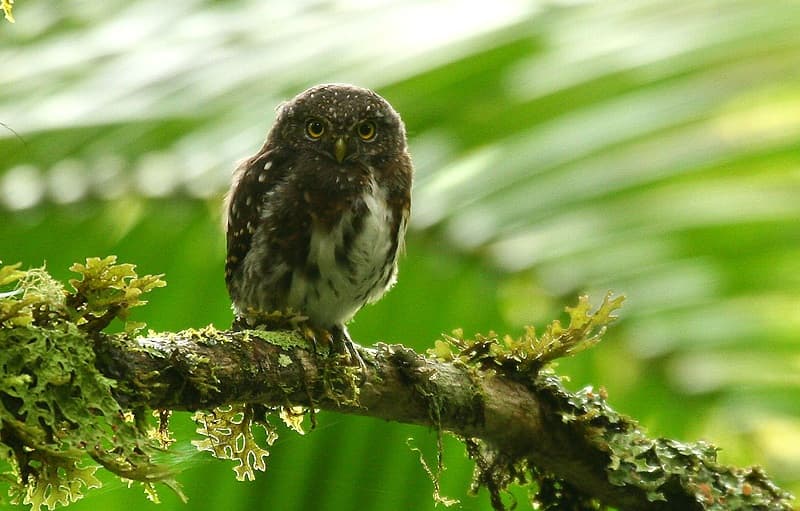
Costa Rican pygmy owl
The Costa Rican pygmy owl is a small owl species found in the montane forests of Costa Rica and Panama. It is known for its distinctive "eye spots" on the back of its head and its varied vocalizations. This species is a year-round resident and forages for prey both day and night.

Pacific pygmy owl
The Pacific pygmy owl, also known as the Peruvian pygmy owl, is a small owl species found on the western slopes of the Andes in Chile, Ecuador, and Peru. It is distinguished by its varied color morphs, including gray, brown, and rufous, and its distinctive vocalizations which help differentiate it from similar species.