
Pacific pygmy owl
The Pacific pygmy owl, also known as the Peruvian pygmy owl, is a small owl species found on the western slopes of the Andes in Chile, Ecuador, and Peru. It is distinguished by its varied color morphs, including gray, brown, and rufous, and its distinctive vocalizations which help differentiate it from similar species.
Key Facts
- ›The Pacific pygmy owl is a small owl, measuring 15 to 17 cm in length.
- ›It exists in gray, brown, and rufous color morphs, with plumage varying accordingly.
- ›This species inhabits diverse environments from sea level up to 3,500 meters in elevation.
- ›Its diet includes birds, small mammals, other vertebrates, and large arthropods.
- ›The Pacific pygmy owl is considered Least Concern by the IUCN, with a stable population.
- ›It is known to nest in tree cavities and old bird nests.

Peruvian Pygmy Owl
Deciduous Forest, Riparian Forest, Arid Lowland Scrubland, Montane Scrubland, Agricultural Areas With Large Trees, Gardens In Built-Up Areas
Chile, Ecuador, Peru
Birds, Small Mammals, Other Vertebrates, Large Arthropods
About Pacific pygmy owl
The Pacific pygmy owl (Glaucidium peruanum), also known as the Peruvian pygmy owl, is a small "typical owl" found in the Surniinae subfamily. This species inhabits the western slopes of the Andes mountain range, with its range extending through Chile, Ecuador, and Peru. It is notable for its adaptability to various environments, from coastal areas to montane regions, and its presence in human-altered landscapes such as agricultural areas and gardens.
Description and Variations
Measuring between 15 and 17 cm in length, the Pacific pygmy owl exhibits distinct color morphs: gray, brown, and rufous. While males and females share the same plumage, females are slightly heavier and possess longer wings and tails. A key feature of the gray morph's plumage includes grayish-brown upperparts marked with buff streaks and spots, as well as distinctive black spots on the neck that create the illusion of extra eyes. All morphs share lemon yellow eyes and yellow-green bills and feet.
Distribution and Habitat
The Pacific pygmy owl's geographic range spans from Manabí province in Ecuador southward through Peru and into Chile's Antofagasta Region. It occupies a wide altitudinal gradient, from sea level up to 3,500 meters in Chile. Its preferred habitats are diverse, encompassing deciduous and riparian forests, arid scrublands, agricultural lands with mature trees, and even urban gardens.
Behavior and Diet
This owl is a year-round resident within its established range. The Pacific pygmy owl is an opportunistic hunter, active both during the day and at night. It typically hunts from the mid-level to the canopy of forests. Its diet is known to consist of birds, small mammals, other vertebrates, and large arthropods. While much about its breeding habits remains unknown, it is understood to nest in tree cavities, including abandoned nests of other species and natural holes in banks.
Vocalization and Status
The vocalizations of the Pacific pygmy owl are distinctive, described as rapid 'pü' notes or rising hoots, along with chirping and warbling sounds, which are crucial for distinguishing it from similar owl species where ranges might overlap. The International Union for Conservation of Nature (IUCN) has assessed the Pacific pygmy owl as Least Concern. Its population is believed to be stable, and it is considered common in many parts of its range, showing tolerance for human presence.
Source: Wikipedia ↗
Frequently Asked Questions
What is the scientific name for the Pacific pygmy owl?
The scientific name for the Pacific pygmy owl is Glaucidium peruanum. It was first described as a species by Claus König in 1991.
Where is the Pacific pygmy owl found?
The Pacific pygmy owl is found on the western slope of the Andes, ranging from north-central Ecuador through Peru and into Chile. It inhabits various moist to arid landscapes.
What are the different color variations of the Pacific pygmy owl?
The Pacific pygmy owl has gray, brown, and rufous color morphs. The gray morph has grayish-brown upperparts with buff streaks and spots, while the other morphs replace the grayish-brown with dark brown or rufous respectively.
What does the Pacific pygmy owl eat?
The diet of the Pacific pygmy owl is not fully detailed but is known to include birds, small mammals and other vertebrates, and large arthropods. It hunts both day and night.
What is the conservation status of the Pacific pygmy owl?
The Pacific pygmy owl is assessed as Least Concern by the IUCN. Its population is believed to be stable, and no specific threats have been identified.
How does the Pacific pygmy owl sound?
The vocalization of the Pacific pygmy owl has been described as a series of rapidly delivered 'pü' notes or as rapid, rising hoots. It also makes chirping and thin warbling notes.
Related Owl species
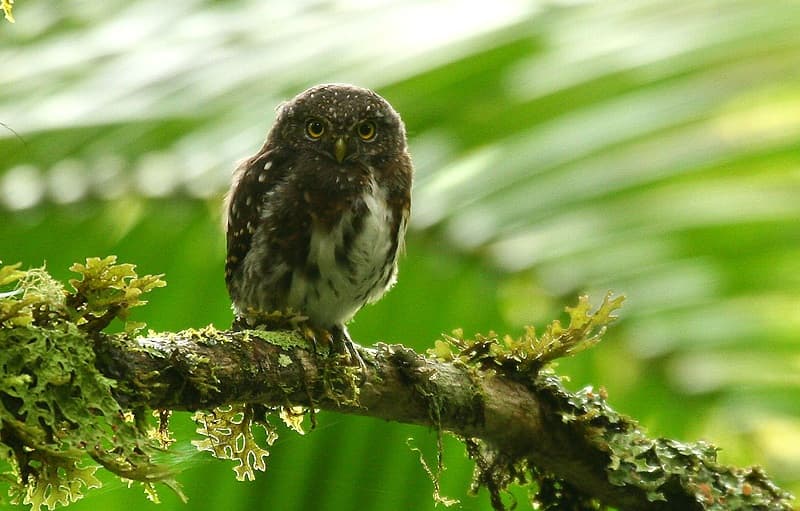
Costa Rican pygmy owl
The Costa Rican pygmy owl is a small owl species found in the montane forests of Costa Rica and Panama. It is known for its distinctive "eye spots" on the back of its head and its varied vocalizations. This species is a year-round resident and forages for prey both day and night.
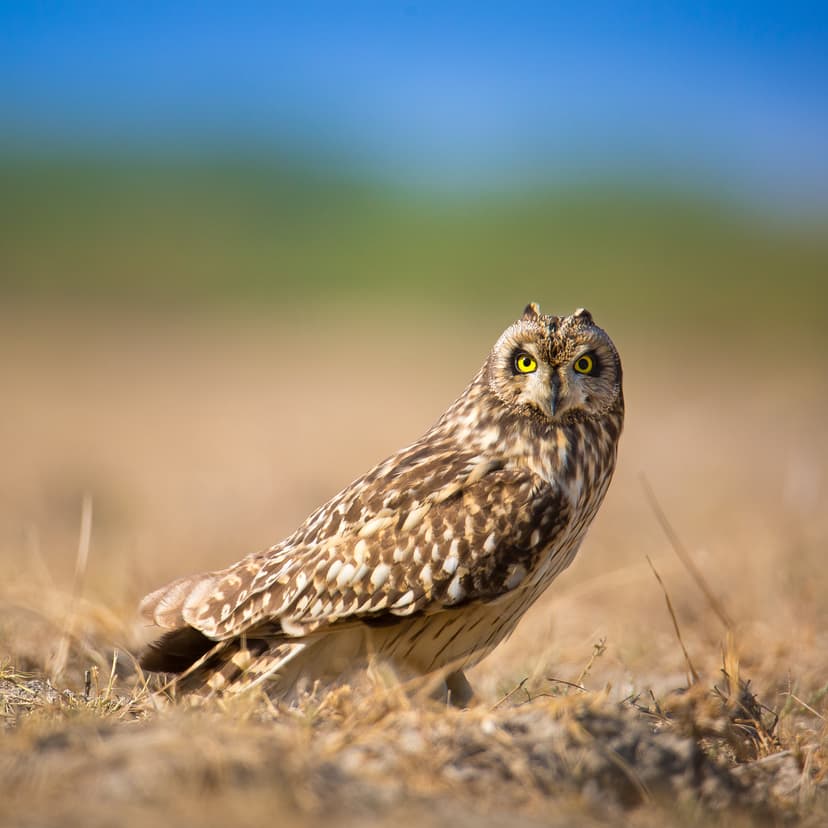
Short-eared owl
The short-eared owl (Asio flammeus) is a widely distributed grassland species known for its distinctive "ear" tufts, which are usually not visible but can be displayed when defensive. This medium-sized owl is found on open country and grasslands across most continents, feeding primarily on rodents like voles.

Yungas pygmy owl
The Yungas pygmy owl (Glaucidium bolivianum) is a small owl species native to the eastern Andes of South America, found in Argentina, Bolivia, and Peru. It is distinguished by its three color morphs (gray, brown, and rufous), pale dorsal spotting, and distinctive "false eyes" on its nape.