
Australian masked owl
Strigiformes·Declining (mainland population)
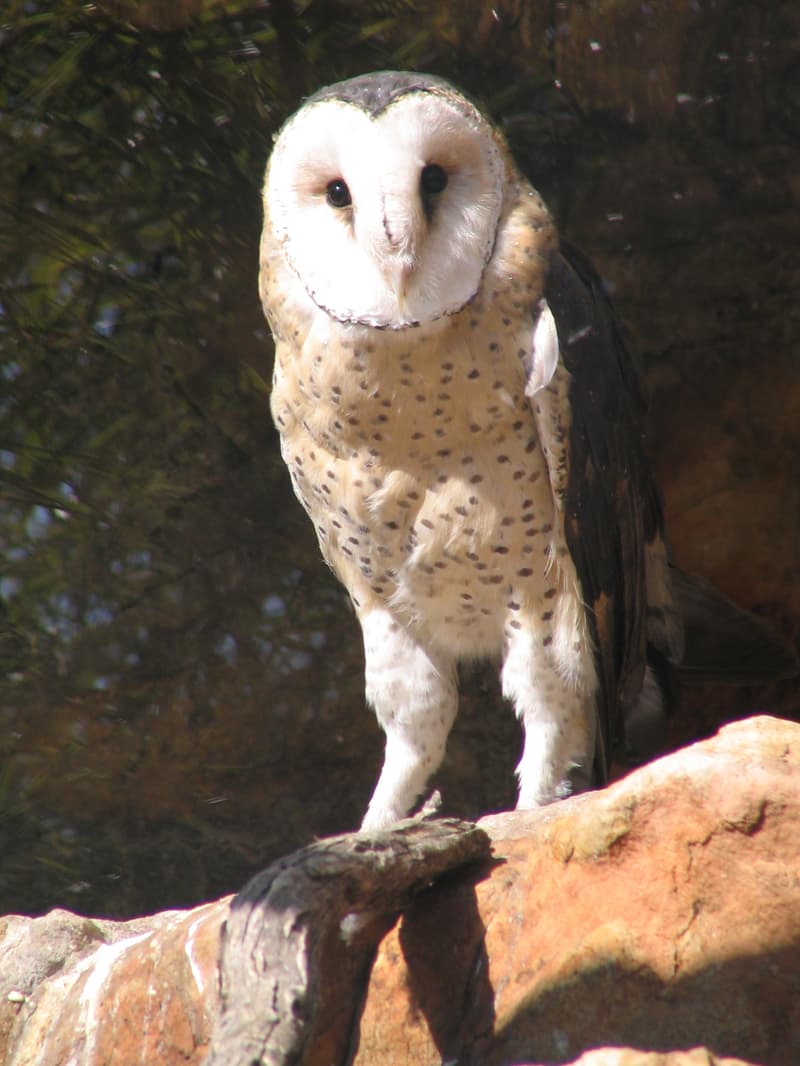
The Australian masked owl, also known as the Australasian masked owl or simply the masked owl, is a barn owl species native to Southern New Guinea and non-desert regions of Australia. It is distinguished by its brown plumage, white heart-shaped facial mask, and the fact that females are typically larger and darker than males.
Key Facts
- ›Found in Southern New Guinea and non-desert areas of Australia.
- ›Characterized by a white, heart-shaped facial mask and brown dorsal plumage.
- ›Females are larger and darker than males, exhibiting sexual dimorphism.
- ›Roosts and nests in large tree hollows, caves, or rock crevices.
- ›Diet includes rodents, small dasyurids, possums, bandicoots, rabbits, bats, birds, reptiles, and insects.
- ›Breeds when conditions are favorable, typically laying two or three eggs.

Australasian Masked Owl, Masked Owl, Mouse-Owl
Timbered Areas With A Shrub Understorey, Large Tree Hollows, Caves, Rock Crevices
Southern New Guinea, Australia
Rodents, Small Dasyurids, Possums, Bandicoots, Rabbits, Bats, Birds, Reptiles, Insects
About Australian masked owl
Overview
The Australian masked owl (Tyto novaehollandiae), also referred to as the Australasian masked owl or simply the masked owl, is a species of barn owl found in Southern New Guinea and the non-desert regions of Australia. This owl is easily recognizable by its striking white, heart-shaped facial mask that contrasts with its brown plumage.
Description and Characteristics
The dorsal plumage of the Australian masked owl is brown, often adorned with light gray spots on the upper back. Its underside is typically white, marked with brown spots. A notable characteristic is the sexual dimorphism within the species, with females being darker in coloration and significantly larger than males. Male weights range from 420 to 800 grams, while females are considerably larger, weighing between 545 to 1,260 grams. Their length varies from 330 to 410 mm for males and 390 to 500 mm for females. The wingspan can extend up to 1,280 mm for southern female masked owls. Tasmanian populations are particularly noted for being the largest within the entire barn-owl family.
Habitat and Distribution
Australian masked owls inhabit timbered areas, frequently featuring a shrub understorey. Within Australia, they are typically found no more than 300 kilometers inland. They seek shelter and build their nests in large tree hollows situated near their foraging grounds. Some populations also utilize caves or rock crevices for nesting and roosting.
Diet and Foraging
These nocturnal hunters have a diverse diet. Their prey includes rodents, small dasyurid marsupials, possums, bandicoots, rabbits, bats, birds, reptiles, and insects. Their foraging strategy primarily targets terrestrial prey, although they are also known to capture prey from trees or while in flight.
Reproduction and Life Cycle
Reproduction in Australian masked owls is triggered by favorable environmental conditions, allowing them to breed at any time of the year. Nests are commonly constructed within tree hollows, sometimes incorporating soil, mulch, or sand. The female typically lays two to three eggs, which she incubates while the male is responsible for hunting and bringing food. The young owls are born with white or off-white down and are capable of leaving the nest at two to three months of age. They continue to be fed by their parents for approximately another month before becoming independent.
Conservation Status
The mainland population of the Australian masked owl is experiencing a decline, leading to its inclusion on the Species Conservation Status lists in several Australian states. In Victoria, it is recognized as a threatened bird, and in New South Wales, it is classified as Vulnerable under the Biodiversity Conservation Act (2016).
Source: Wikipedia ↗
Frequently Asked Questions
What does the Australian masked owl look like?
The Australian masked owl has brown feathers surrounding a white, heart-shaped facial mask. Its dorsal plumage is brown with light gray spots, and its underside is white with brown spots. Eye color can range from black to dark brown.
Where does the Australian masked owl live?
This owl species is found in Southern New Guinea and the non-desert areas of Australia. In Australia, they typically inhabit timbered areas, often with a shrub understorey, and are seldom found more than 300 km inland.
What is the size of the Australian masked owl?
Male masked owls range from 330 to 410 mm in length, while females are larger, measuring between 390 to 500 mm. Wingspans can reach up to 1,280 mm for southern female masked owls. Tasmanian masked owls are notably the largest among the entire barn-owl family.
What does the Australian masked owl eat?
Their diet is varied and includes rodents, small dasyurids, possums, bandicoots, rabbits, bats, birds, reptiles, and insects. They primarily forage for terrestrial prey but will also take prey from trees or in flight.
How does the Australian masked owl reproduce?
They breed when conditions are favorable, which can occur at any time of the year. The female lays two or three eggs, which she incubates while the male provides food. Young owls leave the nest at two to three months of age but continue to be fed by parents for another month.
What is the conservation status of the Australian masked owl?
The mainland population of the Australian masked owl is declining. It is listed as a threatened bird in Victoria and scheduled as Vulnerable in New South Wales, with conservation status lists in several Australian states.
Related Owl species
African grass owl
The African grass owl (Tyto capensis) is a medium-sized owl found in sub-Saharan Africa, known for its uniform sooty blackish-brown upperparts and heart-shaped facial disc. It primarily inhabits moist grasslands and savannas, where it hunts rodents and other small mammals at night.

African scops owl
The African scops owl (Otus senegalensis) is a small owl native to sub-Saharan Africa, characterized by its cryptic greyish-brown plumage and bright yellow eyes. It is a strictly nocturnal hunter, often overlooked during the day due to its remarkable camouflage. Its distinctive call is a monotonous "prrrp" sound.

African wood owl
The African wood owl (Strix woodfordii), also known as Woodford's owl, is a common forest owl species native to sub-Saharan Africa. It is distinguished by its rounded head, large dark eyes with white eyebrows, and a distinctive hooting call that can be heard over long distances. This owl is strictly nocturnal and primarily inhabits indigenous forests and woodlands.