
Baja pygmy owl
The Baja pygmy owl, also known as the cape pygmy owl, is a small owl species found exclusively in the Mexican state of Baja California Sur. Its sandy gray-brown plumage is marked with pale spots and barred tail, and it possesses distinctive yellow irises and bill. It is notable for its unique vocalizations, which differ from other pygmy owls in the region.
Key Facts
- ›Endemic to the Mexican state of Baja California Sur.
- ›Inhabits pine and pine-oak woodlands at moderate to high altitudes.
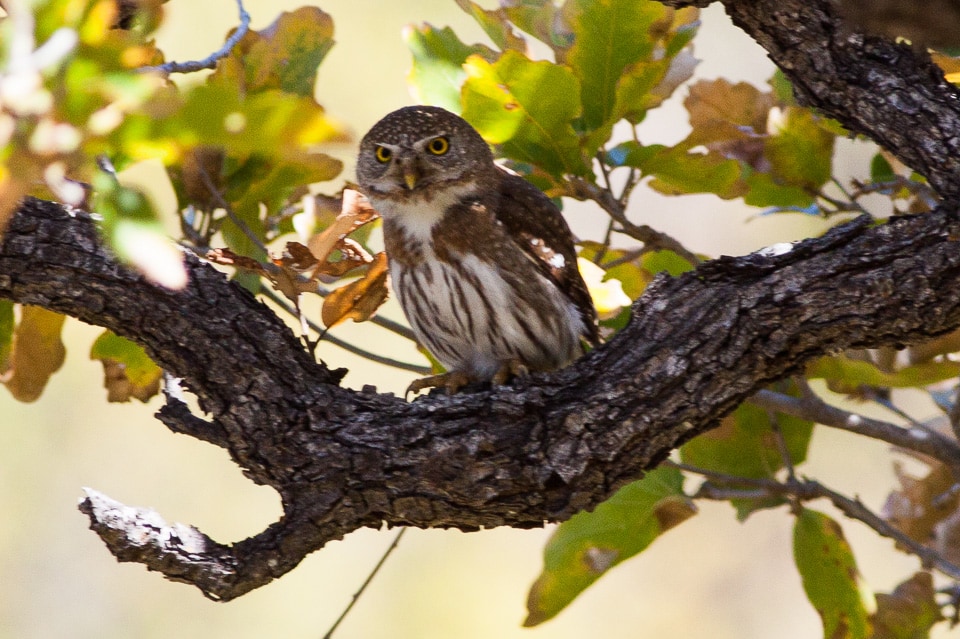
- ›Plumage is sandy gray-brown with pale spots on the crown and back, and a barred tail.
- ›Distinctive vocalization is a "hoo hoo" call, different from other regional pygmy owls.
- ›Possesses yellow irises and a yellow bill, with black "eyespots" on the nape.
- ›Females tend to be more reddish in plumage than males.
Cape Pygmy Owl
Pine Woods, Pine-Oak Woods
Mexico
About Baja pygmy owl
The Baja pygmy owl, scientifically known as Glaucidium hoskinsii and sometimes referred to as the cape pygmy owl, is a small owl species uniquely found in the Mexican state of Baja California Sur. Its taxonomic classification is a subject of debate among ornithologists, with some authorities recognizing it as a distinct species while others consider it a subspecies of the northern pygmy owl (Glaucidium gnoma).
Description and Appearance
This owl measures between 15 to 17 centimeters (6 to 7 inches) in length. Its plumage is predominantly sandy gray-brown, characterized by pale spots on the crown and back, particularly prominent on the scapular feathers. The tail is notably long for its size and is adorned with five or six pale bars. The underparts are off-white, marked with brown streaks. A key distinguishing feature is its bright yellow irises and yellow bill. Like other pygmy owls, it possesses black, white-outlined "eyespots" on the back of its neck, which may serve as a defensive mechanism. While females often display more reddish tones in their plumage compared to males, the species does not appear to exhibit distinct gray and red morphs.
Range and Habitat
The Baja pygmy owl is endemic to the southern tip of the Baja California peninsula, inhabiting the Mexican state of Baja California Sur. Its range includes the Sierra de la Laguna in the Cape District and extends north to the Sierra de la Giganta. The preferred habitat consists of pine and pine-oak woodlands, typically found at elevations between 1,500 and 2,100 meters (5,000–7,000 ft). During the winter months, individuals may descend to lower altitudes, as low as 500 meters (1,640 ft).
Vocalizations
A distinctive characteristic of the Baja pygmy owl is its unique vocalization, which sets it apart from other pygmy owls in the region. The most commonly heard call is a "hoo hoo" sound that lasts for approximately two seconds. These double hoots are typically spaced between five and fifteen seconds apart. The bird may also initiate a hooting sequence with up to five hoots sung in rapid succession, or utter a "rapid, slightly quavering huhuhu…" sound that can transition into its characteristic hooting pattern.
Taxonomy and Etymology
The specific epithet hoskinsii honors Francis Hoskins, an assistant to ornithologist Marston Abbott Frazar. Frazar collected the first known specimen of the Baja pygmy owl during expeditions in the 1880s, funded by American businessman George B. Sennett. While the American Ornithological Society classifies it as a subspecies of the northern pygmy owl, and it has also been considered a subspecies of the least pygmy owl, the Handbook of the Birds of the World recognizes it as a separate species. Genetic evidence suggests that the Baja pygmy owl and the northern pygmy owl may not be closely related.
Source: Wikipedia ↗
Frequently Asked Questions
What is the scientific name of the Baja pygmy owl?
The scientific name of the Baja pygmy owl is Glaucidium hoskinsii. However, its taxonomic status is debated, with some authorities considering it a distinct species and others classifying it as a subspecies of the northern pygmy owl (Glaucidium gnoma).
Where is the Baja pygmy owl found?
The Baja pygmy owl is endemic to the Mexican state of Baja California Sur. Its range extends from the Sierra de la Laguna in the Cape District northward to the Sierra de la Giganta.
What kind of habitat does the Baja pygmy owl prefer?
This owl inhabits pine and pine-oak woodlands. It is typically found at altitudes ranging from 1,500 to 2,100 meters (5,000–7,000 ft), though it may descend to lower elevations in winter.
What does the Baja pygmy owl look like?
The Baja pygmy owl is a small owl, measuring 15 to 17 cm in length. It has sandy gray-brown plumage with pale spots, a long tail with pale bars, yellow irises, and a yellow bill. It also features black "eyespots" on the back of its neck.
What is distinctive about the call of the Baja pygmy owl?
The call of the Baja pygmy owl is distinctly different from other pygmy owls in its region. It is characterized by a "hoo hoo" sound lasting about two seconds, with pauses of five to fifteen seconds between double hoots. It may also begin a hooting series with up to five hoots.
Is the Baja pygmy owl considered a separate species?
Taxonomic authorities differ on this. Some, like the Handbook of the Birds of the World, classify it as a distinct species (Glaucidium hoskinsii). However, others, such as the American Ornithological Society, consider it a subspecies of the northern pygmy owl (Glaucidium gnoma).
Related Owl species
African grass owl
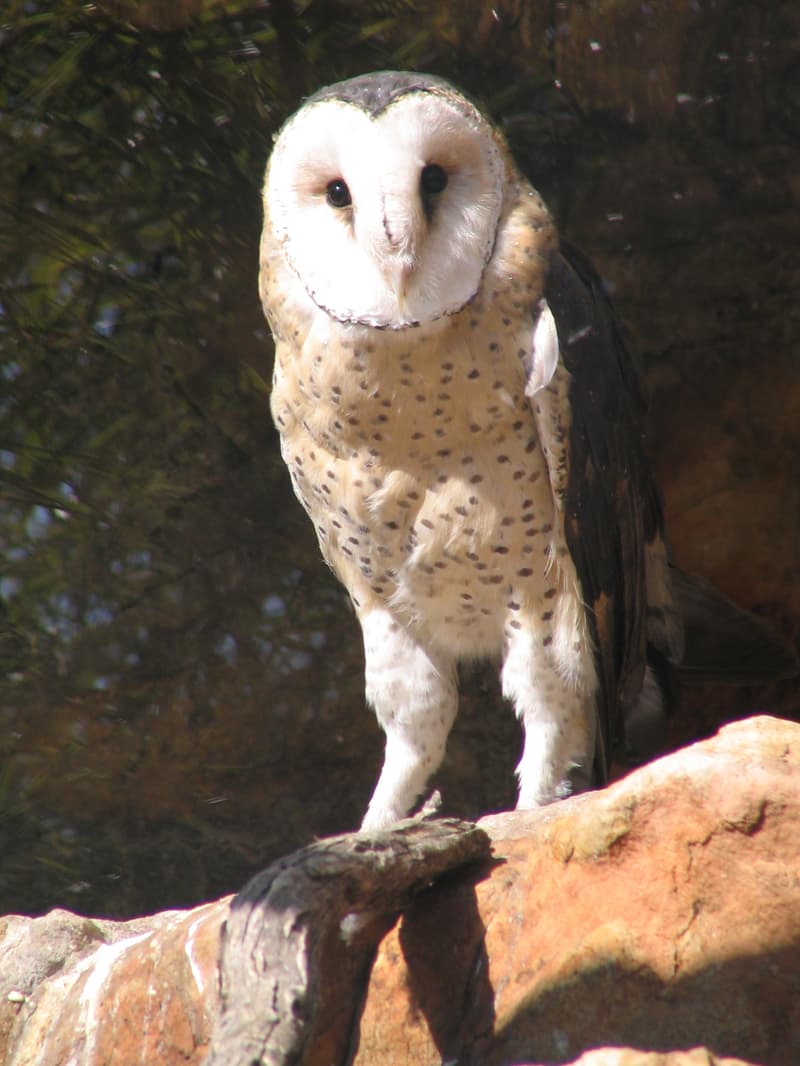
The African grass owl (Tyto capensis) is a medium-sized owl found in sub-Saharan Africa, known for its uniform sooty blackish-brown upperparts and heart-shaped facial disc. It primarily inhabits moist grasslands and savannas, where it hunts rodents and other small mammals at night.

African scops owl
The African scops owl (Otus senegalensis) is a small owl native to sub-Saharan Africa, characterized by its cryptic greyish-brown plumage and bright yellow eyes. It is a strictly nocturnal hunter, often overlooked during the day due to its remarkable camouflage. Its distinctive call is a monotonous "prrrp" sound.

African wood owl
The African wood owl (Strix woodfordii), also known as Woodford's owl, is a common forest owl species native to sub-Saharan Africa. It is distinguished by its rounded head, large dark eyes with white eyebrows, and a distinctive hooting call that can be heard over long distances. This owl is strictly nocturnal and primarily inhabits indigenous forests and woodlands.