
Balsas screech owl
The Balsas screech owl is a species of owl endemic to interior southwestern Mexico, with its range centered along the Balsas River valley. This owl inhabits arid open and semi-open areas, including deciduous woodlands with cactus and thorn forests. It is distinguished by its grayish-brown plumage with darker markings, short ear tufts, and a distinctive territorial song.
Key Facts
- ›Endemic to interior southwestern Mexico, primarily in the Balsas River valley.
- ›Inhabits arid open and semi-open areas like deciduous woodland, thorn forest, and scrublands.
- ›Measures 24 to 27 cm in length and weighs between 150 and 174 g.
- ›Possesses grayish-brown plumage with darker streaks and a pinkish blush on the upperparts.
- ›Its diet includes insects, other arthropods, and small vertebrates.
- ›Its territorial song is a series of gruff notes accelerating into a trill.

Balsas Screech Owl
Arid Open Areas, Semi-Open Areas, Deciduous Woodland With Cactus, Thorn Forest, Secondary Forest, Tropical Scrublands, Edges of Cultivated Areas
Mexico
Insects, Arthropods, Small Vertebrates
Not Specified In Text
About Balsas screech owl
The Balsas screech owl (Megascops seductus) is a species of owl native to Mexico, specifically the interior southwestern regions. Its range is largely centered around the Balsas River valley, extending into states like Jalisco and Guerrero.
Habitat and Distribution
This owl thrives in arid, open, and semi-open environments. Its preferred habitats include deciduous woodlands often adorned with cactus, as well as thorn forests and secondary forests. It can also be found in tropical scrublands and the fringes of agricultural areas. The Balsas screech owl typically resides at elevations ranging from 600 to 1,500 meters.
Physical Description
As one of the larger owls within the Megascops genus, the Balsas screech owl measures between 24 and 27 centimeters in length and weighs between 150 and 174 grams. Its plumage is predominantly grayish-brown. The facial disc is similarly colored, marked with brown and edged with a darker border. Short ear tufts are characteristic of the species. The crown and upperparts are grayish-brown with darker streaks, and the upperparts may exhibit a subtle pinkish blush. The wings, when closed, reveal two distinct bands of whitish spots. The underparts are lighter than the upperparts, featuring narrow dark streaks and faint, wavy markings.
Behavior and Diet
The Balsas screech owl is a nocturnal hunter, meaning it is primarily active during the night. While specific hunting techniques are not detailed, its diet is understood to include a variety of prey such as insects, other arthropods, and small vertebrates.
Vocalization
The vocalizations of the Balsas screech owl are quite distinctive. The territorial song, performed by both sexes, is described as a series of gruff notes that accelerate into a trill, often compared to a 'bouncing-ball' rhythm. A potential courtship song has also been noted as a series of gruff, screaming 'whinny' trills.
Breeding
Information regarding the breeding habits of the Balsas screech owl is limited. It is presumed, based on its genus, that they nest in natural cavities found in trees and cacti.
Conservation Status
Currently, the Balsas screech owl is classified as Least Concern by the International Union for Conservation of Nature (IUCN). This designation was updated from Near Threatened in 2014. Despite this status, the exact population size remains unknown, and there is concern that habitat loss and degradation may be leading to a population decline.
Source: Wikipedia ↗
Frequently Asked Questions
What is the scientific name of the Balsas screech owl?
The scientific name of the Balsas screech owl is Megascops seductus. This name is used to classify it within the scientific community.
Where is the Balsas screech owl found?
The Balsas screech owl is found exclusively in interior southwestern Mexico. Its distribution is concentrated in the valley of the Balsas River, extending from southern Jalisco southeast into central Guerrero.
What kind of habitat does the Balsas screech owl prefer?
This owl prefers arid open and semi-open environments. These include deciduous woodlands characterized by cactus, thorn forests, tropical scrublands, and the peripheries of cultivated land.
What are the physical characteristics of the Balsas screech owl?
The Balsas screech owl is a medium-sized owl with grayish-brown plumage, darker streaks, and a faint pinkish blush. It has short ear tufts and a distinctive facial disc with brownish markings and a darker border.
What does the Balsas screech owl eat?
The diet of the Balsas screech owl is believed to consist of insects, other arthropods, and small vertebrates. Like other screech owls, it is a nocturnal hunter.
What does the Balsas screech owl sound like?
The territorial song of the Balsas screech owl is described as a loud series of gruff notes that speed up into a trill, often likened to a 'bouncing-ball' rhythm. A possible courtship song is a series of gruff, screaming 'whinny' trills.
What is the conservation status of the Balsas screech owl?
The Balsas screech owl is currently assessed as Least Concern by the IUCN. However, its population size is unknown, and there are suspicions of a decline due to habitat loss and degradation.
Related Owl species
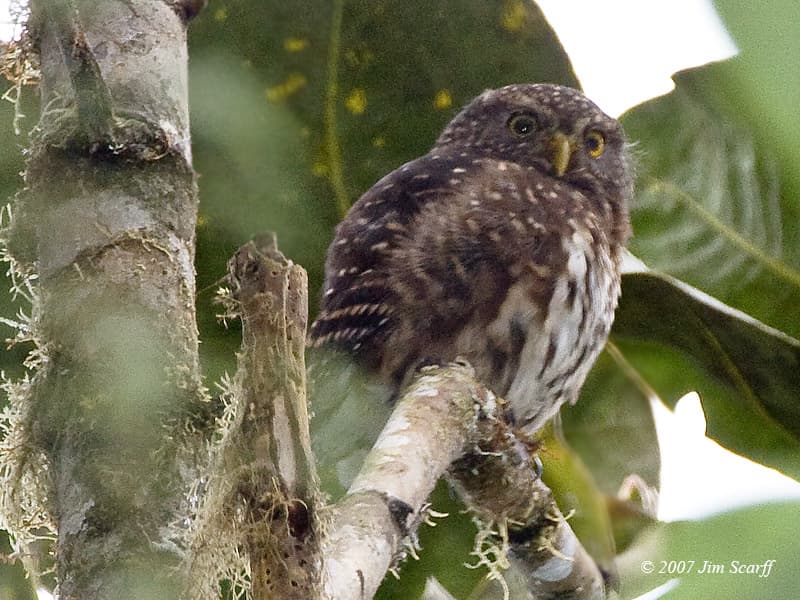
Andean pygmy owl
The Andean pygmy owl is a small owl species native to the Andes mountains of South America, found in countries like Colombia, Ecuador, Peru, and Venezuela. It is distinguished by its two color morphs, white facial markings including prominent "brows" and "moustaches," and a distinctive face-like pattern on its nape. This owl is an opportunistic predator, active both day and night, feeding on a variety of small invertebrates, birds, and mammals.
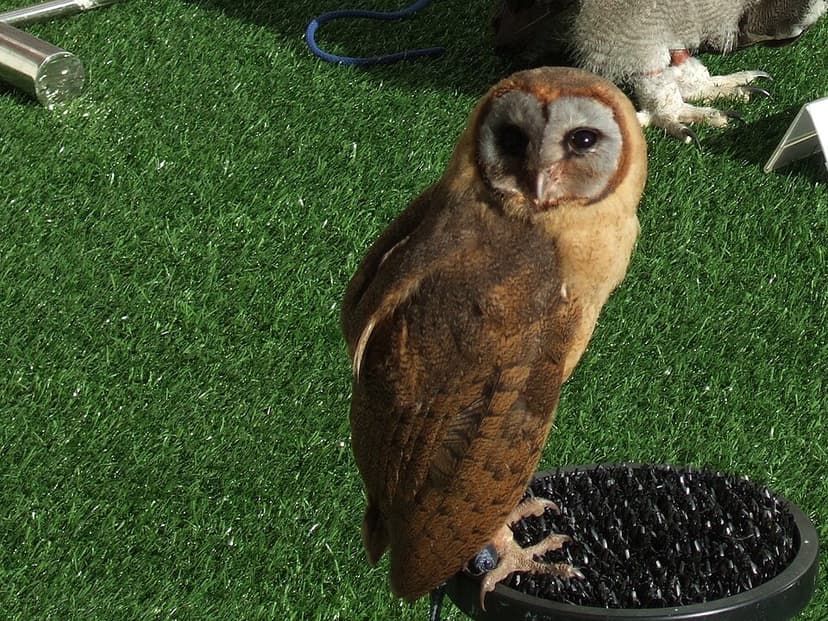
Ashy-faced owl
The ashy-faced owl (Tyto glaucops) is a species of barn owl native to Hispaniola and several islands in the Lesser Antilles. It is distinguished by its silvery-gray facial disc (in the nominate subspecies), a preference for a mix of open hunting spaces and canopy cover, and a varied diet of small vertebrates and invertebrates. This species plays a crucial role as a nocturnal predator in its island ecosystems.

Austral pygmy owl
The austral pygmy owl is a small owl species found in central and southern Chile and parts of southern Argentina. It is distinctive for its gray-brown and red color morphs and its ability to hunt both during the day and at night. This owl is known for its varied vocalizations, including contact whistles, territorial trills, and courtship calls.