
Band-bellied owl
The band-bellied owl (Pulsatrix melanota) is a medium-sized owl native to the montane forests and foothills of South America, found in countries like Bolivia, Colombia, Ecuador, and Peru. It is distinguished by its dark brown facial disk, white "brows" above dark eyes, and barred underparts. While its diet is not extensively studied, it is known to consume large insects.
Key Facts
- ›Found in Bolivia, Colombia, Ecuador, and Peru.
- ›Ranges from 44 to 48 cm in length.
- ›Adults have a dark brown facial disk and white "brows".
- ›Primarily inhabits humid montane forests and foothills rainforest.
- ›Diet is poorly studied but includes large insects.
- ›Assessed by the IUCN as Least Concern, but may be threatened by habitat loss.

Band-Bellied Owl
Humid Montane Forest, Foothills Rainforest, Forest Edges, Clearings With Scattered Trees
Bolivia, Colombia, Ecuador, Peru
Large Insects
About Band-bellied owl
The band-bellied owl (Pulsatrix melanota) is a species of owl belonging to the family Strigidae. This species is found in the montane forests and foothills of South America, with documented occurrences in Bolivia, Colombia, Ecuador, and Peru. The band-bellied owl may form a superspecies with the tawny-browed owl (Pulsatrix koeniswaldiana), though they differ in morphology and vocalizations.
Description and Habitat
Adult band-bellied owls are characterized by their size, ranging from 44 to 48 cm in length, with an average weight of approximately 873 grams. They possess a dark brown facial disk and distinctive white "brows" situated above dark reddish-brown eyes. The upperparts are a dark chocolate brown with scattered buffy-white spots, and the tail is also dark brown with thin white bars. The upper breast is reddish-brown with buff barring, while the underparts are white to creamy with reddish-brown barring. Juvenile plumage has not been described. This owl primarily inhabits the interior of humid montane forests and foothills rainforests, but can also be observed at forest edges and in clearings with scattered trees, typically at elevations between 650 and 2,200 meters.
Behavior and Diet
The band-bellied owl is a nocturnal hunter. Its diet is not extensively studied but is known to include large insects. Information regarding its breeding habits is scarce; it is presumed to nest in natural tree cavities, but specific details on its breeding phenology are not published.
Vocalizations and Conservation
The vocalizations of the band-bellied owl are also poorly known. It is said to produce a short, deep trill followed by a rapid burst of popping notes. Deep, muffled hoots have been recorded in Peru, and the sexes are known to engage in duets. The International Union for Conservation of Nature (IUCN) has assessed the band-bellied owl as Least Concern. However, the species is not well understood and faces potential threats from habitat loss.
Source: Wikipedia ↗
Frequently Asked Questions
What is the scientific name of the band-bellied owl?
The scientific name of the band-bellied owl is Pulsatrix melanota. It belongs to the family Strigidae, which includes typical owls.
Where can the band-bellied owl be found?
The band-bellied owl is found in Bolivia, Colombia, Ecuador, and Peru. It inhabits the eastern slopes of the Andes and ranges from approximately 650 to 2,200 meters in elevation.
What does the band-bellied owl look like?
Adult band-bellied owls are about 44 to 48 cm long and have a dark brown facial disk with white "brows" above dark reddish-brown eyes. Their upperparts are dark chocolate brown with buffy-white spots, and their underparts are barred with reddish-brown.
What is the diet of the band-bellied owl?
The diet of the band-bellied owl is not extensively studied. However, it is known to include large insects, and it hunts nocturnally.
What is the conservation status of the band-bellied owl?
The band-bellied owl is listed as Least Concern by the IUCN. However, there is a concern that it could be threatened by habitat loss, as the species is not well-known.
Related Owl species
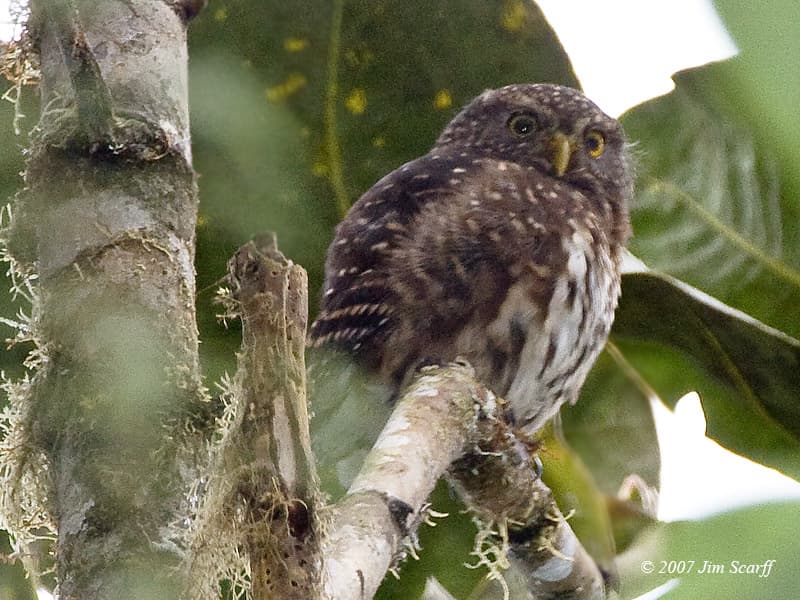
Andean pygmy owl
The Andean pygmy owl is a small owl species native to the Andes mountains of South America, found in countries like Colombia, Ecuador, Peru, and Venezuela. It is distinguished by its two color morphs, white facial markings including prominent "brows" and "moustaches," and a distinctive face-like pattern on its nape. This owl is an opportunistic predator, active both day and night, feeding on a variety of small invertebrates, birds, and mammals.
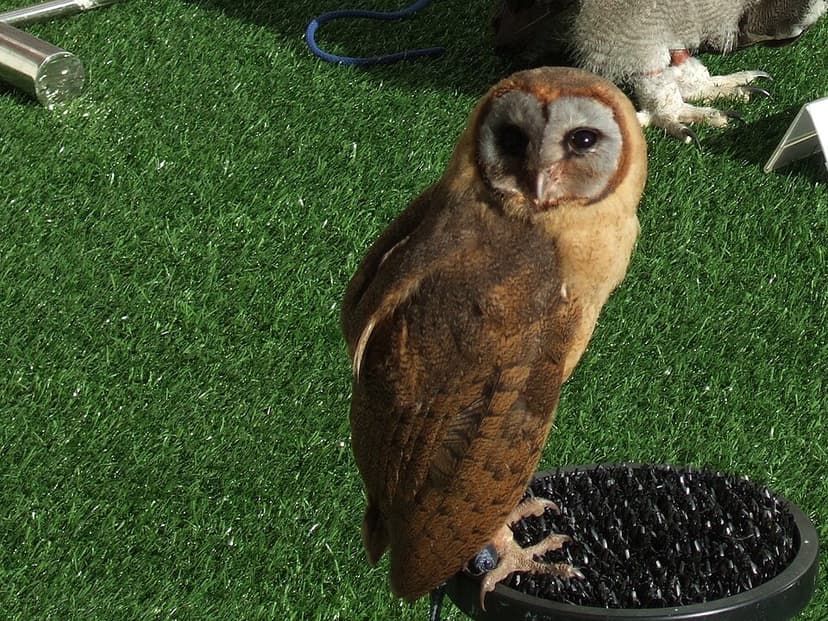
Ashy-faced owl
The ashy-faced owl (Tyto glaucops) is a species of barn owl native to Hispaniola and several islands in the Lesser Antilles. It is distinguished by its silvery-gray facial disc (in the nominate subspecies), a preference for a mix of open hunting spaces and canopy cover, and a varied diet of small vertebrates and invertebrates. This species plays a crucial role as a nocturnal predator in its island ecosystems.

Austral pygmy owl
The austral pygmy owl is a small owl species found in central and southern Chile and parts of southern Argentina. It is distinctive for its gray-brown and red color morphs and its ability to hunt both during the day and at night. This owl is known for its varied vocalizations, including contact whistles, territorial trills, and courtship calls.