
Bare-legged owl
The bare-legged owl is a small owl species endemic to Cuba and Isla de la Juventud. Distinctive for its featherless, green-yellow legs, this nocturnal hunter primarily feeds on insects and arthropods in dry and moist forests.
Key Facts
- ›Endemic to Cuba and Isla de la Juventud.
- ›Characterized by featherless, green-yellow legs.
- ›Strictly nocturnal, foraging mostly on the ground.
- ›Diet consists mainly of insects and arthropods, with occasional small vertebrates.
- ›Secondary cavity nester, utilizing tree cavities or rock crevices.
- ›Breeding season occurs from January to June, with an average clutch of two eggs.

Cuban Bare-Legged Owl, Cuban Screech Owl
Dry Forests, Lowland Moist Forests, Heavily Degraded Former Forest, Palm Tree Stands
Cuba, Isla De La Juventud
Insects, Arthropods, Frogs, Snakes, Small Birds
About Bare-legged owl
The Bare-Legged Owl
The bare-legged owl (Margarobyas lawrencii), also known as the Cuban bare-legged owl or Cuban screech owl, is a small owl species native to Cuba and Isla de la Juventud. It is the sole member of the genus Margarobyas.
Description and Distinguishing Features
This owl is characterized by its relatively small size, typically measuring 20–23 cm (8–9 inches) in length and weighing around 80 grams (2.8 ounces). Its most notable physical characteristic, and the source of its common name, is its featherless, green-yellow legs, which bear a resemblance to those of the burrowing owl. The bare-legged owl possesses dark brown eyes, lacks ear tufts, and features a cream-colored facial disk. Its upperparts are predominantly brown to slightly rufous, with wing feathers adorned with white barring and white spots on the shoulder and scapulars. The underparts are a pale gray- to yellow-white, marked with brown streaking and occasional cross-barring on the sides and breast. Juvenile bare-legged owls share similar plumage colors with adults but tend to have fewer white spots.
Habitat and Behavior
The natural habitats favored by the bare-legged owl include dry forests, lowland moist forests, and areas that were formerly forested but have since become heavily degraded. It shows a particular preference for stands of palm trees. The species is strictly nocturnal, with most of its foraging activities taking place on the ground.
Diet and Reproduction
The bare-legged owl's diet primarily consists of insects and other arthropods. Occasionally, its diet is supplemented by frogs, snakes, and small birds. As a secondary cavity nester, it requires pre-existing holes in trees, such as those created by woodpeckers (particularly in palm trees), or natural openings in trees and rock crevices for nesting. While much about its breeding ecology remains underexplored, the breeding season is known to occur from January to June. The average clutch size is two eggs, which are incubated by the female owl.
Source: Wikipedia ↗
Frequently Asked Questions
What are the distinct physical features of the bare-legged owl?
The bare-legged owl is notable for its featherless, green-yellow legs, which resemble those of the burrowing owl. It also has dark brown eyes, lacks ear tufts, and possesses a cream-colored facial disk.
Where does the bare-legged owl live?
This owl species is found exclusively in Cuba and on Isla de la Juventud. Its preferred habitats include dry forests, lowland moist forests, and degraded former forest areas, with a particular fondness for palm tree stands.
What does the bare-legged owl eat?
Its primary diet consists of insects and other arthropods. Less frequently, it will also consume frogs, snakes, and occasionally small birds.
When does the bare-legged owl breed and how many eggs does it lay?
The breeding season for the bare-legged owl typically spans from January to June. The average clutch size is two eggs, with the female owl responsible for incubation.
Is the bare-legged owl active during the day?
No, the bare-legged owl is strictly nocturnal, meaning it is active and forages primarily during the night.
Related Owl species
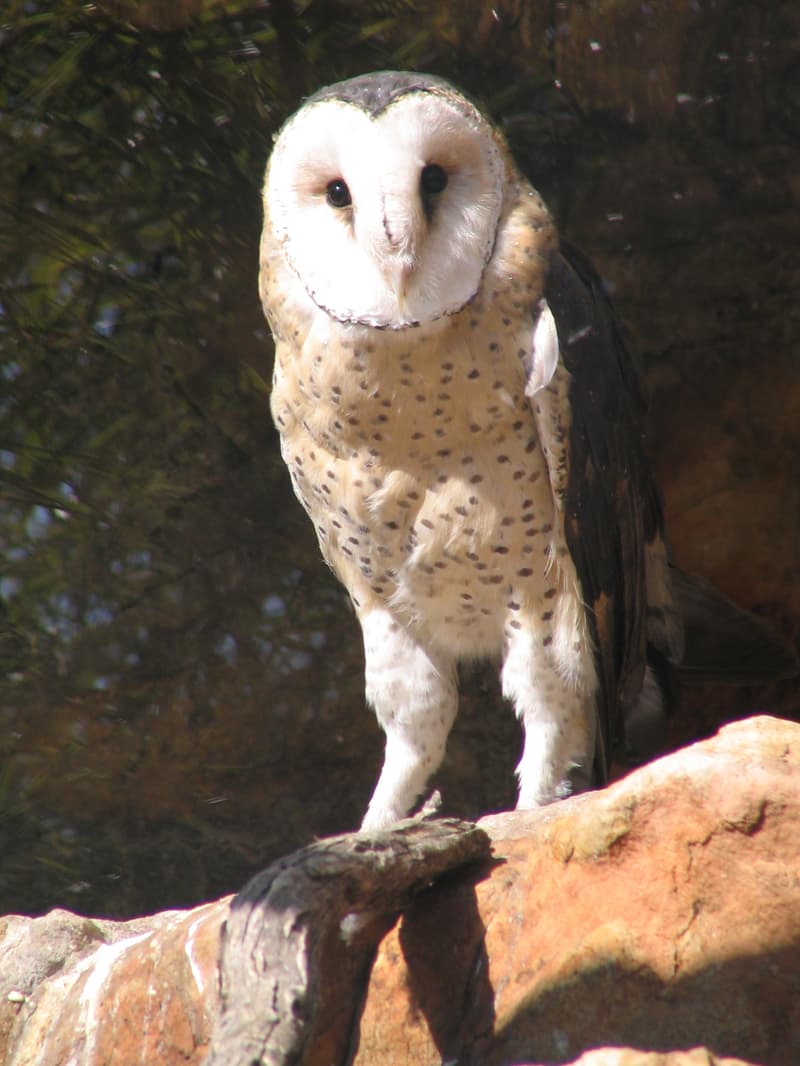
African grass owl
The African grass owl (Tyto capensis) is a medium-sized owl found in sub-Saharan Africa, known for its uniform sooty blackish-brown upperparts and heart-shaped facial disc. It primarily inhabits moist grasslands and savannas, where it hunts rodents and other small mammals at night.

African scops owl
The African scops owl (Otus senegalensis) is a small owl native to sub-Saharan Africa, characterized by its cryptic greyish-brown plumage and bright yellow eyes. It is a strictly nocturnal hunter, often overlooked during the day due to its remarkable camouflage. Its distinctive call is a monotonous "prrrp" sound.

African wood owl
The African wood owl (Strix woodfordii), also known as Woodford's owl, is a common forest owl species native to sub-Saharan Africa. It is distinguished by its rounded head, large dark eyes with white eyebrows, and a distinctive hooting call that can be heard over long distances. This owl is strictly nocturnal and primarily inhabits indigenous forests and woodlands.