
Barking owl
Strigiformes·Varies by region (Threatened, Vulnerable, Near Threatened in parts of Australia)
The Barking Owl is a medium-sized nocturnal bird of prey native to Australia and parts of New Guinea and the Moluccas. It is distinguished by its unique vocalizations, which range from a dog-like bark to an intense human-like howl. This owl plays a significant role in its ecosystem with a broad diet and is currently facing conservation challenges in parts of its range.
Key Facts
- ›Native to mainland Australia, New Guinea, and the Moluccas.
- ›Known for its distinctive barking vocalization, which can sound like a dog or a human howl.
- ›Has a broad diet, consuming mammals, birds, insects, and occasionally reptiles and fish.
- ›Breeds between July and October, depending on the region.
- ›Nests are typically found in large hollows of old eucalypt trees.
- ›Conservation status varies by region, listed as threatened or vulnerable in parts of Australia.

Barking Boobook, Winking Owl
Forests, Woodlands, Areas Near Rivers, Swamps, and Creeks, Drier Parts of New Guinea and the Moluccas
Australia, New Guinea, Moluccas
Mammals, Birds, Insects, Frogs, Reptiles, Fish, Crustaceans
Not Specified In Text
About Barking owl
The Barking Owl: A Distinctive Australian Predator
The Barking Owl, scientifically known as Ninox connivens, is a medium-sized nocturnal bird of prey recognized for its unique and powerful vocalizations. Native to mainland Australia, as well as parts of New Guinea and the Moluccas, this owl is a significant component of its woodland and forest ecosystems. Its common name derives from its characteristic call, which can range from a sound akin to a barking dog to an intense, human-like howl, making it more often heard than seen.
Description and Distribution
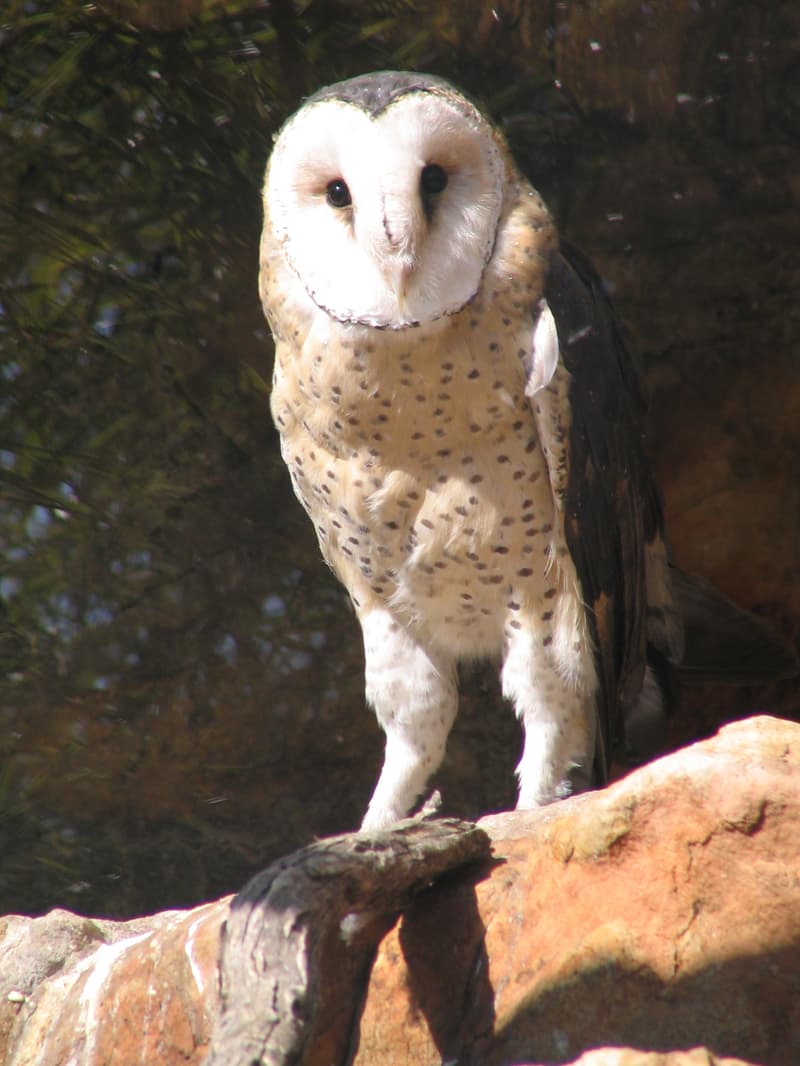
Visually, the Barking Owl is characterized by its brown plumage adorned with white spots on the wings and a streaked chest. It possesses large yellow irises and feet, and its underparts are a brownish-grey, marked with white spots. The tail and flight feathers display prominent brown and white banding. These owls are robust, typically measuring between 39 to 44 cm in length with a wingspan of 85 to 120 cm. While size variations exist, males are generally slightly heavier than females, exhibiting normal sexual dimorphism among owl species.
The Barking Owl's distribution spans the eastern and northern coasts of Australia, extending to the southwest around Perth. Inland, they favor areas near waterways and wooded environments. Their presence also extends to the drier regions of New Guinea and the Moluccas. Historically widespread, their numbers have declined in southern mainland Australia, where they are now considered rare in many areas, though they can occasionally adapt to suburban environments.
Diet and Behaviour
Possessing one of the broadest diets among Australian owls, the Barking Owl is an adaptable hunter. They prey on a wide variety of animals found on the ground, in trees, in the air, and even on the water's surface. Their diet includes mammals such as mice, rats, possums, and bats, as well as birds ranging from small passerines to larger species like magpies and cockatoos. Insects, particularly beetles and moths caught on the wing, often form a significant part of their diet, and they will also consume frogs, reptiles, and fish. They are known to hunt from perches in timbered and open habitats.
Vocalizations and Breeding
The Barking Owl's voice is its most defining characteristic. The territorial call is a double 'hoot' strongly resembling a dog's bark, with males and females exhibiting different pitches. Beyond this primary call, they possess a range of other vocalizations, including growls, howls, and screams, which are often used in defense, particularly around the nest. These screams can be remarkably unsettling, sometimes sounding like a human cry of pain, and have contributed to local myths. Juvenile owls emit an insect-like twitter when begging for food, while females may produce a gentle bleating sound when receiving food from a male.
The breeding season occurs between July and October, varying by region. Nests are typically constructed from decayed debris within the large hollows of old eucalypt trees, often situated near water sources. Females incubate a clutch of two to three dull-white eggs for approximately 36 days. Young owls fledge within five to six weeks, covered initially in white down.
Conservation Concerns
While not federally threatened in Australia, the Barking Owl's conservation status is a concern at the state level. It is listed as 'Threatened' in Victoria and 'Vulnerable' in New South Wales, with its southern subspecies designated 'near threatened'. The primary threat to the species is habitat loss, particularly the loss of mature trees that provide essential nesting hollows. These hollows take centuries to develop, and their removal through land clearing and firewood collection significantly impacts breeding success. Declines in native prey species and the impact of introduced predators also pose challenges, though in some areas, introduced European rabbits have become a substitute food source. Surveys have indicated a decline in populations, with larger areas becoming isolated from one another, highlighting the need for ongoing conservation efforts.
Source: Wikipedia ↗
Frequently Asked Questions
What is another name for the Barking Owl?
The Barking Owl is also known as the barking boobook and the winking owl. Indigenous Australian communities have their own names for the species, such as the Yanyuwa name 'mulurrku'.
What does a Barking Owl sound like?
The Barking Owl is most recognized for its vocalizations, which include a double 'hoot' that resembles a dog's bark. It can also produce deeper growls, howls, screams, bleating, and twittering sounds depending on the context.
Where do Barking Owls live?
Barking Owls inhabit mainland Australia, particularly along the eastern and northern coasts and in the southwest. They also reside in drier parts of New Guinea and the Moluccas, preferring forests and woodlands with large trees for nesting and foliage for roosting.
What do Barking Owls eat?
Their diet is very broad and includes mammals like mice, rats, possums, and rabbits, as well as birds, bats, and insects such as beetles and moths. They are opportunistic hunters and will consume prey from the ground, trees, water, and air.
What is the conservation status of the Barking Owl?
The conservation status varies across Australia. While not listed as threatened federally, it is considered 'Threatened' in Victoria, 'Vulnerable' in New South Wales, and 'near threatened' for its southern subspecies. It is less common and sometimes rare in many suburban areas.
What are the main threats to Barking Owls?
The primary threat is habitat loss, specifically the deterioration or loss of large, hollow-bearing trees essential for nesting, which take centuries to form. Clearing of native vegetation and the decline of prey species also contribute to their endangerment.
Related Owl species
African grass owl
The African grass owl (Tyto capensis) is a medium-sized owl found in sub-Saharan Africa, known for its uniform sooty blackish-brown upperparts and heart-shaped facial disc. It primarily inhabits moist grasslands and savannas, where it hunts rodents and other small mammals at night.

African scops owl
The African scops owl (Otus senegalensis) is a small owl native to sub-Saharan Africa, characterized by its cryptic greyish-brown plumage and bright yellow eyes. It is a strictly nocturnal hunter, often overlooked during the day due to its remarkable camouflage. Its distinctive call is a monotonous "prrrp" sound.

African wood owl
The African wood owl (Strix woodfordii), also known as Woodford's owl, is a common forest owl species native to sub-Saharan Africa. It is distinguished by its rounded head, large dark eyes with white eyebrows, and a distinctive hooting call that can be heard over long distances. This owl is strictly nocturnal and primarily inhabits indigenous forests and woodlands.