
Bearded screech owl
The bearded screech owl, also known as the Santa Barbara screech owl, is a small "typical owl" native to the highlands of Guatemala and Mexico. It is the smallest owl of its genus in North America and is distinguished by its two color morphs, a greenish bill, and pink toes. This species is primarily nocturnal, feeding on arthropods within its humid montane forest habitat.
Key Facts
- ›Smallest screech owl species in North America.
- ›Found in humid temperate montane forests of Guatemala and Mexico.
- ›Exhibits two color morphs: gray-brown and dark reddish.
- ›Feeds almost exclusively on arthropods, hunting from perches.
- ›Breeding season typically occurs from March to June.
- ›Territorial song is a quiet, cricket-like trill.

Santa Barbara Screech Owl
Humid Temperate Montane Forest, Pine-Oak Forest, Oak Forest, Cloudforest
Guatemala, Mexico
Arthropods, Beetles, Crickets, Moths, Roaches, Spiders, Scorpions
About Bearded screech owl
The bearded screech owl, scientifically known as Megascops barbarus and also referred to as the Santa Barbara screech owl, is a small "typical owl" native to the highlands of Guatemala and Mexico. It holds the distinction of being the smallest owl within its genus found in North America. The species is characterized by its two distinct color morphs—a common light gray-brown and a less common dark reddish-brown—and possesses unique features such as yellow eyes, a greenish bill, and unfeathered pink toes.
Distribution and Habitat
This owl is found in the humid temperate montane forests, including pine-oak, oak, and cloudforest ecosystems, primarily at elevations between 1,800 and 2,500 meters. Its range extends from the highlands of central Chiapas, Mexico, southward and eastward into central and western Guatemala.
Behavior and Diet
The bearded screech owl is a resident species, meaning it does not migrate. It is entirely nocturnal, actively hunting during the night. Its diet consists almost exclusively of arthropods, with a preference for beetles, though it also consumes crickets, moths, roaches, spiders, and scorpions. The owl typically hunts from a perch, waiting to pounce on prey in the understory or at the forest edge, and consumes its catch immediately where it is captured.
Reproduction
The breeding season for the bearded screech owl generally occurs between March and June. The species is territorial. Limited information is available on its nesting habits, with only one nest ever documented, which was located within a natural tree cavity. A reddish morph female was observed brooding a gray chick in this instance.
Vocalization
The territorial song of the bearded screech owl is described as a quiet, low-pitched, cricket-like trill that lasts for 3-5 seconds and changes in pitch at its conclusion. Both male and female owls vocalize, with males singing more frequently and at a lower pitch than females. They also emit a soft, ventriloquial "hu" sound.
Conservation Status
The conservation status of the bearded screech owl has been re-evaluated over time by the IUCN. It is currently listed as Least Concern, though its population is estimated to be decreasing. Its total range is relatively small, and it faces threats from deforestation in certain areas, leading Mexican officials to list it as endangered within that country.
Source: Wikipedia ↗
Frequently Asked Questions
What is the scientific name for the bearded screech owl?
The scientific name for the bearded screech owl is Megascops barbarus. It belongs to the genus Megascops, which includes over 20 other screech owl species.
Where can the bearded screech owl be found?
The bearded screech owl is found in the highlands of central Chiapas, Mexico, and extends south and east into the highlands of central and western Guatemala. It inhabits humid temperate montane forests.
What does the bearded screech owl eat?
The bearded screech owl feeds almost exclusively on arthropods. Its diet includes beetles, crickets, moths, roaches, spiders, and scorpions.
What is the conservation status of the bearded screech owl?
The IUCN currently lists the bearded screech owl as Least Concern. Historically, it was assessed as Near Threatened and then Vulnerable before its current rating.
What are the physical characteristics of the bearded screech owl?
The bearded screech owl is small, measuring 16 to 20 cm in length, with two color morphs: gray-brown and dark reddish. Both morphs have yellow eyes, greenish bills, and unfeathered pink toes.
When does the bearded screech owl breed?
The breeding season for the bearded screech owl appears to span from March to June. The only nest ever documented was found in a natural tree cavity.
Related Owl species
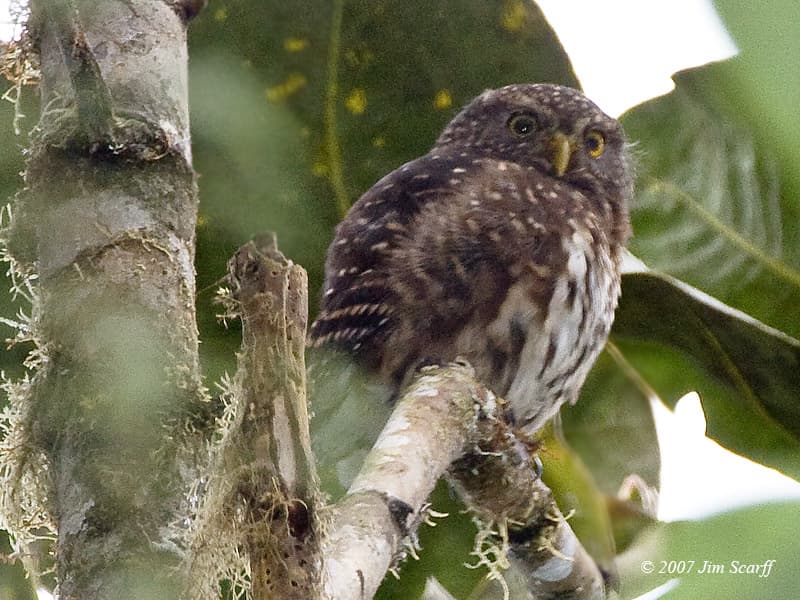
Andean pygmy owl
The Andean pygmy owl is a small owl species native to the Andes mountains of South America, found in countries like Colombia, Ecuador, Peru, and Venezuela. It is distinguished by its two color morphs, white facial markings including prominent "brows" and "moustaches," and a distinctive face-like pattern on its nape. This owl is an opportunistic predator, active both day and night, feeding on a variety of small invertebrates, birds, and mammals.
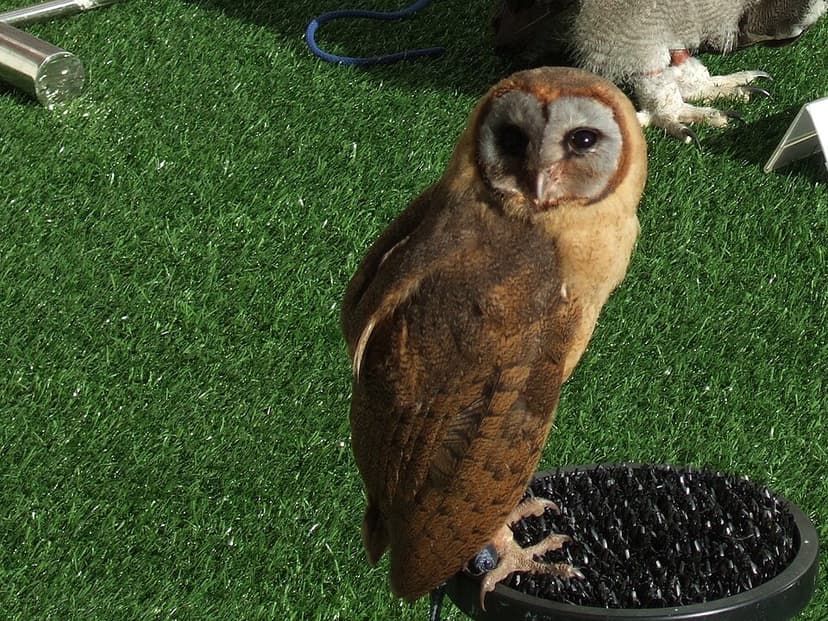
Ashy-faced owl
The ashy-faced owl (Tyto glaucops) is a species of barn owl native to Hispaniola and several islands in the Lesser Antilles. It is distinguished by its silvery-gray facial disc (in the nominate subspecies), a preference for a mix of open hunting spaces and canopy cover, and a varied diet of small vertebrates and invertebrates. This species plays a crucial role as a nocturnal predator in its island ecosystems.

Austral pygmy owl
The austral pygmy owl is a small owl species found in central and southern Chile and parts of southern Argentina. It is distinctive for its gray-brown and red color morphs and its ability to hunt both during the day and at night. This owl is known for its varied vocalizations, including contact whistles, territorial trills, and courtship calls.