
Black-and-white owl
The black-and-white owl is a medium-sized owl species found in neotropical forests from central Mexico to Peru. It is distinguished by its striking black and white striped plumage on its breast and belly, a sooty black head with white "eyebrows," and yellow-orange beak. Primarily an insectivore, it hunts nocturnally, preying on beetles, bats, and small rodents.
Key Facts
- ›Medium-sized owl with a round head and no ear tufts.
- ›Distinctive black and white striped breast and belly plumage.
- ›Found in gallery forests, rainforests, and wet deciduous and mangrove forests.
- ›Nocturnal hunter, primarily feeding on insects, bats, and small rodents.
- ›Monogamous species with a low reproductive success rate, typically laying one egg.
- ›Classified as 'Least Concern' by the IUCN, though populations are declining due to habitat loss.

Black-and-White Owl
Gallery Forests, Rainforest, Wet Deciduous Forests, Mangrove Forests
Central Mexico, Northwestern Peru, Western Colombia, Belize, Costa Rica, Ecuador, El Salvador, Guatemala, Honduras, Nicaragua, Panama, Venezuela
Insects, Bats, Small Rodents, Small Birds, Amphibians, Barn Swallows
Tayras, Ocelots, Coatis, Falcons, Hawks
About Black-and-white owl
The black-and-white owl (Strix nigrolineata) is a medium-sized owl species belonging to the family Strigidae. It is recognized for its distinctive black and white striped plumage on its breast, belly, and vent, contrasted with a sooty black head and back, and a yellow-orange beak.
Habitat and Distribution
This owl inhabits a range stretching from central Mexico south to northwestern Peru and western Colombia. Its preferred habitats include gallery forests, rainforests, and wet deciduous and mangrove forests, often found at altitudes from sea level up to 2400 meters. They are also known to visit small ponds for hunting and are notably not afraid of living in close proximity to human dwellings.
Diet and Behavior
The black-and-white owl is a nocturnal hunter that forages primarily at the canopy level. Its diet consists mainly of insects, such as scarab beetles, orthopterans, and cicadas. It also preys on bats, small rodents, and occasionally smaller birds like thrushes and tanagers, and amphibians. An interesting aspect of its diet is its reported ability to capture barn swallows, which are easier to catch when roosting.
Reproduction and Conservation
This species forms monogamous pairs, with the breeding season beginning in March. The female typically lays one or two eggs, a relatively low clutch size for owls, which is thought to be related to their equatorial proximity. The male plays an active role in defending the nest and foraging for the pair. Despite being classified as 'Least Concern' by the IUCN, black-and-white owl populations are experiencing a decline, primarily due to the loss of wetland and forest habitats to agricultural development and increasing human encroachment.
Source: Wikipedia ↗
Frequently Asked Questions
What does the black-and-white owl look like?
The black-and-white owl is a medium-sized owl, measuring 35-40 cm in length. It features a striped black-and-white breast and belly, a sooty black head with white 'eyebrows,' a yellow-orange beak, and reddish-brown eyes. Juveniles have a whitish face and dark upperparts with white-barred undersides.
Where does the black-and-white owl live?
This owl's range extends from central Mexico south to northwestern Peru and western Colombia. It inhabits gallery forests, rainforests, and wet deciduous and mangrove forests, often found near small ponds and is not deterred by human proximity.
What does the black-and-white owl eat?
The black-and-white owl is primarily insectivorous, favoring scarab beetles. Its diet also includes orthopterans, cicadas, bats, small rodents, and occasionally smaller birds and amphibians. It is noted for its ability to capture barn swallows.
What are the sounds made by the black-and-white owl?
Its vocalization consists of a series of rapid, guttural, low calls, followed by a short pause and a low, airy call with a faint hoot. This can sometimes be shortened, omitting the initial calls. Younglings produce strident cries and beak clacking.
How does the black-and-white owl reproduce?
The black-and-white owl forms monogamous pairs in March. The female incubates a clutch of one or two eggs, while the male forages and defends the nest. Chicks hatch in April, and due to their low clutch size and vulnerability, their survival rate is challenging.
What is the conservation status of the black-and-white owl?
The black-and-white owl is listed as 'Least Concern' on the IUCN's Red List. However, its populations are decreasing, particularly in Mexico, due to habitat loss from conversion to agricultural land and proximity to humans.
Related Owl species
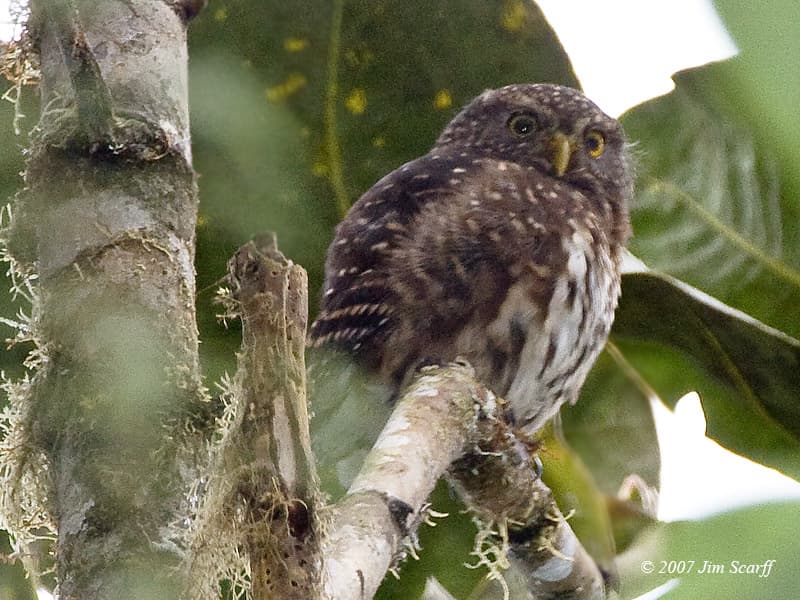
Andean pygmy owl
The Andean pygmy owl is a small owl species native to the Andes mountains of South America, found in countries like Colombia, Ecuador, Peru, and Venezuela. It is distinguished by its two color morphs, white facial markings including prominent "brows" and "moustaches," and a distinctive face-like pattern on its nape. This owl is an opportunistic predator, active both day and night, feeding on a variety of small invertebrates, birds, and mammals.
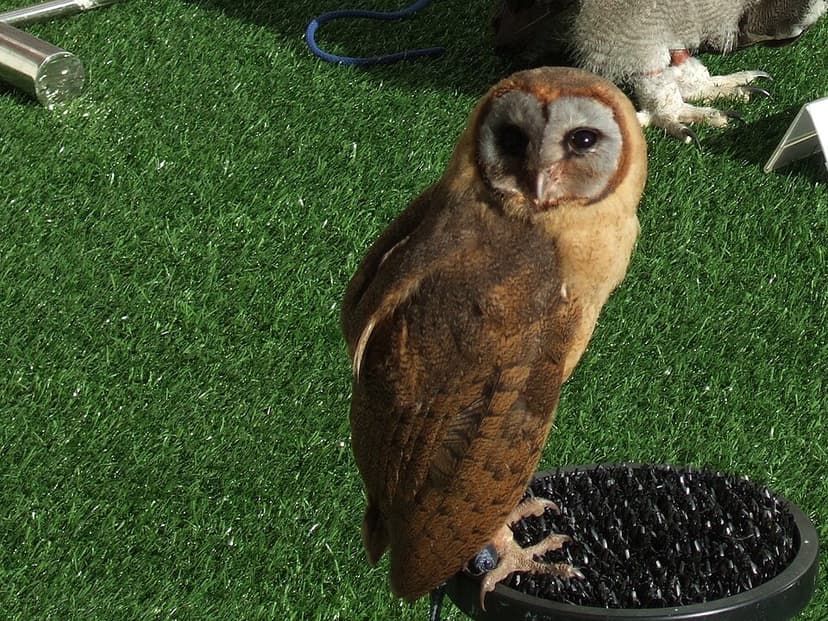
Ashy-faced owl
The ashy-faced owl (Tyto glaucops) is a species of barn owl native to Hispaniola and several islands in the Lesser Antilles. It is distinguished by its silvery-gray facial disc (in the nominate subspecies), a preference for a mix of open hunting spaces and canopy cover, and a varied diet of small vertebrates and invertebrates. This species plays a crucial role as a nocturnal predator in its island ecosystems.

Austral pygmy owl
The austral pygmy owl is a small owl species found in central and southern Chile and parts of southern Argentina. It is distinctive for its gray-brown and red color morphs and its ability to hunt both during the day and at night. This owl is known for its varied vocalizations, including contact whistles, territorial trills, and courtship calls.