
Black-capped screech owl
The black-capped screech owl, also known as the variable screech owl, is a species native to Argentina, Brazil, and Paraguay. It is distinguished by its blackish crown, prominent ear tufts, and variable plumage morphs (brown, rufous, and gray). This owl typically inhabits lowland rainforests and forest edges, hunting insects and small vertebrates.
Key Facts
- ›Found in southeastern Brazil, Paraguay, and northeastern Argentina.
- ›Inhabits lowland rainforests, forest edges, open woodlands, and secondary forests.
- ›Ranges in size from 22 to 23 cm in length.
- ›Occurs in brown, rufous, and gray plumage morphs.
- ›Diet primarily consists of insects, with potential inclusion of small vertebrates.
- ›Breeds in tree cavities and may exhibit semi-colonial nesting behavior.
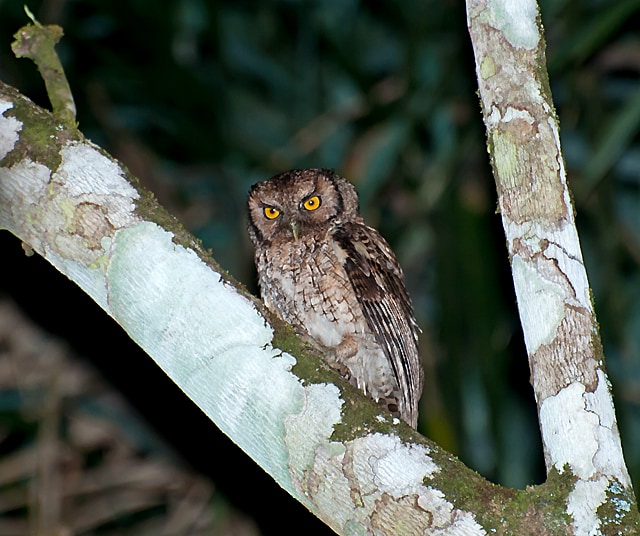
Variable Screech Owl
Lowland Rainforest, Forest With Thick Undergrowth, Forest Edges, Open Woodland, Secondary Forest
Argentina, Brazil, Paraguay
Insects, Small Vertebrates
About Black-capped screech owl
The Black-capped Screech Owl
The black-capped screech owl, scientifically known as Megascops atricapilla and also referred to as the variable screech owl, is a species of owl native to South America. Its range extends across southeastern Brazil, southeastern Paraguay, and the extreme northeastern part of Argentina. This owl is recognized for its distinctive blackish crown, prominent ear tufts, and a light facial disc framed by a dark border.
Description and Habitat
Individuals typically measure between 22 and 23 cm in length. The species exhibits notable plumage variation, appearing in brown, rufous, and gray morphs, with eye colors ranging from dark brown to amber. The black-capped screech owl inhabits a variety of forested environments, including lowland rainforests, areas with dense undergrowth, forest edges, open woodlands, and secondary forests. Its altitudinal distribution varies, being found from sea level up to 600 meters in the northern parts of its range and up to 300 meters in the south.
Behavior and Diet
This owl is primarily nocturnal, hunting from perches within the forest canopy or by foraging within the undergrowth. Its diet predominantly consists of insects, though it is believed to also prey on small vertebrates. The breeding season appears to encompass October and November, though it is not fully defined. Nests are constructed within tree cavities, which can be either natural hollows or those excavated by woodpeckers. Evidence suggests that the black-capped screech owl may exhibit semi-colonial nesting behavior, with individuals sometimes found nesting in proximity to conspecifics.
Vocalization and Conservation
The vocalizations of the black-capped screech owl include a primary song described as a long, fast trill that starts faintly, increases in volume, and ends abruptly. A secondary song features a short, 'bouncing-ball rhythm.' Both male and female owls sing, often in duets, with the female's call being higher pitched. The International Union for Conservation of Nature (IUCN) currently lists the black-capped screech owl as Least Concern. However, specific data on its population numbers and trends are unknown, and it is noted that the species may require substantial forest areas and could struggle in fragmented reserves.
Source: Wikipedia ↗
Frequently Asked Questions
What is the scientific name of the black-capped screech owl?
The scientific name of the black-capped screech owl is Megascops atricapilla. It is also sometimes referred to as the variable screech owl.
Where can the black-capped screech owl be found?
This species is distributed across southeastern Brazil, southeastern Paraguay, and the extreme northeastern region of Argentina.
What does the black-capped screech owl look like?
It is a relatively small owl, measuring 22 to 23 cm in length, with a blackish crown, prominent ear tufts, and a light facial disc bordered by dark feathers. It appears in brown, rufous, and gray color morphs, and its eye color can range from dark brown to amber.
What is the diet of the black-capped screech owl?
The primary food source for this owl is insects. It is also believed to consume small vertebrates, although this is not as extensively documented.
What are the nesting habits of the black-capped screech owl?
The black-capped screech owl nests in tree cavities, utilizing both natural hollows and those excavated by woodpeckers. There is some indication that they may nest in proximity to others of their species.
What is the conservation status of the black-capped screech owl?
The International Union for Conservation of Nature (IUCN) has assessed the black-capped screech owl as Least Concern. However, its population size and trends are not well understood, and it may be vulnerable in fragmented forest reserves.
What are the different vocalizations of the black-capped screech owl?
The primary song is a long, fast trill that starts faintly and increases in volume before ending abruptly. A secondary song has a short, 'bouncing-ball rhythm.' Both males and females sing, often in duets, with the female's voice being higher pitched.
Related Owl species
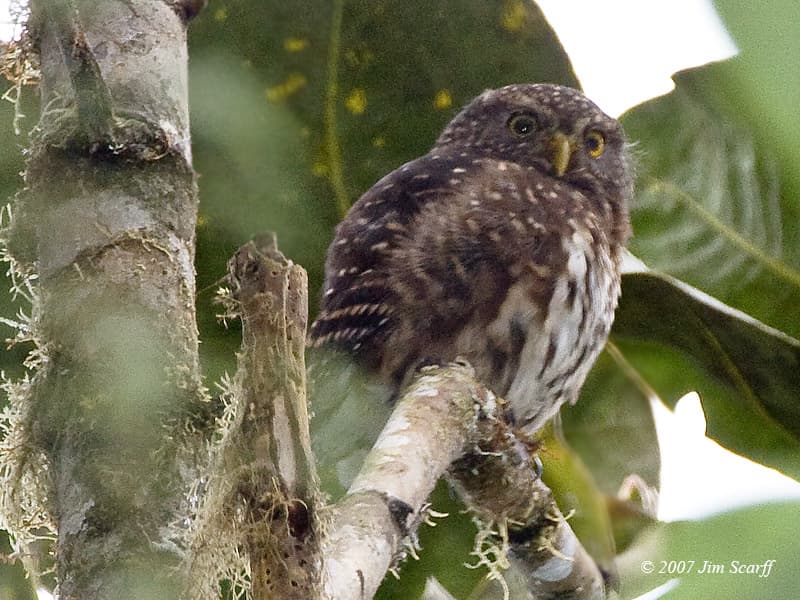
Andean pygmy owl
The Andean pygmy owl is a small owl species native to the Andes mountains of South America, found in countries like Colombia, Ecuador, Peru, and Venezuela. It is distinguished by its two color morphs, white facial markings including prominent "brows" and "moustaches," and a distinctive face-like pattern on its nape. This owl is an opportunistic predator, active both day and night, feeding on a variety of small invertebrates, birds, and mammals.
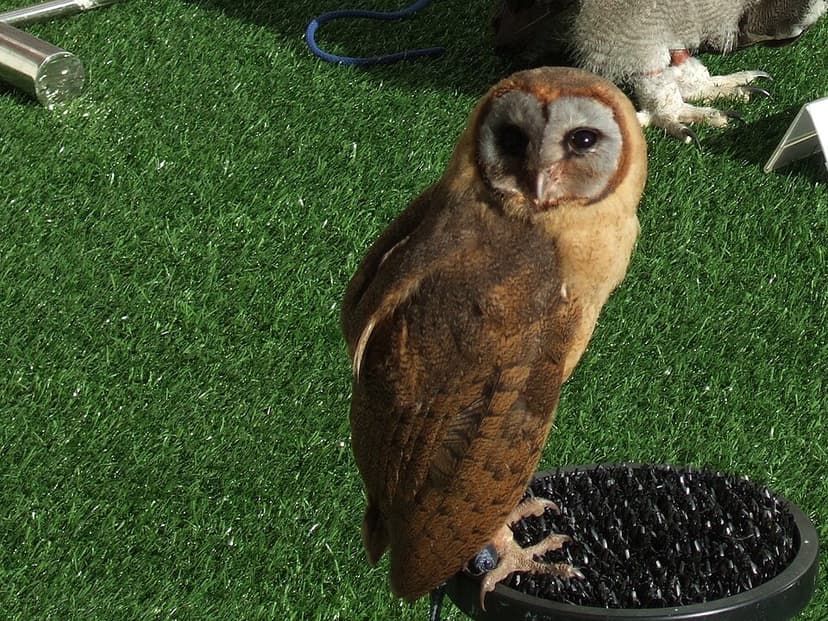
Ashy-faced owl
The ashy-faced owl (Tyto glaucops) is a species of barn owl native to Hispaniola and several islands in the Lesser Antilles. It is distinguished by its silvery-gray facial disc (in the nominate subspecies), a preference for a mix of open hunting spaces and canopy cover, and a varied diet of small vertebrates and invertebrates. This species plays a crucial role as a nocturnal predator in its island ecosystems.

Austral pygmy owl
The austral pygmy owl is a small owl species found in central and southern Chile and parts of southern Argentina. It is distinctive for its gray-brown and red color morphs and its ability to hunt both during the day and at night. This owl is known for its varied vocalizations, including contact whistles, territorial trills, and courtship calls.