
Boreal owl
The boreal owl, also known as Tengmalm's owl, is a small owl found in the taiga forests of North America and Eurasia. It is distinguished by its pearly-white spots on brown plumage, remarkable confiding nature when encountered, and a unique asymmetrical skull structure that aids in pinpointing prey.
Key Facts
- ›Smallest owl in North America and Europe.
- ›Distinctive pearly-white spots on its back and wings.
- ›Known for being unusually confiding towards humans.
- ›Preys on small mammals, birds, and invertebrates.
- ›Nests in tree cavities, often those excavated by woodpeckers.
- ›Its scientific name, Aegolius funereus, means 'funereal screech owl'.

Tengmalm's Owl, Richardson's Owl, Pearl Owl
Boreal Forests, Subalpine Forests, Mixed Woodlands, Old-Growth Forests
North America, Eurasia
Voles, Mice, Chipmunks, Squirrels, Gophers, Moles, Shrews, Bats, Birds, Amphibians, Insects, Invertebrates
Marten Species, Tawny Owls, American Red Squirrels, Cooper's Hawk, American Goshawk, Eurasian Goshawk, Great Horned Owl, Ural Owl, Eurasian Nuthatches
About Boreal owl
The boreal owl (Aegolius funereus), also known as Tengmalm's owl, is a small owl species renowned for its distinctive appearance and elusive nature. Found across the boreal and subalpine forests of North America and Eurasia, this owl is rarely seen due to its nocturnal habits and preference for dense, inaccessible woodland. When encountered, however, boreal owls are often remarkably confiding, showing little fear of humans.
Identification and Description
Boreal owls are characterized by their small size, large heads, and long wings. Adults display brown upperparts adorned with conspicuous pearly-white spots on the back and wings, and whitish underparts streaked with rust. Their prominent yellow eyes and the framing of their facial disc contribute to an often 'surprised' expression. A unique feature is their asymmetrical ear structure, which significantly enhances their ability to locate prey with pinpoint accuracy. Juveniles are a uniform dull chocolate-brown, gradually acquiring the adult plumage with white markings and streaks.
Habitat and Distribution
These owls inhabit dense boreal, subalpine forests, and mixed woodlands, with a strong preference for old-growth forests that offer abundant shelter and prey. Their breeding grounds span across northern North America and the Palearctic, including mountainous regions like the Alps and the Rockies. While they can travel considerable distances, they often breed within close proximity to their natal sites, with males exhibiting higher fidelity to their territories.
Behavior and Diet
Boreal owls are primarily nocturnal hunters, though in the far north, they may hunt during daylight in summer due to short nights. They are ambush predators, relying on their exceptional hearing to capture prey. Their diet is varied, consisting mainly of voles and other small mammals, but also includes birds, amphibians, insects, and invertebrates. Vocalizations are complex, with specific calls used for communication, courtship, and territorial defense.
Reproduction and Lifespan
These owls are monogamous and raise a single brood per year, typically reaching reproductive age by one year old. The breeding season begins with an extensive courtship period. Nests are usually established in tree cavities, often those previously excavated by woodpeckers, or in nest boxes. Females lay between three and seven glossy white eggs, which are incubated solely by her. Young owls hatch asynchronously and are cared for by the female, with the male providing food. The fledglings become independent a few weeks after leaving the nest. The lifespan of a boreal owl can range from 3.5 years for breeding males to up to 16 years for ringed individuals.
Conservation
The boreal owl is currently listed as Least Concern by the IUCN, with a stable population trend. However, certain subpopulations face challenges. Logging activities, pesticide use, and the decline of woodpecker populations (which provide nesting cavities) negatively impact their habitat and prey availability. Conservation efforts include the preservation of old-growth forests and the implementation of nest boxes to ensure reproductive success. Protecting species like the black woodpecker is also crucial for the long-term survival of the boreal owl.
Source: Wikipedia ↗
Frequently Asked Questions
What are the common names for Aegolius funereus?
The boreal owl is known by several common names. In North America, it is called the boreal owl or Richardson's owl. In Europe and Asia, it is known as Tengmalm's owl, named after Swedish naturalist Peter Gustaf Tengmalm.
What makes the boreal owl's physical appearance distinctive?
Boreal owls are small with large heads and long wings. Their plumage is brown above with prominent pearly-white spots on the back and wings, and whitish underparts with rust-colored streaks. They have striking yellow eyes and a facial disc that often gives them a 'surprised' expression.
Where does the boreal owl live?
The boreal owl inhabits dense boreal and subalpine forests, as well as mixed woodlands across North America and the Palearctic region. They prefer old-growth forests that provide ample shelter and prey.
What does the boreal owl eat?
Their diet primarily consists of voles and other small mammals like mice and chipmunks. They also consume birds, small amphibians, insects, and other invertebrates.
What are the threats to the boreal owl population?
Threats include logging activities that reduce prey availability and nesting sites, and the use of pesticides. Predation by martens and other owls, as well as human interference with nests, also pose risks.
How does the boreal owl hunt?
The boreal owl is an ambush predator that hunts primarily at night. Its highly asymmetrical skull allows for extremely precise sound localization, enabling it to capture prey even under snow or dense vegetation.
Related Owl species
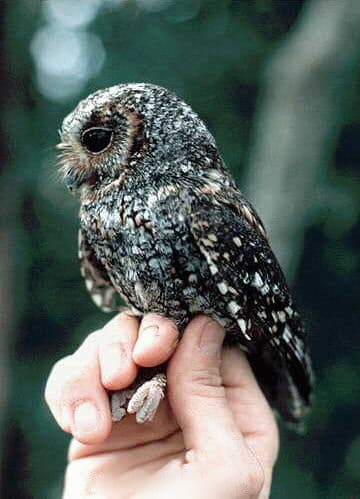
Flammulated owl
The flammulated owl is a small, migratory North American owl known for its flame-colored facial markings. It is the sole member of the genus Psiloscops and is distinguished from similar species by its small ear tufts, dark eyes, and unique hooting vocalization. Primarily an insectivore, it breeds in mature forests across western North America and migrates to Central America for the winter.

Northern boobook
The northern boobook (Ninox japonica) is a hawk owl species native to eastern and southern Asia, belonging to the family Strigidae. Previously considered a subspecies of the brown boobook, it is now recognized as a distinct species, though its taxonomy and subspecies remain subjects of debate. It is notable for being the most common breeding owl in Japan, despite limited research on its populations.
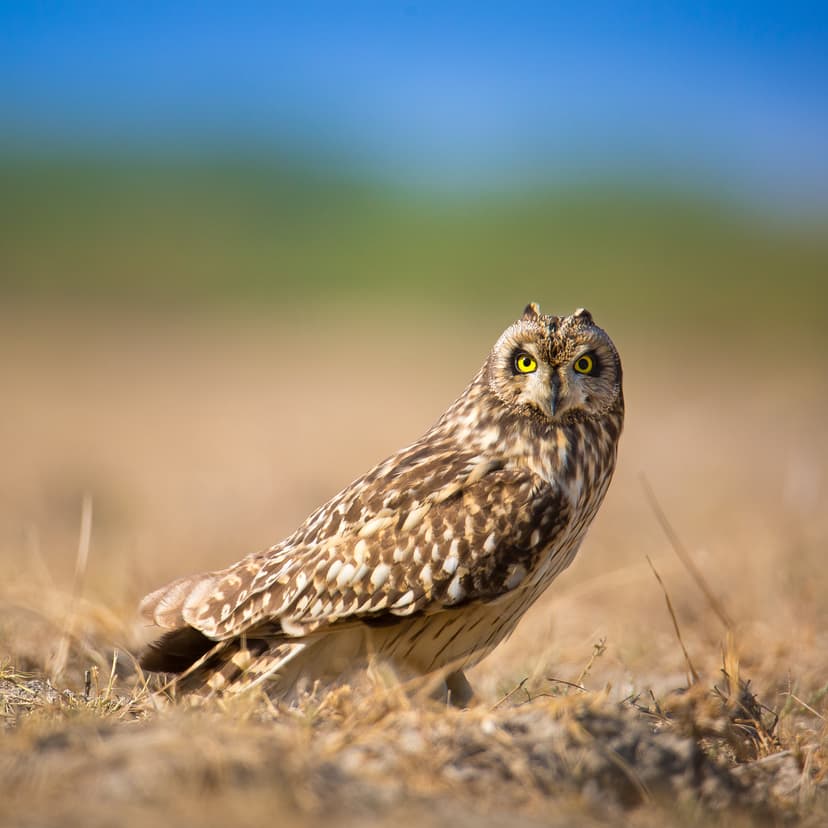
Short-eared owl
The short-eared owl (Asio flammeus) is a widely distributed grassland species known for its distinctive "ear" tufts, which are usually not visible but can be displayed when defensive. This medium-sized owl is found on open country and grasslands across most continents, feeding primarily on rodents like voles.