
Northern boobook
The northern boobook (Ninox japonica) is a hawk owl species native to eastern and southern Asia, belonging to the family Strigidae. Previously considered a subspecies of the brown boobook, it is now recognized as a distinct species, though its taxonomy and subspecies remain subjects of debate. It is notable for being the most common breeding owl in Japan, despite limited research on its populations.
Key Facts
- ›Belongs to the Strigidae family, commonly known as true owls.
- ›Has a hawk-like appearance with yellow-gold eyes and a brown back with lighter streaks.
- ›Found in deciduous forests, wooded parks, gardens, and residential areas.
- ›Primarily hunts invertebrates like insects, and occasionally small vertebrates.
- ›The IUCN Red List classifies its conservation status as Least Concern due to no significant population declines.
- ›Vocalizes with a sequence of deep 'ho-hos', primarily during the breeding season.

Northern Boobook, Brown Boobook
- Low altitude deciduous forests with thick vegetation
- Wooded parks
- Gardens
- Residential areas
- Rainforests
- Mixed or coniferous forests
Eastern Asia, Southern Asia, Siberia, Southeastern Asia, China, Korea, Japan, Taiwan, Ryukyu Islands, Vietnam, Malaysia, Thailand, Philippines
Invertebrates, Small Birds, Lizards, Bats
About Northern boobook
The northern boobook (Ninox japonica) is a species of hawk owl native to eastern and southern Asia. It belongs to the family Strigidae, commonly known as true owls. Historically, it was considered a conspecific of the brown boobook (Ninox scutulata), but it is now recognized as a distinct species, although the precise taxonomic classification of its subspecies remains a subject of scientific debate. Despite being the most common breeding owl in Japan, research on the northern boobook is limited.
Description and Appearance
This species exhibits a hawk-like appearance, with a body length typically ranging from 29 to 33 cm and a wingspan of approximately 60 to 70 cm. Sexual dimorphism is not apparent in the northern boobook. Its plumage consists of a brown back and wings adorned with lighter brown horizontal streaks on the tail feathers. The neck, crown, and face are a more grayish-brown, distinguished by a small white patch situated above the beak. A striking feature is its yellow-gold eyes, complemented by a black beak and yellow talons. The underside is predominantly white, marked with rust-colored specks that bear a resemblance to those of the brown boobook.
Habitat and Distribution
The northern boobook primarily inhabits low-altitude deciduous forests characterized by dense vegetation. They are also found in wooded parks, gardens, and even residential areas, often nesting within trees where they are well-camouflaged. While they typically winter in rainforests south of their summer ranges, they may occasionally be found in mixed or coniferous forests. The species' geographical distribution spans Siberia and most of Southeastern Asia. The migratory subspecies, Ninox japonica japonica, covers the majority of this range, while the sedentary subspecies, Ninox japonica totogo, resides year-round in Taiwan and the Ryukyu Islands.
Source: Wikipedia ↗
Frequently Asked Questions
What is the scientific name of the northern boobook?
The scientific name of the northern boobook is Ninox japonica. It belongs to the Ninox genus, which includes other species commonly referred to as brown hawk owls.
Where is the northern boobook found?
The northern boobook is endemic to eastern and southern Asia. Its geographical distribution includes Siberia, Southeastern Asia, China, Korea, Japan, and Taiwan.
What does the northern boobook eat?
The northern boobook primarily preys on invertebrates, such as insects. It will occasionally also hunt smaller vertebrates like birds, lizards, and bats.
What is the conservation status of the northern boobook?
The northern boobook is classified as Least Concern by the IUCN Red List. This is because there are no indications of significant population declines across its range.
How does the northern boobook's appearance differ from its sister species?
The northern boobook has rust-colored specks on its belly, similar to its sister species, the brown boobook (Ninox scutulata). Otherwise, the subspecies are practically indistinguishable and share a hawk-like appearance.
When does the northern boobook breed and lay eggs?
The breeding season varies between subspecies. Migratory subspecies typically occupy breeding sites in April, while the sedentary subspecies begins as early as January. Females typically lay 3 or 4 eggs, with incubation lasting around 28 days.
Related Owl species

Boreal owl
The boreal owl, also known as Tengmalm's owl, is a small owl found in the taiga forests of North America and Eurasia. It is distinguished by its pearly-white spots on brown plumage, remarkable confiding nature when encountered, and a unique asymmetrical skull structure that aids in pinpointing prey.
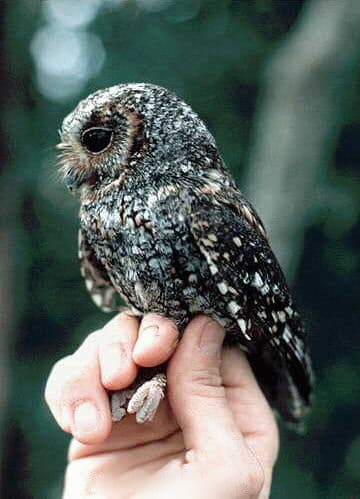
Flammulated owl
The flammulated owl is a small, migratory North American owl known for its flame-colored facial markings. It is the sole member of the genus Psiloscops and is distinguished from similar species by its small ear tufts, dark eyes, and unique hooting vocalization. Primarily an insectivore, it breeds in mature forests across western North America and migrates to Central America for the winter.
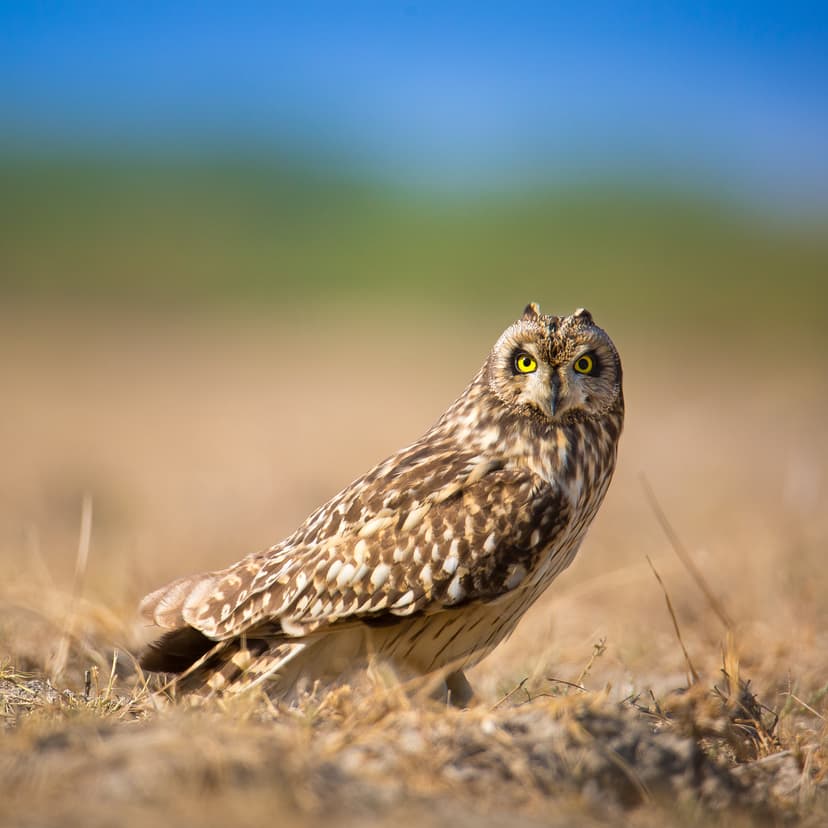
Short-eared owl
The short-eared owl (Asio flammeus) is a widely distributed grassland species known for its distinctive "ear" tufts, which are usually not visible but can be displayed when defensive. This medium-sized owl is found on open country and grasslands across most continents, feeding primarily on rodents like voles.