
Flammulated owl
The flammulated owl is a small, migratory North American owl known for its flame-colored facial markings. It is the sole member of the genus Psiloscops and is distinguished from similar species by its small ear tufts, dark eyes, and unique hooting vocalization. Primarily an insectivore, it breeds in mature forests across western North America and migrates to Central America for the winter.
Key Facts
- ›Small migratory owl native to North America, found from southern British Columbia to central Mexico.
- ›Distinguished by flame-like markings on its face, small ear tufts, and dark eyes.
- ›Feeds primarily on insects, especially Lepidoptera, crickets, and beetles, with occasional small mammals.
- ›Nests in tree cavities, often former woodpecker nests, with bare interiors and no added nesting material.
- ›Migrates south for winter, typically to northern Central America, returning to breeding grounds in late April or early may.
- ›Listed as a species of least concern by the IUCN, though populations may be declining in some areas.
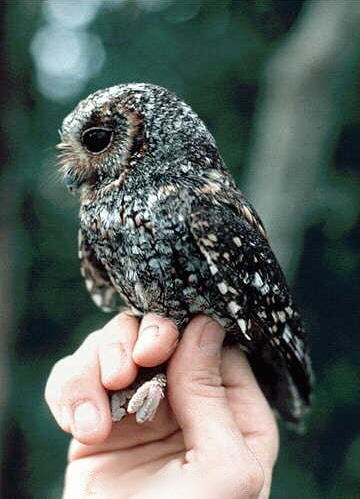
Flammulated Screech Owl
- Mature, Open Ponderosa Pine and Douglas Fir Forests
- Deciduous Forests With Some Conifers Present
- Tree Cavities
North America, Central America
Insects, Small Mammals
About Flammulated owl
The flammulated owl (Psiloscops flammeolus) is a small, migratory owl species native to North America. It is the only species within the genus Psiloscops and is recognized for the distinctive flame-colored markings adorning its facial disk. This owl breeds across a range extending from southern British Columbia and the western United States down to central Mexico, migrating south for the winter to areas in northern Central America.
Description and Identification
Measuring approximately 15 cm in length with a wingspan of about 36 cm, the flammulated owl is notably small. Its most striking feature is the "flammulated" or flame-like coloration on its face. Unlike some other small owls, it has dark eyes and possesses small, barely visible ear tufts. Females are generally larger and heavier than males, with females weighing between 62–65 grams and males between 50–52 grams. Its call is a characteristic series of deep, single or double hoots.
Habitat and Distribution
The breeding habitat of the flammulated owl typically consists of mature, open ponderosa pine and Douglas fir forests in the western United States and Canada. They can also be found breeding in deciduous forests that contain some coniferous trees. During the non-breeding season, they migrate to wintering grounds in northern Central America, including southern Mexico, Guatemala, and El Salvador, though some individuals may remain in parts of South Texas, Arizona, and California.
Behavior and Ecology
Flammulated owls are primarily insectivorous, with their diet consisting mainly of moths, crickets, and beetles. Occasionally, they supplement their diet with small mammals such as shrews and rodents. They are obligate cavity nesters, meaning they exclusively use tree cavities for nesting, often repurposing old woodpecker nests. These nests are typically bare and lack any added nesting material. Interestingly, flammulated owls often nest in loose colonies, a behavior less common among solitary owl species. The species undertakes seasonal migrations, departing its northern breeding grounds in August and returning in late April or early May.
Conservation Status
The International Union for Conservation of Nature (IUCN) currently classifies the flammulated owl as a species of least concern. Despite this status, there are observations suggesting potential population declines in certain areas, highlighting the need for continued monitoring of this small migratory owl.
Source: Wikipedia ↗
Frequently Asked Questions
What does a flammulated owl look like?
The flammulated owl is a small owl, approximately 15 cm long with a 36 cm wingspan. It has flame-like markings on its face, small ear tufts that are barely visible, and dark eyes. Females are slightly larger and heavier than males.
Where do flammulated owls live?
They breed in western North America, from southern British Columbia and the western United States down to central Mexico. They migrate south for the winter, typically to northern Central America, from southern Mexico to Guatemala and El Salvador.
What do flammulated owls eat?
Their diet consists almost entirely of insects, with small Lepidoptera being a primary food source. They also consume crickets and beetles. Very occasionally, they will eat small mammals like shrews and rodents.
What is the call of a flammulated owl?
The call of the flammulated owl is described as a series of relatively deep, single or double hoots. This vocalization distinguishes it from similar owl species like the western screech owl.
How do flammulated owls reproduce?
Flammulated owls nest in tree cavities, often choosing abandoned woodpecker nests. They typically lay two to four eggs, which incubate for about 26 days. The young are able to forage for themselves around 25-32 days after hatching.
Are flammulated owls endangered?
The flammulated owl is currently listed as a species of least concern by the International Union for Conservation of Nature (IUCN). However, there are indications that populations may be declining in certain regions.
Related Owl species

Boreal owl
The boreal owl, also known as Tengmalm's owl, is a small owl found in the taiga forests of North America and Eurasia. It is distinguished by its pearly-white spots on brown plumage, remarkable confiding nature when encountered, and a unique asymmetrical skull structure that aids in pinpointing prey.

Northern boobook
The northern boobook (Ninox japonica) is a hawk owl species native to eastern and southern Asia, belonging to the family Strigidae. Previously considered a subspecies of the brown boobook, it is now recognized as a distinct species, though its taxonomy and subspecies remain subjects of debate. It is notable for being the most common breeding owl in Japan, despite limited research on its populations.
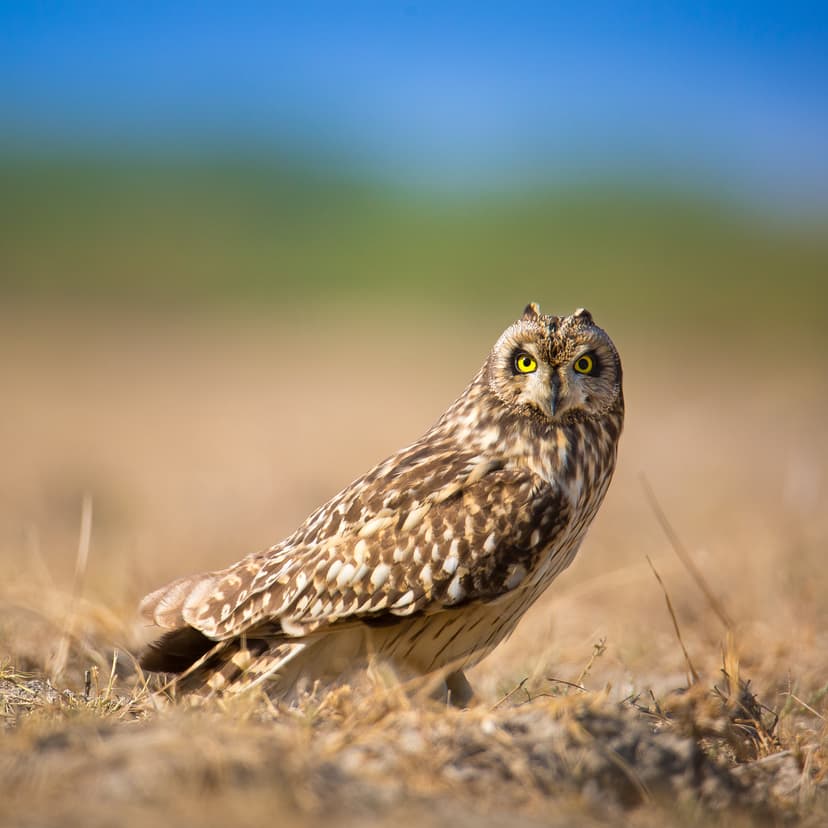
Short-eared owl
The short-eared owl (Asio flammeus) is a widely distributed grassland species known for its distinctive "ear" tufts, which are usually not visible but can be displayed when defensive. This medium-sized owl is found on open country and grasslands across most continents, feeding primarily on rodents like voles.