
Brown boobook
The brown boobook, also known as the brown hawk-owl, is a medium-sized owl found in well-wooded areas and forests across tropical south Asia. Distinctive for its hawk-like shape without a prominent facial disk, it features dark brown upperparts, streaked whitish underparts, and a barred tail. This species is a resident breeder, commonly found in both natural habitats and urban environments.
Key Facts
- ›Medium-sized owl with a hawk-like silhouette.
- ›Dark brown upperparts and whitish underparts with reddish-brown streaking.
- ›Resident breeder in tropical south Asia, found in well-wooded country and forest.
- ›Feeds on large insects, frogs, lizards, small birds, and mice.
- ›Nocturnal, but often revealed by small birds mobbing its roost.
- ›Lays three to five eggs in tree holes.

Brown Hawk-Owl
Well-Wooded Country, Forest, Towns, Cities, Suburban Areas
India, Nepal, Bangladesh, Bhutan, Sri Lanka, Southern China, Western Indonesia, Middle East
Large Insects, Frogs, Lizards, Small Birds, Mice
About Brown boobook
The brown boobook, scientifically known as Ninox scutulata and also referred to as the brown hawk-owl, is a typical owl species recognized for its hawk-like appearance. It is a medium-sized owl, measuring around 32 cm in length, distinguished by its dark brown upperparts, whitish underparts streaked with reddish-brown, a barred tail, and large yellow eyes. Unlike many owls, it lacks a pronounced facial disk, contributing to its hawk-like silhouette. Both male and female brown boobooks share a similar appearance.
Distribution and Habitat
This owl is a resident breeder found throughout much of tropical south Asia, with its range extending from the Middle East to southern China, and including countries like India, Nepal, Bangladesh, Bhutan, Sri Lanka, and western Indonesia. The brown boobook thrives in well-wooded country and forests. It has also demonstrated adaptability to human environments, being commonly observed in towns and cities such as Colombo, Sri Lanka, as well as in suburban areas situated close to buildings.
Behavior and Ecology
The brown boobook is primarily a nocturnal hunter. Despite its nighttime activity, it is often revealed by the vociferous mobbing behavior of smaller birds that congregate to harass it while it roosts in a tree during daylight hours. Its diet consists mainly of large insects, but it also preys on frogs, lizards, small birds, and mice. The species lays three to five eggs within tree holes, and its call is described as a repeated, low, soft, and musical 'oo-uk ...ooo-uk..', which may be heard at dusk and dawn.
Source: Wikipedia ↗
Frequently Asked Questions
What are the key physical characteristics of the brown boobook?
The brown boobook is a medium-sized owl, approximately 32 cm in length, characterized by a hawk-like shape without a distinct facial disk. It has dark brown upperparts, whitish underparts marked with reddish-brown streaking, and a barred tail. Its eyes are large and yellow, and sexes appear similar.
Where can the brown boobook be found?
This species is a resident breeder found in most of tropical south Asia, extending from the Middle East to southern China. Its preferred habitat includes well-wooded country and forests, and it is also common in towns and suburban areas.
What does the brown boobook eat?
The diet of the brown boobook primarily consists of large insects. They also consume other small prey such as frogs, lizards, and small birds, as well as mice.
What is the vocalization of the brown boobook?
The brown boobook produces a repeated, low, soft, musical call. This sound is often described as 'oo-uk ...ooo-uk...' and can sometimes be heard at dusk and dawn.
How does the brown boobook behave?
The brown boobook is primarily a nocturnal species. Despite its nighttime activity, it can often be detected during the day by the sounds of smaller birds that mob it while it is roosting in a tree.
Related Owl species
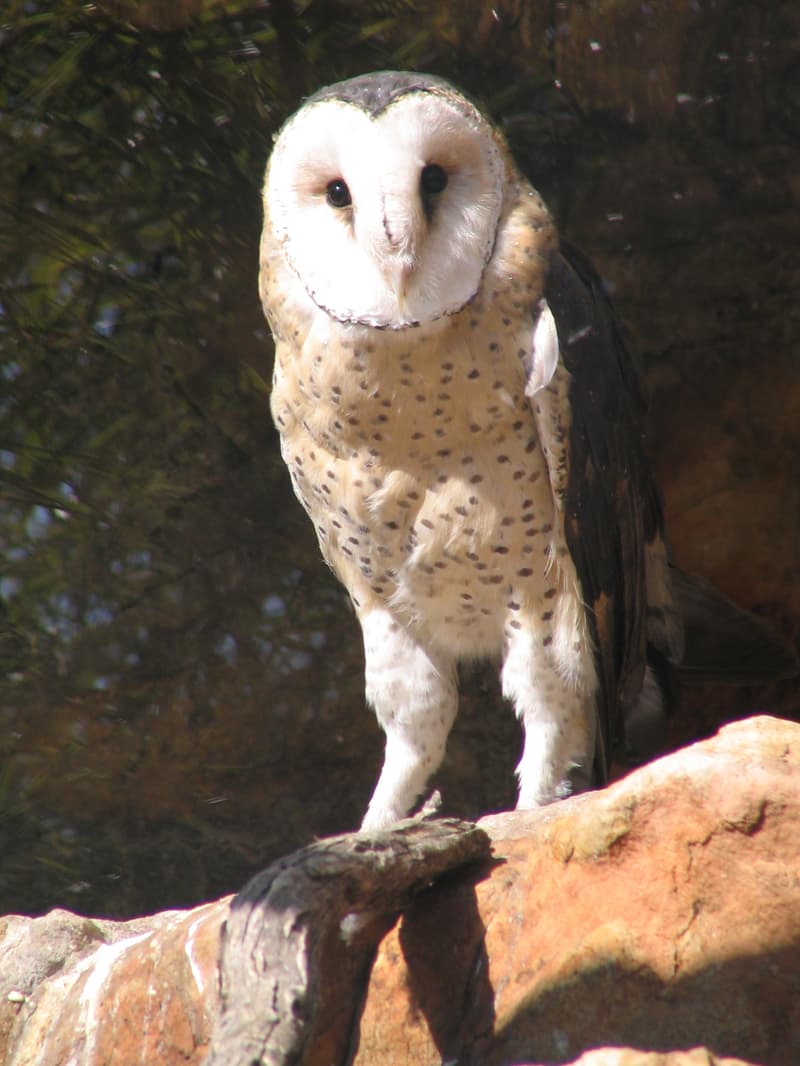
African grass owl
The African grass owl (Tyto capensis) is a medium-sized owl found in sub-Saharan Africa, known for its uniform sooty blackish-brown upperparts and heart-shaped facial disc. It primarily inhabits moist grasslands and savannas, where it hunts rodents and other small mammals at night.

African scops owl
The African scops owl (Otus senegalensis) is a small owl native to sub-Saharan Africa, characterized by its cryptic greyish-brown plumage and bright yellow eyes. It is a strictly nocturnal hunter, often overlooked during the day due to its remarkable camouflage. Its distinctive call is a monotonous "prrrp" sound.

African wood owl
The African wood owl (Strix woodfordii), also known as Woodford's owl, is a common forest owl species native to sub-Saharan Africa. It is distinguished by its rounded head, large dark eyes with white eyebrows, and a distinctive hooting call that can be heard over long distances. This owl is strictly nocturnal and primarily inhabits indigenous forests and woodlands.