
Brown fish owl
The Brown fish owl is a large owl species native to a vast range spanning from Turkey to South and Southeast Asia, inhabiting forests and wooded wetlands. It is distinguished by its prominent ear tufts, rufous brown upperparts streaked with black, and a white throat, with adaptations for hunting aquatic prey including powerful talons and rough toe pads. As the most widely distributed and best-studied of the four living fish owl species, it is classified as Least Concern by the IUCN.
Key Facts
- ›Native to a wide range from Turkey to South and Southeast Asia.
- ›Inhabits forests and wooded wetlands, often near water bodies.
- ›Possesses prominent ear tufts and rufous brown upperparts with black streaking.
- ›Adapted for aquatic hunting with powerful talons and rough toe pads.
- ›Feeds primarily on fish, frogs, and aquatic crustaceans.
- ›Listed as Least Concern on the IUCN Red List due to its wide distribution.

Brown Fish Owl
Forests, Wooded Wetlands, Near Streams, Near Lakes, Rice Fields, Open Woodland, Dense Forest, Plantations, Submontane Forest, Water Reservoirs, Canals, Outskirts of Villages, Sea Coasts, Semi-Arid Landscapes, Oases In Arid Regions
Turkey, South Asia, Southeast Asia, Middle East, Indian Subcontinent, Myanmar, Thailand, Sri Lanka, China, Indochina, Malay Peninsula
Fish, Frogs, Aquatic Crustaceans, Freshwater Crabs, Small Mammals, Snakes, Lizards, Insects, Water Beetles, Bats, Water Birds, Carrion
About Brown fish owl
The Brown fish owl (Ketupa zeylonensis) is a significant species within the fish owl group, recognized for its extensive geographic distribution and prominence as the most common and well-studied among its relatives. This large owl is native to a broad territory stretching from Turkey across South and Southeast Asia, with its preferred habitats being forests and wooded wetlands, particularly those adjacent to water bodies like streams, lakes, and rice fields.
Physical Characteristics and Adaptations
Distinguished by its prominent ear tufts and a rufous brown upper plumage marked with heavy black streaking, the Brown fish owl presents a striking appearance. Its underparts are a lighter buffy-fulvous to whitish, adorned with wavy dark brown streaks and finer barring. A notable feature is its white, puffed throat, contrasting with a dark bill and golden yellow irises. The owl's legs and feet, which are featherless and yellow, are equipped with powerful, curved talons and a sharp keel under the middle claw, adaptations crucial for grasping slippery aquatic prey. The soles of its feet possess a rough texture, further aiding in securing fish, a characteristic shared with diurnal fish-eating raptors.
Unlike many other owl species, the Brown fish owl's feathers are not soft and lack the specialized fringes that enable silent flight. This results in audible wing beats, sometimes described as singing. Their facial disk is also less developed, suggesting a greater reliance on vision over hearing for hunting, a trait that contributes to their characteristically "morose and sinister" facial expression due to the bill's placement.
Diet and Hunting Behavior
The diet of the Brown fish owl predominantly consists of fish, frogs, and aquatic crustaceans, with freshwater crabs being a staple in many areas. They are known to target larger fish available in waterways and are attracted to ornamental fish ponds and commercial fisheries. While their primary prey is aquatic, they are opportunistic feeders and have been recorded consuming small mammals, snakes, lizards, insects, bats, water birds, and even scavenging carrion, such as crocodile carcasses.
Their hunting strategy often involves perching on a vantage point over water or wading into shallow areas. They then extend their long legs to snatch prey with their talons. Unlike some diurnal raptors, fish owls typically avoid submerging their bodies, preferring to use only their feet to capture food.
Reproduction and Life Cycle
Brown fish owls breed between November and April, with breeding activity often peaking earlier in the northern parts of their range and later in the more tropical south. This period aligns with the dry season, which facilitates easier access to prey. As owls do not construct nests, they select suitable natural cavities. Common nesting sites include hollows in large trees like mangoes and figs, as well as overgrown ravines, steep riverbanks, or even abandoned nests of larger birds.
The clutch size typically consists of one or two eggs. Incubation lasts for approximately 38 days, and the young fledge after about seven weeks. The chicks are initially off-white and gradually develop into a paler version of the adult plumage by their second year.
Distribution, Habitat, and Conservation
This species is an all-year resident across much of the Indian subcontinent and Southeast Asia, with westward extensions into the Levant and Asia Minor. They inhabit a variety of environments, from open woodlands to dense forests and plantations, always in proximity to water. While generally found in lowlands, they can extend into submontane forests in the Himalayan foothills.
The Brown fish owl is currently listed as Least Concern on the IUCN Red List due to its wide distribution and relatively common status. However, threats such as habitat destruction and superstitious killing, particularly in India during the Diwali festival, pose challenges. In some regions, such as Israel, habitat degradation and the use of rodenticides have led to significant population declines or local extinctions.
Source: Wikipedia ↗
Frequently Asked Questions
What is the scientific name of the Brown fish owl?
The scientific name of the Brown fish owl is Ketupa zeylonensis. It was first described by Johann Friedrich Gmelin in 1788, initially placed in the genus Strix before being moved to the genus Ketupa.
Where are Brown fish owls found?
Brown fish owls are found year-round throughout tropical and subtropical regions from the Indian subcontinent to Southeast Asia and surrounding areas. They are also patchily distributed west of their main range, reaching the Levant and southern Asia Minor.
What does a Brown fish owl look like?
They have prominent ear tufts, rufous brown upperparts heavily streaked with black, and buffy-fulvous to whitish underparts with dark brown streaks and barring. Their throat is white and puffed, their bill is dark, and their irises are golden yellow, with featherless yellow feet.
What do Brown fish owls eat?
Their diet primarily consists of fish, frogs, and aquatic crustaceans, with freshwater crabs being a significant food source in some regions. They may also consume small mammals, snakes, lizards, water birds, and occasionally scavenge carrion.
What are the adaptations of Brown fish owls for hunting fish?
Brown fish owls have adaptations such as powerful, curved talons and a sharp keel under the middle claw for grasping slippery prey. They also have rough textures on the bottom of their toes, similar to diurnal raptors that feed on fish, which aids in gripping.
When do Brown fish owls breed?
The breeding season for Brown fish owls typically occurs from November to April, coinciding with the dry season. This period offers benefits such as lower water levels, making fish and crabs more accessible.
What are the nesting habits of Brown fish owls?
As owls do not build their own nests, Brown fish owls are opportunistic nesters. They often utilize natural holes in trees, such as in old-growth mango or fig trees, or find sites in overgrown ravines, steep riverbanks, or even deserted nests of other large birds.
Related Owl species
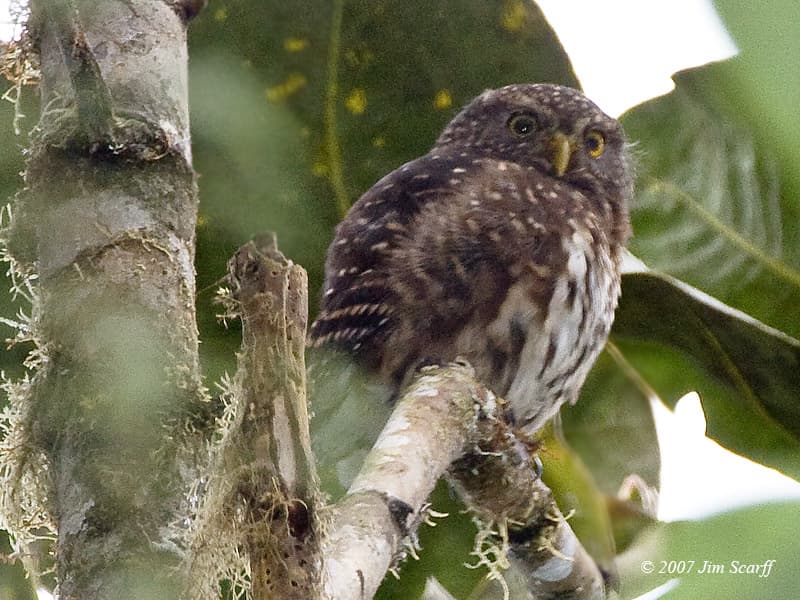
Andean pygmy owl
The Andean pygmy owl is a small owl species native to the Andes mountains of South America, found in countries like Colombia, Ecuador, Peru, and Venezuela. It is distinguished by its two color morphs, white facial markings including prominent "brows" and "moustaches," and a distinctive face-like pattern on its nape. This owl is an opportunistic predator, active both day and night, feeding on a variety of small invertebrates, birds, and mammals.
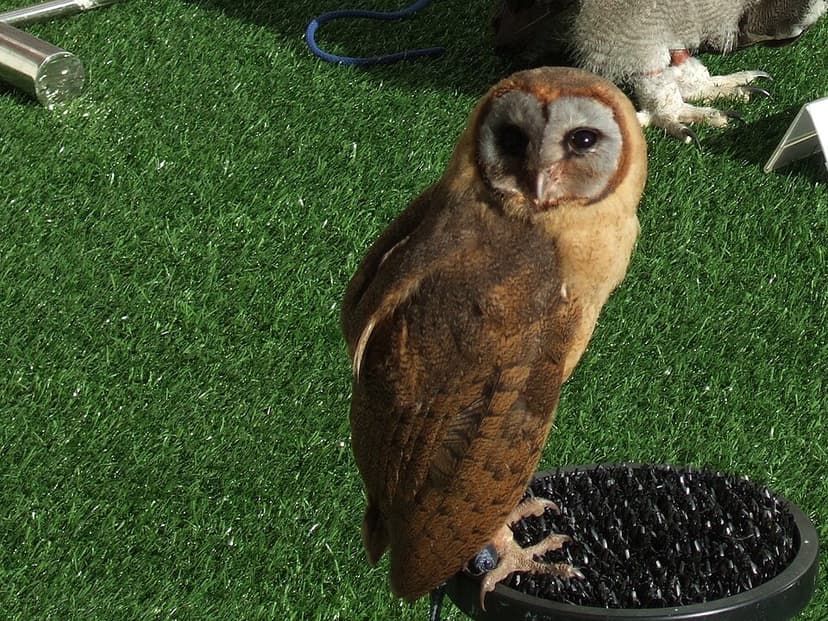
Ashy-faced owl
The ashy-faced owl (Tyto glaucops) is a species of barn owl native to Hispaniola and several islands in the Lesser Antilles. It is distinguished by its silvery-gray facial disc (in the nominate subspecies), a preference for a mix of open hunting spaces and canopy cover, and a varied diet of small vertebrates and invertebrates. This species plays a crucial role as a nocturnal predator in its island ecosystems.

Austral pygmy owl
The austral pygmy owl is a small owl species found in central and southern Chile and parts of southern Argentina. It is distinctive for its gray-brown and red color morphs and its ability to hunt both during the day and at night. This owl is known for its varied vocalizations, including contact whistles, territorial trills, and courtship calls.