
Buff-fronted owl
The buff-fronted owl (Aegolius harrisii) is a small owl species native to widely separated areas across South America, excluding French Guiana and Suriname. It is distinguished by its buff facial disks with black surrounds and patches above its greenish-yellow eyes, and a compact build with a short tail and large head lacking ear tufts. Its conservation status is currently Least Concern.
Key Facts
- ›Found in diverse South American habitats including forests, forest edges, and human-altered areas.
- ›Possesses buff facial disks with distinctive black patches above greenish-yellow eyes.
- ›Measures 19 to 21 cm in length and weighs between 104 to 155 g.
- ›Its closest relative is the northern saw-whet owl (Aegolius acadicus).
- ›Has three recognized subspecies: a. h. harrisii, a. h. dabbenei, and a. h. iheringi.
- ›Currently assessed as Least Concern by the IUCN, though often considered rare and possibly overlooked.
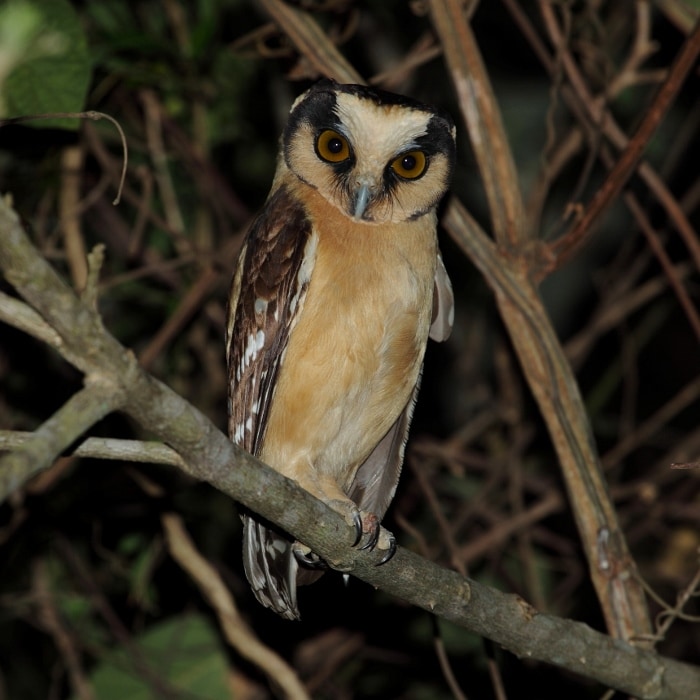
Buff-Fronted Owl
- Open humid forest
- Dry forest
- Forest edges
- Subtropical rainforest
- Human-altered areas with fruit trees and palms
South America
Insects, Rodents, Birds, Other Small Vertebrates
About Buff-fronted owl
The Buff-Fronted Owl
The buff-fronted owl, scientifically known as Aegolius harrisii, is a small owl species inhabiting fragmented parts of South America. This owl is notable for its distinctive facial markings, including buff-colored facial disks with black surrounds and striking black patches above its greenish-yellow eyes. It possesses a compact body, a short tail, and a noticeably large, square head that lacks ear tufts.
Distribution and Habitat
The buff-fronted owl is found in a variety of landscapes across South America, with its range excluding French Guiana and Suriname. Its preferred habitats include open humid forests, dry forests, forest edges, subtropical rainforests, and areas altered by human activity that feature fruit trees and palms. The nominate subspecies is found in the Andes from Venezuela to southern Peru, while other subspecies inhabit regions of Bolivia, Paraguay, and Brazil, extending into northeastern Argentina.
Description and Behavior
Measuring between 19 to 21 cm in length and weighing 104 to 155 grams, the buff-fronted owl displays plumage variations among its three subspecies. Generally, it has buff underparts and brown upperparts, with a tail marked by white bars. Little is documented about its specific hunting strategies, but its diet is known to include insects, rodents, birds, and other small vertebrates. The male's call is a rapid, wavering trill, and fledglings emit a raspy begging sound.
Taxonomy and Conservation
The buff-fronted owl is the sole member of the Aegolius genus in South America, with its closest relative being the northern saw-whet owl of North America. It was first described by John Cassin in 1849. The species is currently classified as Least Concern by the IUCN, although it is often considered rare and may be overlooked in surveys. Its population size is not precisely known but is believed to be stable.
Source: Wikipedia ↗
Frequently Asked Questions
What is the scientific name of the buff-fronted owl?
The scientific name of the buff-fronted owl is Aegolius harrisii. It was initially described by John Cassin in 1849 as Nyctale harrisii, a name that commemorates American ornithologist Edward Harris.
Where can the buff-fronted owl be found?
The buff-fronted owl is distributed across South America, appearing in widely separated regions in every country except French Guiana and Suriname. Its distribution is discontinuous, with different subspecies found in various Andean regions, Bolivia, Paraguay, and Brazil.
What does a buff-fronted owl look like?
The buff-fronted owl is a small, compact owl with a short tail and a large, blocky head without ear tufts. It features buff facial disks bordered in black, with distinct black patches above its greenish-yellow eyes. Its plumage varies slightly among subspecies, but generally includes buff underparts and brown or chocolate-brown upperparts with white tail bars.
What is the diet of the buff-fronted owl?
While its specific hunting behavior and diet have not been extensively studied, the buff-fronted owl has been observed to consume insects, rodents, birds, and other small vertebrates. Detailed information on its feeding habits remains limited.
What is the conservation status of the buff-fronted owl?
The buff-fronted owl is currently listed as Least Concern by the IUCN. Although it is often perceived as rare and might be overlooked, its population is believed to be stable.
What are the vocalizations of the buff-fronted owl?
The male buff-fronted owl produces a distinctive song described as a rapid, wavering trill, often rendered as 'frurururururururu'. Young, dependent fledglings have been noted to emit a 'hissing, raspy 'cheet'' begging call.
Related Owl species
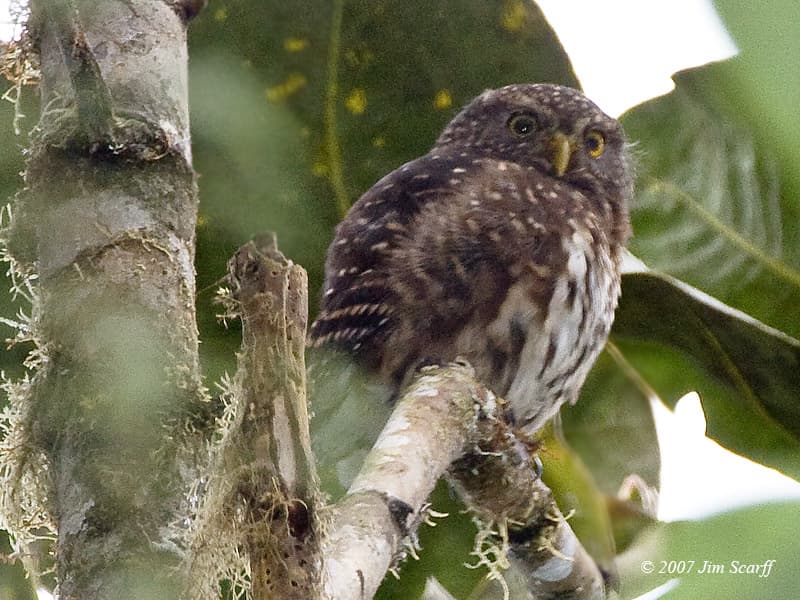
Andean pygmy owl
The Andean pygmy owl is a small owl species native to the Andes mountains of South America, found in countries like Colombia, Ecuador, Peru, and Venezuela. It is distinguished by its two color morphs, white facial markings including prominent "brows" and "moustaches," and a distinctive face-like pattern on its nape. This owl is an opportunistic predator, active both day and night, feeding on a variety of small invertebrates, birds, and mammals.
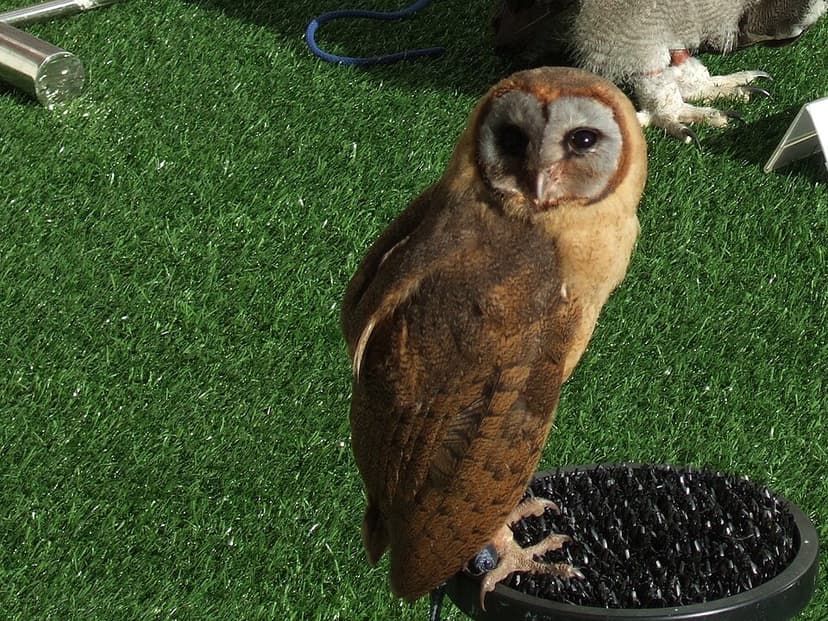
Ashy-faced owl
The ashy-faced owl (Tyto glaucops) is a species of barn owl native to Hispaniola and several islands in the Lesser Antilles. It is distinguished by its silvery-gray facial disc (in the nominate subspecies), a preference for a mix of open hunting spaces and canopy cover, and a varied diet of small vertebrates and invertebrates. This species plays a crucial role as a nocturnal predator in its island ecosystems.

Austral pygmy owl
The austral pygmy owl is a small owl species found in central and southern Chile and parts of southern Argentina. It is distinctive for its gray-brown and red color morphs and its ability to hunt both during the day and at night. This owl is known for its varied vocalizations, including contact whistles, territorial trills, and courtship calls.