
Burrowing owl
The burrowing owl (Athene cunicularia) is a small, long-legged owl found in open landscapes across North and South America. Unlike most owls, they are often active during the day and are known for their unique habit of living in burrows, often those excavated by other animals. Their adaptive behaviors and reliance on specific habitats make them a subject of conservation interest.
Key Facts
- ›They are primarily terrestrial owls with long legs adapted for sprinting and short flights.
- ›Burrowing owls inhabit open grasslands, deserts, and agricultural areas.
- ›They typically nest and roost in burrows made by other animals like badgers and ground squirrels.
- ›Unlike many owls, they are often active during the day and are crepuscular hunters.
- ›Their diet consists of invertebrates, small rodents, and occasionally fruits and seeds.

Burrowing Owl
Grasslands, Rangelands, Agricultural Areas, Deserts, Open, Dry Areas With Low Vegetation, Prairie, Badlands, Chaparral
North America, South America, Caribbean
Invertebrates, Insects, Termites, Orthoptera, Jerusalem Crickets, True Crickets, Grasshoppers, Scarab Beetles, Scorpions, Spiders, Millipedes, Ground Beetles, Earthworms, Small Rodents, Vesper Mouse, Other Birds, Reptiles, Lizards, Snakes, Amphibians, Frogs, Toads, Fruits, Seeds, Tasajillo Fruit, Prickly Pear Fruit, Cholla Cacti Fruit
Badgers, Coyotes, Snakes, Feral Cats, Domestic Cats, Feral Dogs, Domestic Dogs
About Burrowing owl
The burrowing owl (Athene cunicularia), also known by the Latin name Strix cunicularia, is a distinctive owl species found across the open landscapes of North and South America. Unlike most owls, it is primarily terrestrial, possessing long legs that enable it to sprint and hop, and it is often active during daylight hours, particularly during the twilight periods of dawn and dusk.
Habitat and Distribution
Burrowing owls thrive in open environments such as grasslands, rangelands, deserts, and agricultural areas where vegetation is low. Their unique lifestyle involves nesting and roosting in burrows, which they typically do not excavate themselves. Instead, they adapt abandoned tunnels dug by other animals, including American badgers, foxes, ground squirrels, and prairie dogs. Their range spans from southern Canada through Mexico and into much of South America, with exceptions in dense rainforest interiors and high mountain ranges. Birds breeding in northern regions often migrate south for the winter.
Physical Characteristics and Behavior
These owls are characterized by their bright eyes, lack of ear tufts, and a flattened facial disc. They possess prominent white eyebrows and a white chin patch, which they may display when agitated. Their plumage is generally brown with white spotting on the head and wings, and lighter undersides with variable barring. Adults measure between 19–28 cm in length with a wingspan of 50.8–61 cm. A notable behavior is their mimicry of rattlesnake sounds—rattling and hissing—when threatened, a strategy believed to deter predators.
Diet and Reproduction
The burrowing owl's diet is diverse, comprising invertebrates like termites and grasshoppers, as well as small vertebrates such as rodents, lizards, and small birds. Unusually for an owl, they also consume fruits and seeds. Breeding typically occurs in spring, with pairs nesting in burrows and laying clutches of 4 to 12 eggs. Both parents share incubation and chick-rearing duties. The survival of young owls is often aided by the presence of burrowing animals, which not only provide shelter but also act as a buffer against predators and can alert the owls to approaching danger with their alarm calls.
Conservation Status
While the burrowing owl is listed as Least Concern globally by the IUCN, certain populations face significant threats. In parts of North America, habitat loss and the decline of burrowing animal populations, exacerbated by eradication programs, have led to endangerment or threatened status. Conservation efforts include protecting habitats and, in some cases, creating artificial burrows to support declining populations. The species is protected under migratory bird treaties in Canada, the United States, and Mexico.
Source: Wikipedia ↗
Frequently Asked Questions
What is a burrowing owl?
The burrowing owl is a small owl species native to the open landscapes of North and South America. It is characterized by its long legs and terrestrial lifestyle, often inhabiting burrows.
Where do burrowing owls live?
They are found in open, dry areas with low vegetation such as grasslands, rangelands, agricultural areas, and deserts across North and South America. They prefer regions with burrowing animals available for their homes.
Are burrowing owls nocturnal?
While they possess adaptations for night vision and hearing, burrowing owls are often active during the day, though they tend to avoid the heat of midday. They are most active as crepuscular hunters during dawn and dusk.
What do burrowing owls eat?
Their diet is varied and includes invertebrates like termites and grasshoppers, as well as small vertebrates such as rodents and other small birds. Uniquely among owls, they also consume fruits and seeds.
Why are burrowing owls called burrowing owls?
They are named burrowing owls because they nest and roost in burrows. However, they typically do not dig these burrows themselves but rather repurpose those already made by animals like ground squirrels, prairie dogs, or badgers.
What are the conservation concerns for burrowing owls?
Declining populations in North America are largely due to habitat loss and the control of burrowing animals like prairie dogs. They are endangered in Canada and threatened in Mexico, with specific populations listed as threatened or of special concern in various U.S. states.
Related Owl species
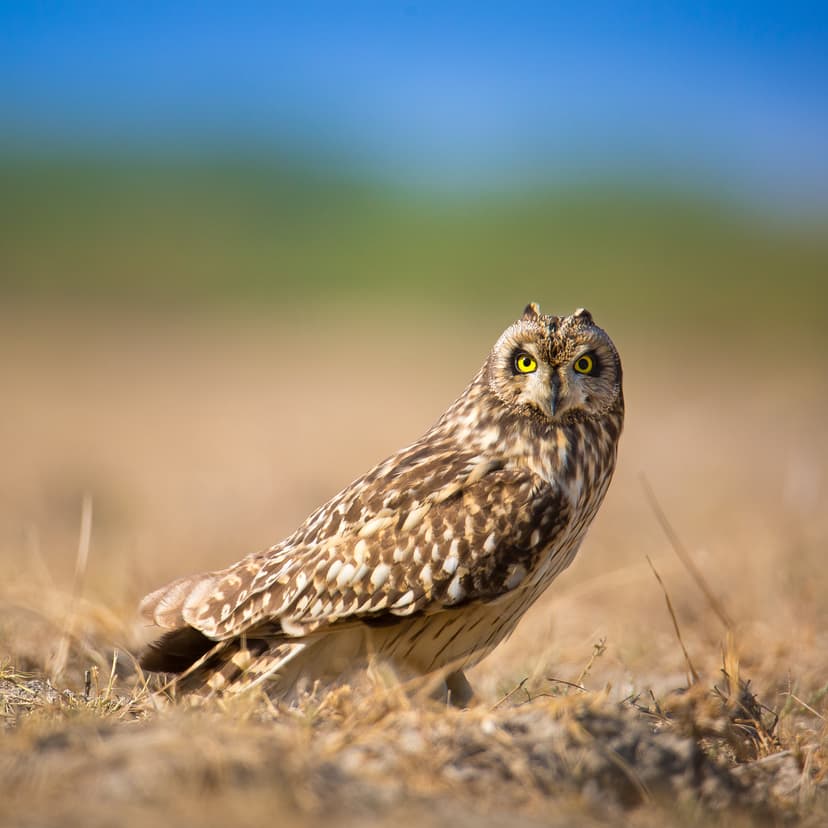
Short-eared owl
The short-eared owl (Asio flammeus) is a widely distributed grassland species known for its distinctive "ear" tufts, which are usually not visible but can be displayed when defensive. This medium-sized owl is found on open country and grasslands across most continents, feeding primarily on rodents like voles.

Snowy owl
The snowy owl, also known as the polar owl, is a large, predominantly white owl native to the Arctic regions of North America and Eurasia. It is distinguished by its striking white plumage, which provides camouflage in its snowy habitat, and its adaptation to hunting during daylight hours, particularly in summer. Its breeding success is closely linked to lemming populations, though it can adapt to other prey when necessary.
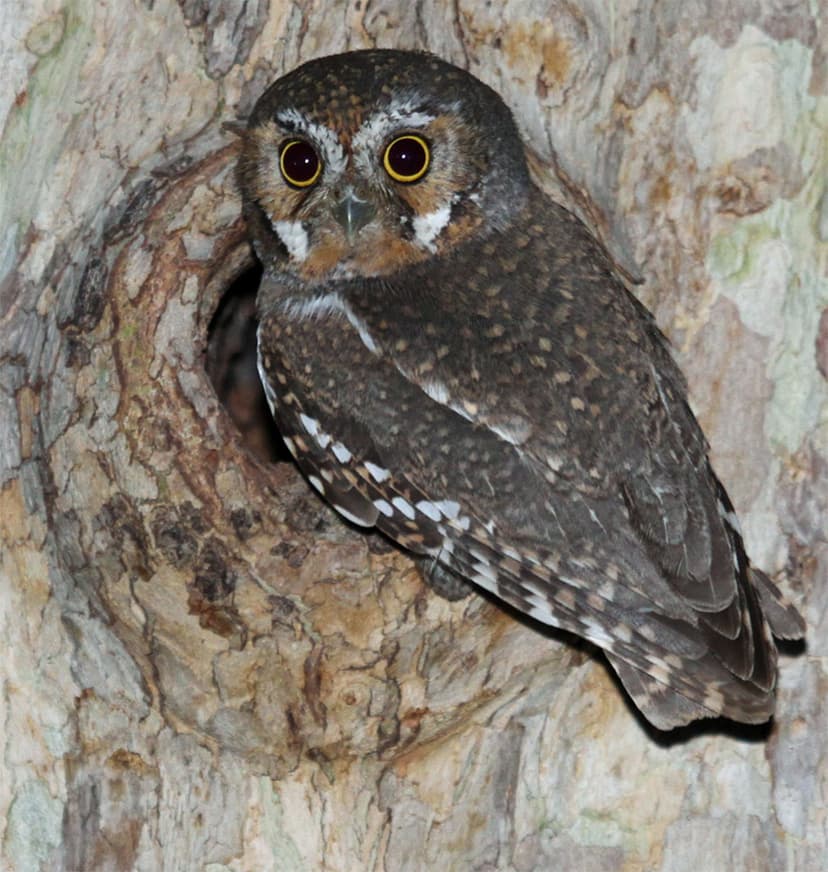
Elf owl
The Elf owl is the world's smallest owl, a tiny bird found in the southwestern United States, central Mexico, and the Baja California peninsula. Distinctive for its pale yellow eyes and gray bill, it frequently inhabits woodpecker holes in saguaro cacti. Primarily feeding on insects, this nocturnal owl is known for its complex vocalizations, which vary between sexes and play a role in territorial defense and mating.