
Cape eagle-owl
The Cape eagle-owl (Bubo capensis) is a large owl species native to the southernmost regions of southern Africa and parts of East Africa. It is distinguished by its prominent ear-tufts, dark brown plumage, and powerful, explosive hoot call. This owl primarily inhabits mountainous and hilly areas with rocks, but also frequents woodlands and grasslands, and can be found up to 2,500 meters above sea level.
Key Facts
- ›Found in mountainous regions, hilly areas with rocks, woodlands, grasslands, and wooded gullies.
- ›Its range is limited to southern Africa and parts of East Africa.
- ›Possesses prominent ear-tufts and yellow to yellowish-orange eyes.
- ›Diet consists predominantly of mammals, but also includes birds, reptiles, and insects.
- ›The male's call is a powerful, explosive hoot, while the female's is slightly higher pitched.
- ›Classified as 'Least Concern' by the IUCN due to a large range and stable populations.

Cape Owl
Mountainous Regions, Hilly Areas With Rocks, Adjacent Woodlands, Grasslands, Wooded Gullies, Sheltered Rock Ledges, Rock Crevices, Caves, Trees, Ground Amongst Dense Bushes
Southern Africa, East Africa
Mammals, Birds, Reptiles, Frogs, Scorpions, Crabs, Large Insects
Predation of Nests
About Cape eagle-owl
The Cape eagle-owl (Bubo capensis) is a significant avian species belonging to the Strigidae family and is one of the larger members of the eagle-owl genus, Bubo. It is primarily found in the southernmost regions of southern Africa and extends into parts of East Africa. Claims of its presence in the southern Arabian Peninsula are considered erroneous, likely due to confusion with other species.
Habitat and Distribution
This owl predominantly inhabits mountainous or hilly areas characterized by rocks, where it finds suitable roosting locations. Its habitat also encompasses adjacent woodlands, grasslands, and wooded gullies. The species can be found from sea level up to elevations of 2,500 meters. In some instances, Cape eagle-owls have been observed venturing into human settlements and towns, often to hunt pigeons.
Physical Characteristics
The Cape eagle-owl is a large bird, positioned between other large Bubo owl species in size. Its total length typically ranges from 46 to 61 cm. The plumage is dark brown above, with distinctive prominent ear-tufts and striking yellow to yellowish-orange eyes. Its underside is also dark, featuring a paler chest overlaid with a complex pattern of white, black, and tawny-fulvous markings, with the sides of the breast exhibiting blotchy brown. The facial disc is fulvous-brown, bordered by a dark frame that becomes broader near the neck. Both the tail and wing feathers are barred with alternating light and dark brown. The toes and tarsi are densely feathered.
Behavior and Diet
As a nocturnal species, the Cape eagle-owl roosts during the day in sheltered rock ledges, large rock crevices, caves, or sometimes in trees or on the ground amongst dense vegetation. They have occasionally been found roosting in urban areas like Johannesburg and Pretoria. Their diet is primarily composed of mammals, ranging from small rodents to animals larger than themselves, such as hyraxes. They also prey on other birds, reptiles, amphibians, scorpions, crabs, and large insects. Mole rats are a particularly favored food source in some areas.
Vocalizations and Reproduction
The vocalizations of the Cape eagle-owl are distinctive. The male emits a powerful, explosive hoot followed by a faint note, described as 'boowh-hu'. The female's call is similar but slightly higher in pitch, and pairs sometimes engage in duets. During courtship rituals, the male performs a bowing display accompanied by a trisyllabic call. Young owls and females produce a nasal, drawn-out 'chrrreeh' when begging for food, while females may cluck when offering sustenance. Alarm calls consist of a barking 'wack wack wack'.
Nesting typically involves a shallow scrape in a sheltered location, such as a rock ledge, crevice, or cave, or on the ground under dense bushes. Rarely, they may utilize existing large stick nests or the tops of bushes. The breeding cycle usually occurs annually, though sometimes in alternate years. A clutch typically consists of two white eggs, though one or three may be laid. The female incubates the eggs for 34 to 38 days, during which the male provides her with food. The young hatch at intervals of up to four days. Both parents care for the chicks, which become capable of flight by 70–77 days and are cared for a total of six months, reaching sexual maturity the following year.
Conservation Status
The Cape eagle-owl is classified by the IUCN as 'Least Concern.' This status reflects its relatively large geographic range and apparently stable population numbers. Despite this classification, nests, particularly those on the ground, are subject to predation, and individuals can be victims of roadkills or electrocution from power lines. The use of rodenticides may also pose an indirect threat to the species.
Source: Wikipedia ↗
Frequently Asked Questions
What is the typical size of a Cape eagle-owl?
The Cape eagle-owl is a large owl, with a total length ranging from 46 to 61 cm (18 to 24 inches). Males weigh between 905 to 1,387 g, while larger females range from 1,240 to 1,800 g.
Where does the Cape eagle-owl live?
Its geographic range is confined to the southernmost parts of southern Africa and extends into East Africa. They are primarily found in mountainous and hilly terrains with rocky outcrops.
What does the Cape eagle-owl eat?
The predominant prey for this species is mammals, which can vary in size from small rodents to animals heavier than the owl itself. They also supplement their diet with other birds, reptiles, frogs, scorpions, crabs, and large insects.
What are the distinctive calls of the Cape eagle-owl?
The male's song is a powerful, explosive hoot followed by a faint note: boowh-hu. The female's voice is similar but higher pitched. Pairs may duet, and during courtship, the male uses a trisyllabic call.
What is the conservation status of the Cape eagle-owl?
The Cape eagle-owl is listed as 'Least Concern' by the IUCN. This classification is due to its relatively large geographic range and seemingly stable population numbers.
What are the nesting habits of the Cape eagle-owl?
Nests are typically shallow scrapes located on sheltered rock ledges, in rock crevices, caves, or on the ground beneath dense bushes. Occasionally, they may use abandoned nests of other birds or the tops of large bushes.
Related Owl species
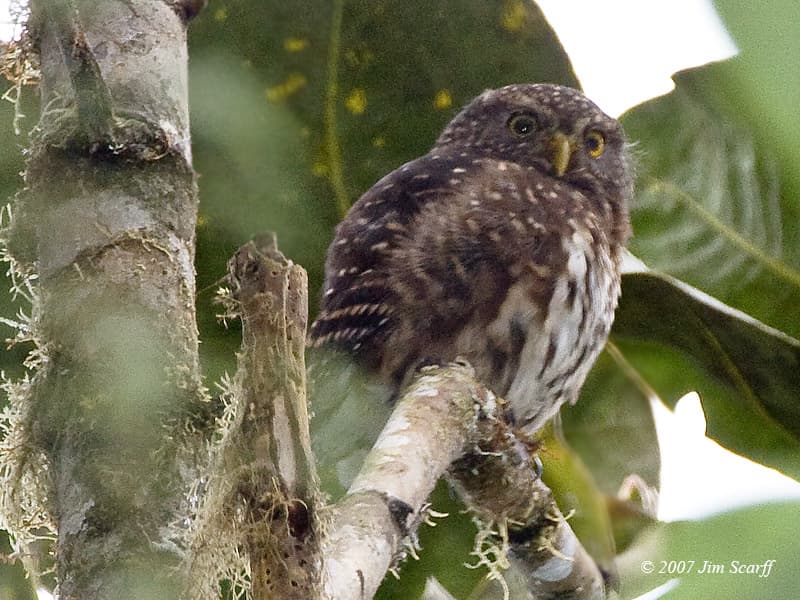
Andean pygmy owl
The Andean pygmy owl is a small owl species native to the Andes mountains of South America, found in countries like Colombia, Ecuador, Peru, and Venezuela. It is distinguished by its two color morphs, white facial markings including prominent "brows" and "moustaches," and a distinctive face-like pattern on its nape. This owl is an opportunistic predator, active both day and night, feeding on a variety of small invertebrates, birds, and mammals.
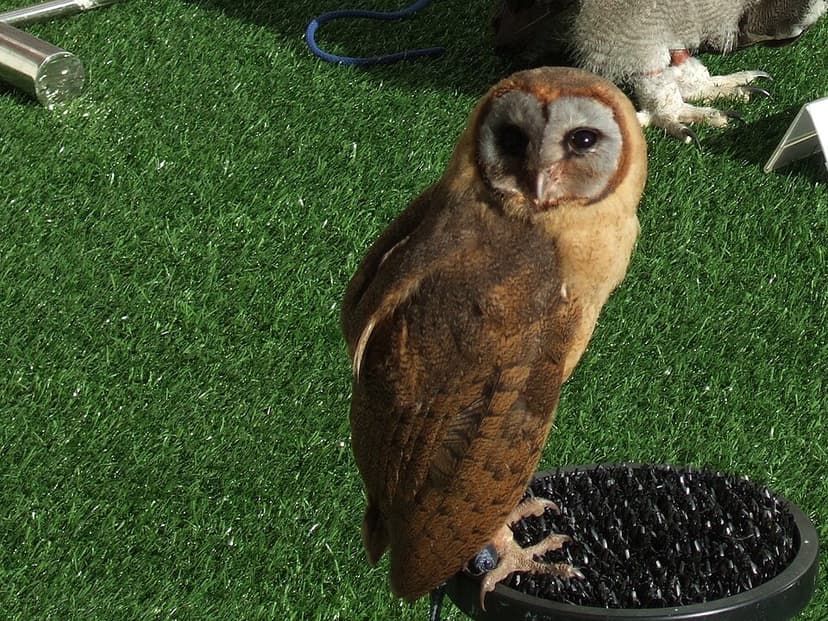
Ashy-faced owl
The ashy-faced owl (Tyto glaucops) is a species of barn owl native to Hispaniola and several islands in the Lesser Antilles. It is distinguished by its silvery-gray facial disc (in the nominate subspecies), a preference for a mix of open hunting spaces and canopy cover, and a varied diet of small vertebrates and invertebrates. This species plays a crucial role as a nocturnal predator in its island ecosystems.

Austral pygmy owl
The austral pygmy owl is a small owl species found in central and southern Chile and parts of southern Argentina. It is distinctive for its gray-brown and red color morphs and its ability to hunt both during the day and at night. This owl is known for its varied vocalizations, including contact whistles, territorial trills, and courtship calls.