
Cebu boobook
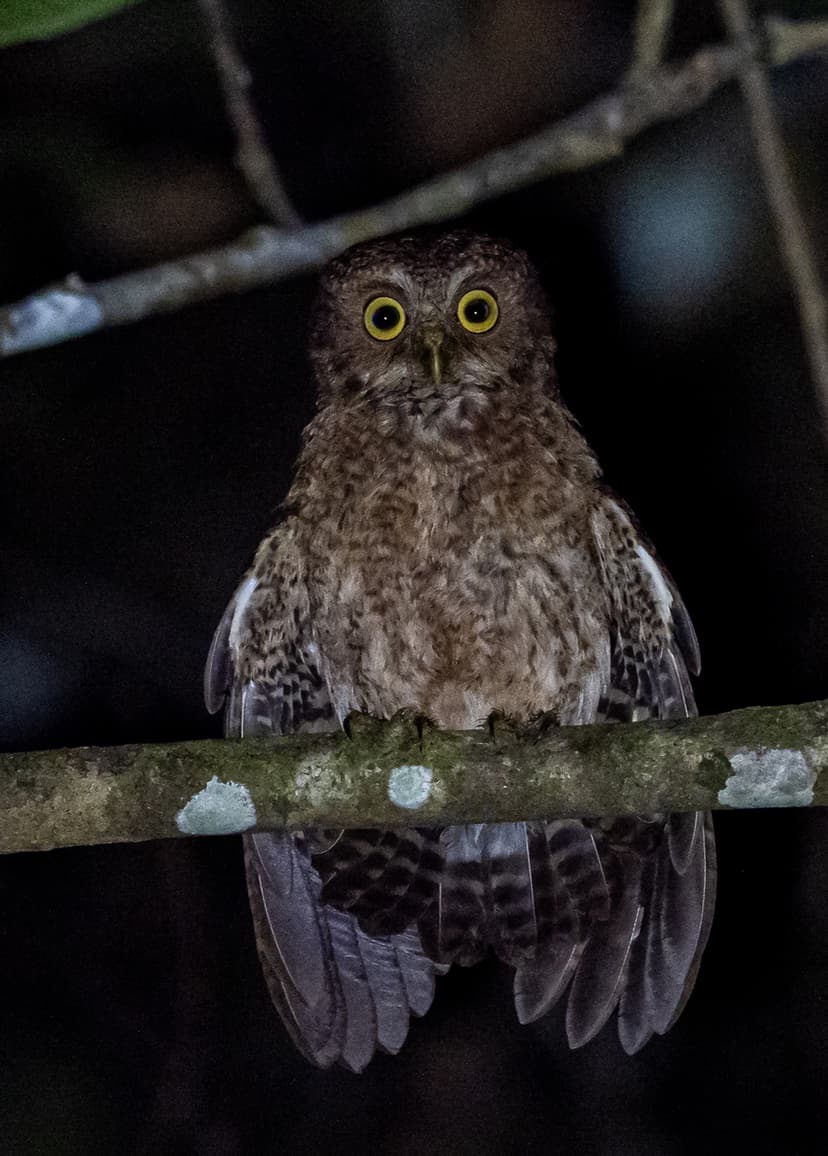
The Cebu boobook is a species of owl found exclusively in the Philippines, characterized by its earless appearance and similarity between sexes. It is notable for being one of the largest owls within the Philippine hawk-owl complex, nesting in natural tree cavities. Its survival is critically threatened by extensive habitat loss.
Key Facts
- ›Endemic to the Philippines.
- ›One of the largest owls in the Philippine hawk-owl complex.
- ›Nests in natural cavities of mature trees.
- ›Feeds on insects, small mammals, reptiles, amphibians, and particularly birds.
- ›Classified as Vulnerable by the IUCN.
- ›Main threat is habitat loss due to logging, mining, and agricultural conversion.

Cebu Hawk-Owl
Tropical Moist Lowland Primary Forest, Secondary Forests, Clearings, Plantations
Philippines
Insects, Small Mammals, Reptiles, Amphibians, Birds
About Cebu boobook
The Cebu boobook (Ninox rumseyi), also known as the Cebu hawk-owl, is a species of owl endemic to the Philippines. It is a member of the Strigidae family and was recognized as a distinct species in 2012, having previously been considered a subspecies of the Philippine hawk-owl. The Cebu boobook is characterized by its earless appearance, with males and females being visually similar.
Ecology and Behavior
This owl is one of the larger species within the Philippine hawk-owl complex, standing at approximately 25cm tall. Its diet is varied, including insects, small mammals, reptiles, amphibians, and birds. Notably, the Cebu boobook appears to prey on birds more frequently than other related species, with recorded prey including Elegant tits, Magnificent sunbirds, Red-keeled flowerpeckers, and various flycatchers. Breeding pairs are known to maintain territories of about 10 hectares, and nests are typically found in natural cavities within the trunks of tall trees. Nests have been observed in May, and clutches usually contain two eggs.
Habitat and Conservation
The natural habitats for the Cebu boobook are tropical moist lowland forests, both primary and secondary, up to an altitude of 700 meters. It can also be found in clearings and plantations as long as they are situated near forest cover. The species is currently classified as Vulnerable by the IUCN, with an estimated population of 250 to 999 mature individuals. The primary threat to the Cebu boobook is habitat loss, resulting from extensive deforestation due to logging, mining, and conversion to agricultural land. The island of Cebu has experienced severe deforestation, leaving very little forest cover remaining. This habitat degradation also impacts other species sharing its range, some of which are also endangered. While the Cebu boobook occurs in several protected forests, conservation efforts are reportedly lax, and there is currently no species-specific conservation program in place.
Source: Wikipedia ↗
Frequently Asked Questions
What is the Cebu boobook?
The Cebu boobook, also known as the Cebu hawk-owl, is a species of owl native to the Philippines. It belongs to the family Strigidae and was reclassified as a distinct species in 2012.
What does the Cebu boobook eat?
Its diet consists of insects, small mammals, reptiles, amphibians, and birds. It is noted among Philippine hawk-owls for preying more frequently on birds, including species like the Elegant tit and various flycatchers.
Where does the Cebu boobook live?
The natural habitats of the Cebu boobook are tropical moist lowland primary and secondary forests, extending up to 700 meters in altitude. It can also be found in clearings and plantations adjacent to forests.
What is the conservation status of the Cebu boobook?
The Cebu boobook is classified as Vulnerable on the IUCN Red List. Its population is estimated to be between 250 and 999 mature individuals, with concerns that the population is at the lower end of this range.
What are the main threats to the Cebu boobook?
The primary threat to the Cebu boobook is habitat loss, driven by extensive forest clearance from logging, mining, and conversion to farmland. Hunting pressure also contributes to the reduction of its remaining forest habitat.
How large is the Cebu boobook?
The Cebu boobook reaches a height of approximately 25cm. It is considered one of the larger owls within the Philippine hawk-owl species complex.
Related Owl species

Christmas boobook
The Christmas boobook (Ninox natalis), also known as the Christmas Island hawk owl, is a small, rufous-brown owl endemic to Christmas Island in the Indian Ocean. It is characterized by its barred breast, dark chestnut facial mask, and a distinctive double-noted hoot. This species faces threats from habitat destruction and introduced species, leading to its vulnerable conservation status.

Cloud-forest pygmy owl
The Cloud-forest pygmy owl, scientifically known as Glaucidium nubicola, is a small owl species found in the cloud forests of western Colombia and northwestern Ecuador. It is distinguished by its dark brown plumage, a rounded head without ear tufts, and distinctive "false eyespots" on its nape that likely deter predators.
Mindoro boobook
The Mindoro boobook (Ninox mindorensis) is a species of owl endemic to the Philippines, belonging to the Strigidae family. It is distinguished among Philippine hawk-owls by its darker plumage and fine barring on its head and belly. This medium-sized, earless owl inhabits tropical lowland forests and faces a conservation status of vulnerable due to significant habitat loss.