
Mindoro boobook
The Mindoro boobook (Ninox mindorensis) is a species of owl endemic to the Philippines, belonging to the Strigidae family. It is distinguished among Philippine hawk-owls by its darker plumage and fine barring on its head and belly. This medium-sized, earless owl inhabits tropical lowland forests and faces a conservation status of vulnerable due to significant habitat loss.
Key Facts
- ›Endemic to the Philippines.
- ›Distinguished by darker plumage and fine head/belly barring.
- ›Medium-sized owl, standing at 20cm tall.
- ›Inhabits tropical moist lowland primary and secondary forests.
- ›Classified as Vulnerable by the IUCN Red List.
- ›Primary threat is habitat loss from logging, mining, and land conversion.
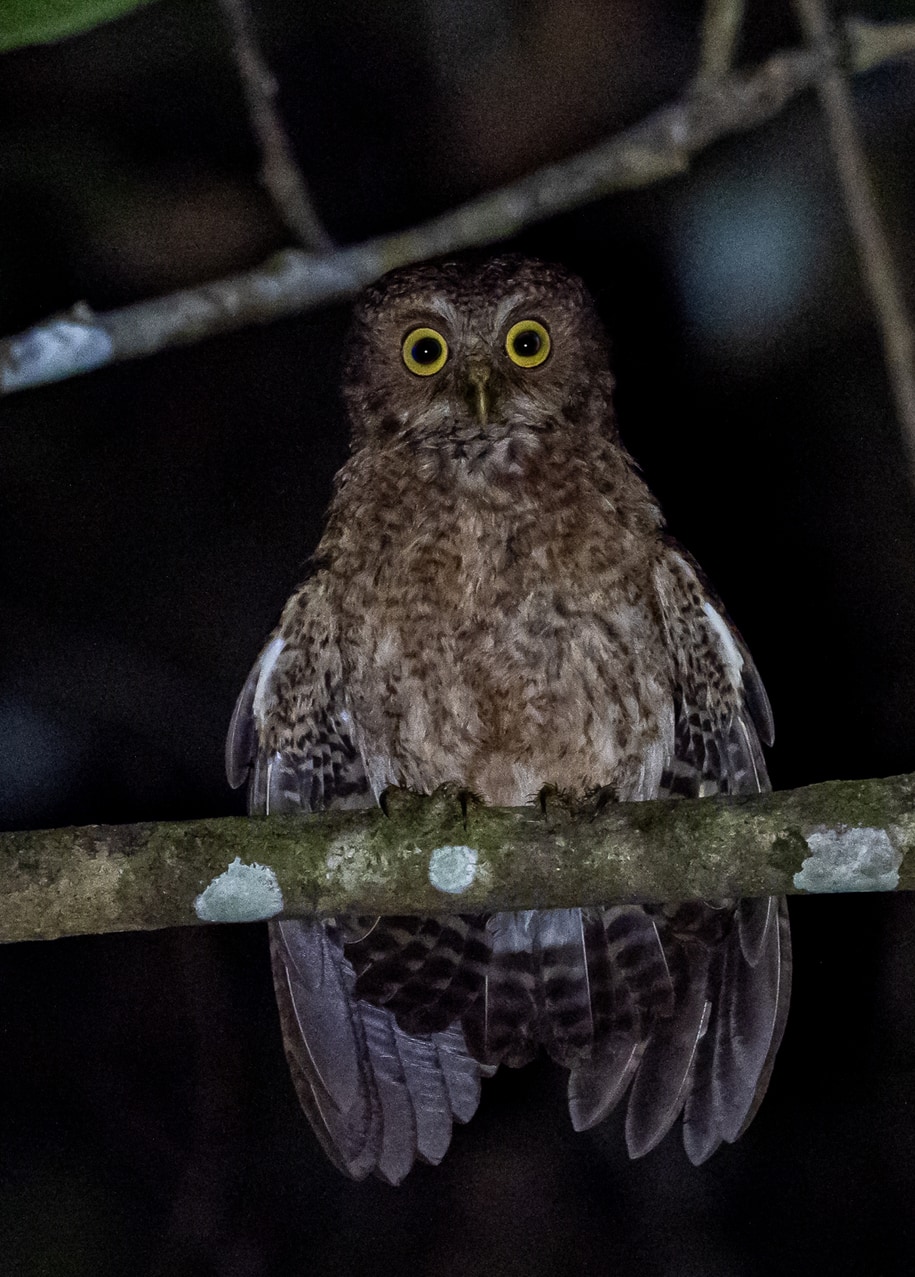
Mindoro Hawk-Owl
Tropical Moist Lowland Primary Forests, Tropical Moist Lowland Secondary Forests, Forest Edges, Clearings, Plantations
Philippines
Insects, Small Mammals, Reptiles, Amphibians, Birds
About Mindoro boobook
The Mindoro boobook (Ninox mindorensis), also known as the Mindoro hawk-owl, is a species of owl native to the Philippines. It belongs to the family Strigidae and is an earless owl, with males and females appearing similar in coloration and size. This medium-sized owl, standing at approximately 20cm tall, is distinctive among the Philippine hawk-owl complex for its darker plumage and the presence of fine barring on its head and belly.
Habitat and Ecology
The Mindoro boobook inhabits tropical moist lowland forests, both primary and secondary, and can be found up to elevations of 1250 meters above sea level. Occasionally, they are also observed in areas such as forest edges, clearings, and plantations. While detailed studies on its ecology are limited, it is presumed to share a typical boobook diet consisting of insects, small mammals, reptiles, amphibians, and potentially other birds. Its nesting habits are also not well-documented, but it is believed to nest in tree cavities, a common practice among other boobook species.
Conservation Status and Threats
This species is currently classified as Vulnerable by the International Union for Conservation of Nature (IUCN) Red List, with estimates of mature individuals ranging from 2,500 to 9,999. The primary threat to the Mindoro boobook is severe habitat loss, resulting from extensive deforestation due to legal and illegal logging, mining operations, conversion of forests into agricultural land, and urbanization. On Mindoro, the remaining forest cover has dramatically decreased, with only a fraction of it being closed-canopy forest.
Protected Areas and Conservation Efforts
The Mindoro boobook is found in a few protected areas on the island, including Mounts Iglit-Baco National Park, which is also a critical habitat for the Tamaraw, and Naujan Lake National Park. Currently, there is no species-specific conservation program in place. Proposed conservation actions include conducting more surveys to better understand the species' habitat requirements and population dynamics, initiating public education and awareness campaigns to highlight the owl's importance and foster local pride, and advocating for the protection of the remaining forest habitats.
Source: Wikipedia ↗
Frequently Asked Questions
What distinguishes the Mindoro boobook from other Philippine hawk-owls?
The Mindoro boobook is recognized by its overall darker plumage and the presence of fine barring on its head and belly. It is also noted for being earless.
What is the typical habitat of the Mindoro boobook?
This owl species is found in tropical moist lowland primary and secondary forests, extending up to 1250 meters above sea level. They can also be observed near forest edges, clearings, and plantations.
What is the conservation status of the Mindoro boobook?
The Mindoro boobook is classified as Vulnerable on the IUCN Red List. Population estimates suggest between 2,500 and 9,999 mature individuals.
What are the main threats to the Mindoro boobook population?
The most significant threat is habitat loss, driven by the extensive clearance of forest areas for logging, mining, agriculture, and urbanization. A substantial reduction in forest cover on Mindoro has been documented.
Where can the Mindoro boobook be found within protected areas?
The species occurs in a few protected areas on Mindoro, including Mounts Iglit-Baco National Park and Naujan Lake National Park. These areas are crucial for its survival.
What is known about the diet and nesting habits of the Mindoro boobook?
While its ecology is not fully studied, it is presumed to have a typical boobook diet of insects, small mammals, reptiles, amphibians, and possibly birds. It is also presumed to nest in tree cavities, similar to other boobook species.
Related Owl species

Christmas boobook
The Christmas boobook (Ninox natalis), also known as the Christmas Island hawk owl, is a small, rufous-brown owl endemic to Christmas Island in the Indian Ocean. It is characterized by its barred breast, dark chestnut facial mask, and a distinctive double-noted hoot. This species faces threats from habitat destruction and introduced species, leading to its vulnerable conservation status.

Pemba scops owl
The Pemba scops owl is a small owl species endemic to Pemba Island, off the coast of Tanzania. It is distinguished by its two color morphs, brown and rufous, and its distinctive "hoo" call. This owl is primarily nocturnal and feeds on insects, inhabiting various wooded areas including native forests and plantations.

Rufous fishing owl
The Rufous fishing owl is a medium-sized owl endemic to West Africa, inhabiting forest rivers and mangrove forests. This species is distinguished by its lack of ear tufts, pale cinnamon facial disc, and barred flight feathers. It is primarily nocturnal and feeds on small fish, though its habits are not extensively documented.