
Mantanani scops owl
The Mantanani scops owl is a small owl species found on islands between Borneo and the Philippines. It is characterized by its buff facial disk, dark brown upperparts with pale markings, and pale underparts with dark streaks. The species is listed as "near threatened" due to its limited and fragmented range and the ongoing degradation of its forest habitat.
Key Facts
- ›Small owl endemic to islands between Borneo and the Philippines.
- ›Measures approximately 18 cm in length with a wingspan of about 15.5 cm.
- ›Distinctive features include a buff facial disk, dark brown upperparts with pale markings, and pale underparts with streaks.
- ›Primary diet consists of insects, hunted at forest edges and clearings.
- ›Breeding season is believed to occur between March and may, with eggs laid in tree hollows.
- ›IUCN conservation status is 'near threatened' due to habitat loss and fragmentation.

Mantanani Scops Owl
Forest Edge, Clearings, Coconut Groves, Wooded Habitats, Stands of Casuarina Equisetifolia
Asia
Insects
About Mantanani scops owl
The Mantanani scops owl (Otus mantananensis) is a small owl species found on the islands situated between Borneo and the Philippines. Its distinctive appearance includes a buff facial disk, dark brown upperparts with pale markings, and pale underparts marked with dark streaks and barring. This owl is primarily observed hunting at the forest edge or in clearings.
Habitat and Range
This species is endemic to a collection of small islands within this biogeographical region, including those near Sabah in northern Borneo, such as the Mantanani group from which it derives its common name. Its range also extends to islands off the coast of Palawan in the Philippines and through the Sulu Archipelago and central Philippines. While relatively common in habitats like coconut groves and stands of Casuarina equisetifolia, the total area of its habitat is small, estimated to be less than 2,000 km², and is increasingly disturbed and degraded.
Conservation Status
The Mantanani scops owl is classified as 'near threatened' by the International Union for Conservation of Nature (IUCN). This designation is a consequence of its limited and fragmented geographical distribution and the ongoing threats to its forest habitat from logging and land clearance. The estimated global population is between 6,000 and 15,000 individuals and is reported to be decreasing.
Behavior and Reproduction
The Mantanani scops owl's diet mainly consists of insects. Breeding is believed to occur between March and May, with the owls laying their eggs in tree hollows. The species' vocalizations are notable, described as a simple 'waa' and a goose-like honk, with territorial disputes marked by a descending series of short 'was'. The female's call is generally lower and harsher than that of the male.
Source: Wikipedia ↗
Frequently Asked Questions
What is the Mantanani scops owl?
The Mantanani scops owl is a small owl species belonging to the genus Otus. It is found on various islands located between Borneo and the Philippines.
What does the Mantanani scops owl look like?
This owl is about 18 cm long and has a buff facial disk bordered by a dark rim. Its upperparts are dark brown with pale markings on the scapulars, and its underparts are pale with dark streaks and barring. It possesses yellow irides, grey feet and bill, and feathered tarsi.
Where does the Mantanani scops owl live?
The Mantanani scops owl is endemic to small islands situated between the Malaysian state of Sabah in northern Borneo and the Philippine island of Palawan. Its range also includes islands in the Calamian, Sulu Archipelago, and central Philippines.
What is the conservation status of the Mantanani scops owl?
The Mantanani scops owl is classified as 'near threatened' by the IUCN. This status is due to its limited and fragmented range, coupled with the ongoing degradation of its forest habitat through logging and clearance.
What does the Mantanani scops owl eat?
The Mantanani scops owl primarily feeds on insects. It hunts for its prey at the edges of forests and in clearings.
What are the sounds made by the Mantanani scops owl?
The vocalizations of the Mantanani scops owl have been described as a simple 'waa' sound and a goose-like honk. During territorial disputes, it produces a descending series of short 'was'. The female's voice is noted to be lower and harsher than the male's.
When does the Mantanani scops owl breed?
It is thought that the Mantanani scops owl breeds from March to May. Eggs are typically laid in tree hollows.
Related Owl species

Chaco owl
The Chaco owl is a species of owl native to southern South America, inhabiting the Gran Chaco region of Argentina, Bolivia, and Paraguay. It is distinguished by its lack of ear tufts, pale facial disk with dark lines, and barred plumage. Primarily nocturnal hunters, they are vocally active during twilight hours.

Javan scops owl
The Javan scops owl (Otus angelinae), also known locally as Celepuk Jawa, is a small owl endemic to the high volcanic mountains of western Java. It is distinguished by its rusty-brown facial disc, prominent white eyebrows and ear-tufts, and a unique alarm call. This nocturnal predator primarily hunts insects and other small invertebrates in montane forests.
Mindoro scops owl
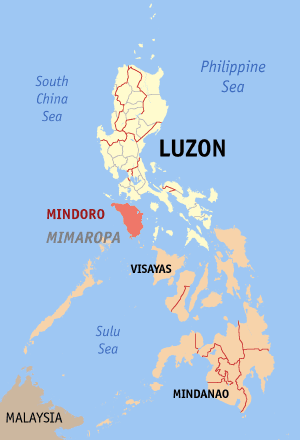
The Mindoro scops owl is a small owl species endemic to the island of Mindoro in the Philippines. It inhabits tropical moist montane forests at high elevations and is distinguished by its unique morphology compared to related scops owls. This species is considered near threatened due to ongoing habitat loss.