
Javan scops owl
The Javan scops owl (Otus angelinae), also known locally as Celepuk Jawa, is a small owl endemic to the high volcanic mountains of western Java. It is distinguished by its rusty-brown facial disc, prominent white eyebrows and ear-tufts, and a unique alarm call. This nocturnal predator primarily hunts insects and other small invertebrates in montane forests.
Key Facts
- ›Endemic to the high volcanic mountains of western Java, Indonesia.
- ›Possesses a rusty-brown facial disc and striking white eyebrows and ear-tufts.
- ›Feeds mainly on insects such as beetles, grasshoppers, and crickets.
- ›Its alarm call is a repeated explosive "poo-poo" with a trembling quality.
- ›Listed as near Threatened on the IUCN Red List due to habitat fragmentation.

Celepuk Jawa
- Montane Forest With A Well-Developed Understory
- Lower and Middle Canopy Layers
Java
Insects, Tiny Lizards, Snakes
About Javan scops owl
The Javan scops owl (Otus angelinae), known locally as Celepuk Jawa, is a small owl species endemic to the high volcanic mountains of western Java, Indonesia. This nocturnal bird is characterized by its silent flight and distinctive physical features, including a light rusty-brown facial disc, prominent white eyebrows that extend into ear-tufts, and golden yellow to orange-yellow irides.
Distribution and Habitat
These owls are found exclusively in the montane forests of western Java, with documented occurrences in areas such as Mount Salak, Mount Pangrango, Mount Gede, and Mount Tangkuban Perahu. They prefer habitats with a well-developed understory, typically residing in the lower and middle canopy layers at elevations ranging from 900 to 2,500 meters, though most commonly between 1,500 and 2,000 meters.
Diet and Behavior
The Javan scops owl's diet primarily consists of insects, including beetles, grasshoppers, crickets, and mantises, though they are also known to occasionally prey on small lizards and snakes. They utilize their keen senses of vision and hearing to locate and capture prey from tree trunks, foliage, or the ground. While most scops owls are vocally prominent, the Javan scops owl is relatively quiet. Its alarm call is a repeated, explosive "poo-poo" with a trembling quality, and its contact call is a hissing "tch-tschschsch."
Reproduction
Observations suggest that breeding occurs with laying predicted in the second weeks of December and May. Clutch sizes are likely to be around two eggs.
Conservation Status
The Javan scops owl is listed as Near Threatened on the IUCN Red List. Its population is estimated to be between 2,500 and 9,999 mature individuals and is experiencing a declining trend due to forest fragmentation. The species has been documented in protected areas such as Mount Halimun Salak National Park and Mount Gede Pangrango National Park, but further research and conservation actions are proposed to better understand and protect its population.
Source: Wikipedia ↗
Frequently Asked Questions
What is the Javan scops owl?
The Javan scops owl (Otus angelinae) is a small owl species native to the highlands of western Java. It is known for its distinctive white eyebrows and ear-tufts and its preference for montane forests.
Where does the Javan scops owl live?
This owl is endemic to the montane forests of western Java, specifically found on mountains such as Mount Salak, Mount Pangrango, Mount Gede, and Mount Tangkuban Perahu. They inhabit elevations typically between 1,500 to 2,000 meters.
What does the Javan scops owl eat?
The Javan scops owl's diet primarily consists of insects, including beetles, grasshoppers, crickets, and mantises. Occasionally, they may also consume small lizards and snakes.
What does the Javan scops owl sound like?
While generally a quiet owl, its alarm call is a repeated, explosive "poo-poo" with a slight pitch decrease and a trembling quality. Its contact call is a hissing "tch-tschschsch," and males can produce a soft "wook-wook" comfort call.
What is the conservation status of the Javan scops owl?
The Javan scops owl is classified as Near Threatened on the IUCN Red List. Its population is estimated to be between 2,500 and 9,999 mature individuals and is declining due to forest fragmentation.
Related Owl species

Chaco owl
The Chaco owl is a species of owl native to southern South America, inhabiting the Gran Chaco region of Argentina, Bolivia, and Paraguay. It is distinguished by its lack of ear tufts, pale facial disk with dark lines, and barred plumage. Primarily nocturnal hunters, they are vocally active during twilight hours.

Mantanani scops owl
The Mantanani scops owl is a small owl species found on islands between Borneo and the Philippines. It is characterized by its buff facial disk, dark brown upperparts with pale markings, and pale underparts with dark streaks. The species is listed as "near threatened" due to its limited and fragmented range and the ongoing degradation of its forest habitat.
Mindoro scops owl
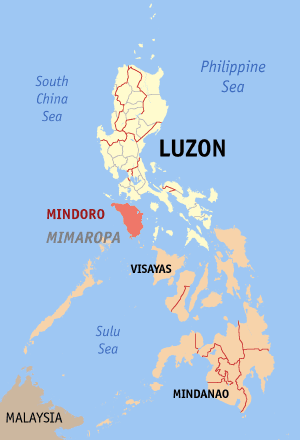
The Mindoro scops owl is a small owl species endemic to the island of Mindoro in the Philippines. It inhabits tropical moist montane forests at high elevations and is distinguished by its unique morphology compared to related scops owls. This species is considered near threatened due to ongoing habitat loss.