
Chocolate boobook
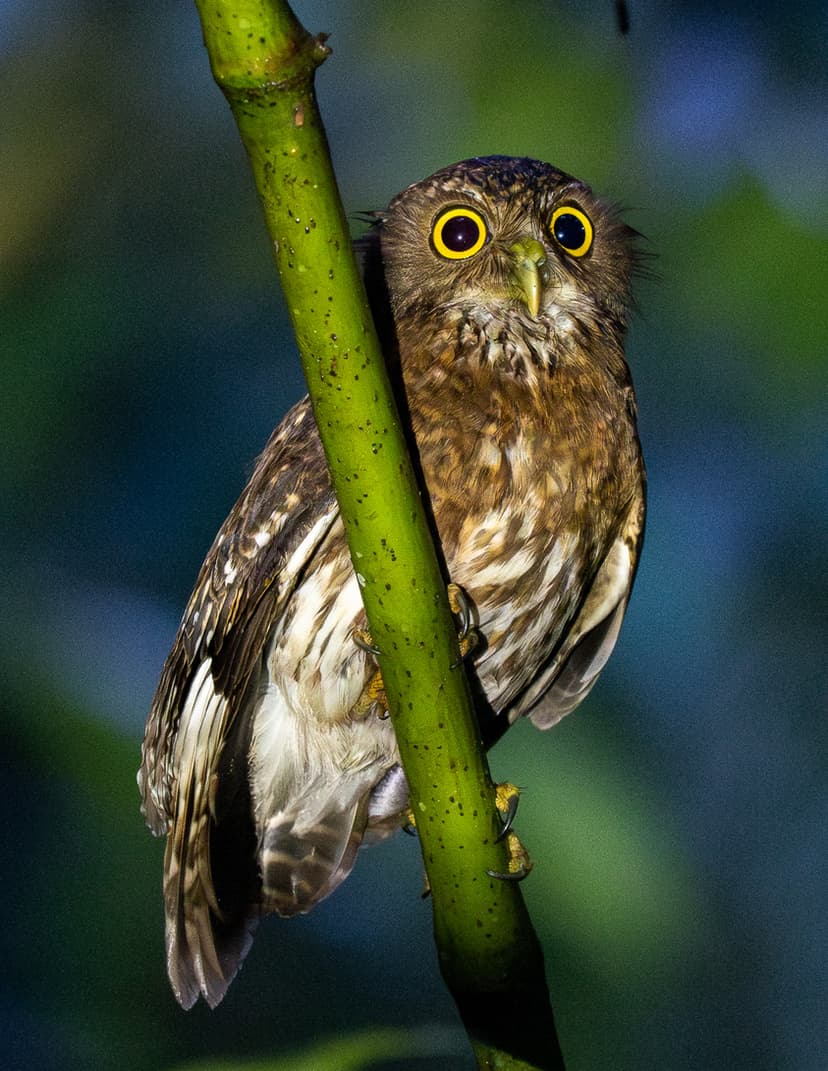
The Chocolate boobook is a bird species belonging to the true owl family, Strigidae. Previously considered a subspecies of the Brown boobook, it is now recognized as a distinct species, primarily found in the Philippines. Its distinctiveness lies in its unique vocalizations and body measurements compared to its relatives.
Key Facts
- ›Formerly classified as a subspecies of the Brown boobook.
- ›Distinct from other boobooks by its voice and body measurements.
- ›Inhabits primary lowland rainforest, second-growth forests, and mangroves.
- ›Avoids cultivated and human-inhabited areas.
- ›Assessed as near-threatened by the IUCN due to population decline.
- ›Threatened by deforestation, mining, and habitat conversion.

Chocolate Boobook
Primary Lowland Rainforest, Second-Growth Forest, Mangroves
Philippines
Insects, Small Vertebrates
Not Specified In Text
About Chocolate boobook
The Chocolate boobook (Ninox randi) is a species of owl belonging to the true owl family, Strigidae. It was historically considered a subspecies of the Brown boobook but is now recognized as a distinct species, differentiated by its unique vocalizations and body measurements. While it was once recorded in Karakelang, Indonesia, its known range is currently limited to the Philippines.
Habitat and Ecology
This owl species inhabits primary lowland rainforests, second-growth forests, and mangrove environments, typically found at elevations up to 1,000 meters above sea level. The Chocolate boobook is not tolerant of cultivated areas or regions with significant human habitation. Its diet is not definitively known but is presumed to consist of insects and small vertebrates, consistent with other boobook owls. Information on its breeding habits is scarce, though a young individual was observed in June, suggesting this period may be part of its breeding cycle. It is believed to be a cavity nester.
Conservation Status
The International Union for Conservation of Nature (IUCN) has assessed the Chocolate boobook as near-threatened. The species' population is thought to be declining, primarily due to ongoing deforestation in the Philippines. This habitat loss is driven by factors such as slash-and-burn farming, mining activities, illegal logging, and the conversion of land for other uses. The Chocolate boobook is also occasionally captured for the pet trade or for bushmeat. Despite being found in several protected areas like Pasonanca Natural Park, Rajah Sikatuna Protected Landscape, and Bataan National Park, conservation efforts face challenges due to lax enforcement and continued habitat destruction.
Source: Wikipedia ↗
Frequently Asked Questions
What makes the Chocolate boobook distinct from other boobooks?
The Chocolate boobook is differentiated from other boobooks by its unique vocalizations and specific body measurements. These characteristics have led to its classification as a separate species.
What type of habitat does the Chocolate boobook prefer?
This owl species favors primary lowland rainforest, second-growth forests, and mangrove areas. It is not found in cultivated or heavily human-populated regions.
What is the conservation status of the Chocolate boobook?
The Chocolate boobook is listed as near-threatened by the IUCN. Its population is believed to be declining, primarily due to ongoing deforestation in the Philippines.
What are the main threats to the Chocolate boobook's survival?
The primary threats include deforestation caused by slash-and-burn farming, mining, and illegal logging. It is also occasionally caught for the pet trade or for bushmeat.
Where is the Chocolate boobook found?
The Chocolate boobook is primarily found in the Philippines. While it was once recorded in Karakelang, Indonesia, there have been no subsequent records outside the Philippines.
Related Owl species

Giant scops owl
The giant scops owl, also known as the lesser eagle owl or Mindanao eagle owl, is an owl species endemic to the Philippines. It is distinguished by its intermediate size between a scops owl and an eagle-owl, and its reddish-brown plumage with prominent ear tufts and facial disc. This species inhabits tropical lowland forests and is currently assessed as Near-threatened due to significant habitat loss.

Negros scops owl
The Negros scops owl, also known as the Visayan scops owl, is a small owl endemic to the Philippine islands of Negros and Panay. It belongs to the Strigidae family and is distinguished by its rufous or reddish-brown crown, nape, and face. This species is currently assessed as Near-threatened due to significant habitat loss and hunting pressures.
Mindanao boobook
The Mindanao boobook (Ninox spilocephala) is a small owl species endemic to the island of Mindanao in the Philippines. Previously considered a subspecies, it was recognized as distinct in 2012 due to its unique vocalizations, which are more dove-like than the typical screeching of other boobooks. It inhabits tropical moist lowland forests and is currently classified as near-threatened due to significant habitat loss.