
Negros scops owl
The Negros scops owl, also known as the Visayan scops owl, is a small owl endemic to the Philippine islands of Negros and Panay. It belongs to the Strigidae family and is distinguished by its rufous or reddish-brown crown, nape, and face. This species is currently assessed as Near-threatened due to significant habitat loss and hunting pressures.
Key Facts
- ›Endemic to the islands of Negros and Panay in the Philippines.
- ›Distinguished by a rufous or reddish-brown crown, nape, and face.
- ›Preys on insects at night.
- ›Nests in tree hollows in lowland forests.
- ›Assessed as Near-threatened by the IUCN.
- ›Threatened primarily by habitat destruction from logging and agricultural conversion.

Visayan Scops Owl
Tropical Moist Lowland Forest, Montane Primary Forest, Montane Secondary Forest
Philippines
Insects
About Negros scops owl
The Negros scops owl (Otus nigrorum), also recognized as the Visayan scops owl, is a small owl species native to the Philippine islands of Negros and Panay. It belongs to the family Strigidae and is distinguished by its striking rufous or reddish-brown coloration on its crown, nape, and facial disc. Historically, it was considered a subspecies of the Philippine scops owl but is now classified as its own species, being the smallest and palest within the endemic Philippine scops owl complex.
Ecology and Behavior
This owl is a nocturnal hunter, preying primarily on insects. Socially, Negros scops owls are observed living either solitarily or in monogamous pairs. Their breeding season is extensive, occurring throughout the year, during which they typically lay clutches of one or two eggs. They make their nests in tree hollows, favoring the forest environments of the Philippine lowlands.
Habitat and Conservation
The natural habitats of the Negros scops owl are tropical moist lowland and montane primary and secondary forests, typically found up to 1,000 meters above sea level. While they can adapt to secondary forests, their populations are healthiest and most dense in primary, old-growth forests. As of 2025, the species is assessed as Near-threatened by the International Union for Conservation of Nature (IUCN), with an estimated population of 2,500 to 9,999 mature individuals, and the population is believed to be declining.
Threats and Protection
The primary threats to the Negros scops owl are habitat destruction stemming from legal and illegal logging, the conversion of forests into farmlands through slash-and-burn practices, charcoal burning, and mining. Extensive habitat loss has occurred on both Negros and Panay islands, with remaining forest cover being minimal and often located at higher elevations where the owl does not thrive. Despite these challenges, the species can be found in some protected areas such as Northern Negros Natural Park, Mount Kanlaon National Park, and Northwest Panay Peninsula Natural Park. However, enforcement of protection against hunting and illegal logging remains lax in these areas. A notable observation is the significant number of birdwatcher sightings in the Liptong Woodland, a small private reforestation project on Negros Oriental, which supports multiple pairs of these owls.
Source: Wikipedia ↗
Frequently Asked Questions
What is the Negros scops owl?
The Negros scops owl, scientifically known as Otus nigrorum, is a species of owl native to the Philippine islands of Negros and Panay. It is part of the typical owl family, Strigidae, and is recognized for its distinctive reddish-brown facial features and crown.
Where can the Negros scops owl be found?
This owl species is endemic to the islands of Negros and Panay in the Philippines. Its natural habitats include tropical moist lowland and montane primary and secondary forests.
What does the Negros scops owl eat?
The Negros scops owl is a nocturnal predator that feeds on insects. Its diet consists mainly of these small invertebrates found in its forest habitat.
What is the conservation status of the Negros scops owl?
As of 2025, the Negros scops owl is classified as Near-threatened by the International Union for Conservation of Nature (IUCN). Previously, it was listed as Vulnerable, indicating a concerning trend in its population.
What are the main threats to the Negros scops owl?
The primary threats to the Negros scops owl are habitat destruction through logging, conversion of forests to farmlands, charcoal burning, and mining. Hunting for the pet trade also contributes to its decline.
What are the nesting habits of the Negros scops owl?
Negros scops owls typically nest in tree hollows. These nests are found within the forests of the Philippine lowlands, where they also hunt.
Related Owl species

Giant scops owl
The giant scops owl, also known as the lesser eagle owl or Mindanao eagle owl, is an owl species endemic to the Philippines. It is distinguished by its intermediate size between a scops owl and an eagle-owl, and its reddish-brown plumage with prominent ear tufts and facial disc. This species inhabits tropical lowland forests and is currently assessed as Near-threatened due to significant habitat loss.
Mindanao boobook
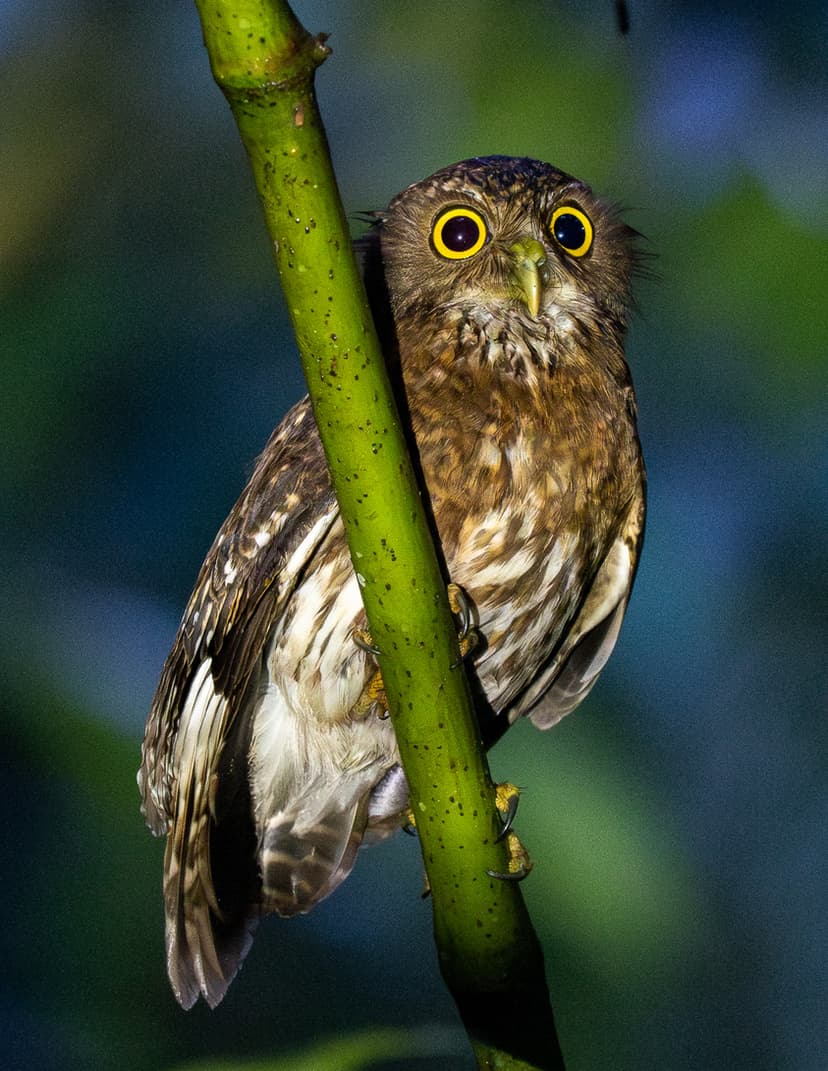
The Mindanao boobook (Ninox spilocephala) is a small owl species endemic to the island of Mindanao in the Philippines. Previously considered a subspecies, it was recognized as distinct in 2012 due to its unique vocalizations, which are more dove-like than the typical screeching of other boobooks. It inhabits tropical moist lowland forests and is currently classified as near-threatened due to significant habitat loss.
Tamaulipas pygmy owl
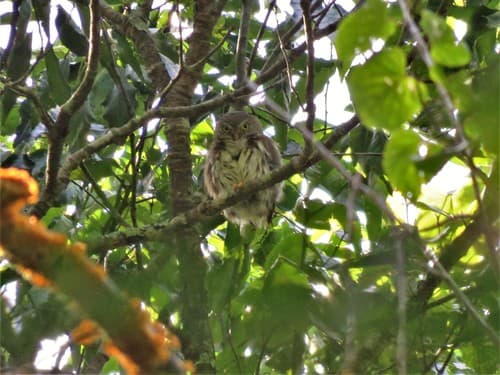
The Tamaulipas pygmy owl (Glaucidium sanchezi) is a diminutive owl species endemic to Mexico. It is distinguished by its small size, with adults measuring around 13.5 cm in length, making it one of the smallest owls globally. This species inhabits subtropical and tropical moist montane forests in northeastern Mexico.